Finding the right surgeon can make you feel more confident about taking the next step towards treatment. However, with qualifications, specialist interests, hospital ratings, and patient reviews to consider, knowing where to begin is not always easy.
The good news is that there are a number of experienced hip surgeons in Derbyshire who can assess your symptoms, explain your treatment options, and provide expert care for hip pain.
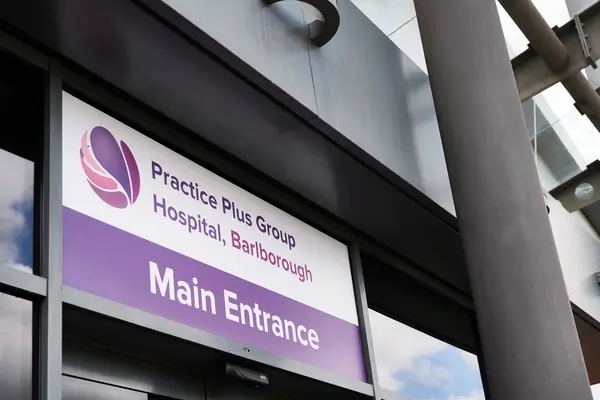
In this guide, we explain how to compare private hip surgeons in Derbyshire, introduce the specialists working at our Barlborough hospital, and outline what to expect from consultation all the way through to recovery.
Choosing the best hip surgeon for you in Derbyshire involves checking GMC registration, relevant specialist experience, patient communication levels, clinical outcomes, and the support provided by the wider hospital team.
This guide introduces the hip specialists at Practice Plus Group Hospital, Barlborough, while exploring treatment options, costs, access routes, recovery, and questions to ask during your consultation.
What makes a good hip surgeon?
There is no single surgeon who will be the best choice for every patient. The right hip consultant in Derbyshire for your specific needs will depend on your condition, the treatment you require, your general health, and what matters most to you.
For example, someone having their first total hip replacement may have different needs from a patient who requires revision surgery on an existing hip implant. Your choice may also be affected by the surgeon’s availability, whether they are approved by your insurer, and the hospital where they practise.
Here are some of the main points to consider.
Qualifications and specialist registration
A hip surgeon should be registered with the General Medical Council and have appropriate specialist training in trauma and orthopaedic surgery.
You can use the GMC medical register to check a doctor’s registration status, licence to practise and inclusion on the Specialist Register.
Qualifications such as FRCS (Tr & Orth) indicate that a surgeon has completed specialist training and examinations in trauma and orthopaedics. However, while the right qualifications are essential, they only make up one part of the full picture.
Experience with your treatment
You should be looking for a surgeon with relevant experience in the procedure you may need. This could include:
total hip replacement
complex primary hip replacement
hip revision surgery
hip injections
treating arthritis and other causes of joint damage
rehabilitation and follow-up after surgery.
Some consultants work across several areas of orthopaedics, while others focus mainly on hip and knee replacements.
The number of procedures a surgeon performs can be helpful, but it should not be considered on its own. Patient outcomes, communication, complication management, and the support provided by the wider hospital team are also important.
A clear and personal approach
Your surgeon should listen to your concerns and explain your options clearly. He or she will help you to understand:
what may be causing your symptoms
whether further tests are needed
whether non-surgical treatments may still help
the benefits and risks of surgery
which operation is being recommended
what recovery may involve
what could happen if you decide not to have surgery.
During your consultation, you should feel able to ask questions without being rushed or pressured into making a decision.
“Hip replacement surgery isn’t just about fixing a joint, it is about getting the patient back to independence. While surgery sets the foundation, it is the vital partnership between the medical team and patients’ commitment to recovery that means a patient gets back to a full and pain free life.”
Reading about other patients’ experiences can be very useful when looking for orthopaedic surgeons in Derbyshire, but they shouldn’t be your only source of information.
Patient feedback can tell you about communication, cleanliness, staff support, and the overall hospital experience. However, a positive review cannot guarantee the same clinical outcome for every patient.
Use the following five checks when comparing surgeons.
1. Check their GMC registration
Confirm that the consultant is registered and licensed to practise. Their profile should ideally display their General Medical Council (GMC) number so you can verify it easily.
2. Look at their specialist experience
Check whether the consultant regularly treats your condition and carries out the operation you may need.
For hip replacement, look for clear information about total hip replacements, complex cases, and revision procedures where relevant.
3. Search the National Joint Registry
The National Joint Registry Surgeon and Hospital Profile allows patients to search for surgeons and hospitals that carry out joint replacement procedures.
It includes information about hip, knee, ankle, elbow, and shoulder joint replacement activity. The available surgeon and hospital data is updated regularly and can help you make a more informed comparison.
The Care Quality Commission (CQC) independently assesses healthcare services in England.
According to CQC standards, Practice Plus Group Hospital, Barlborough is currently rated Good overall, with Outstanding for caring. The hospital’s surgery and outpatient services were assessed in February 2026, with the report published in June 2026.
A successful patient experience depends on more than the operation itself.
Ask who will support you after surgery, when physiotherapy will begin, how follow-up appointments work, and who you should contact if you have concerns at home.
Practice Plus Group Hospital, Barlborough has a trusted orthopaedic team offering hip pain assessment, hip replacement surgery, and related joint treatments.
The hip and knee specialists currently practising at our Barlborough hospital are listed below. Please note that they’ve been listed alphabetically and have not been ranked. The most suitable surgeon for you will depend on your diagnosis, the treatment being considered and your individual circumstances. The consultant team may also change, so check the Barlborough consultant directory for the latest information.
Charles Ayekoloye
Mr Charles Ayekoloye is a consultant orthopaedic surgeon specialising in hip replacement and complex hip and knee replacement surgery. He treats patients at Practice Plus Group hospitals in Barlborough and Birmingham.
Mr Ferenc Toth is a consultant orthopaedic surgeon with experience in hip and knee replacement, prosthetic replacement and knee arthroscopy. He joined the Barlborough orthopaedic team in 2005.
Mr Gyorgy Lovasz is a consultant orthopaedic surgeon specialising in hip and knee replacements. He was also involved in developing Barlborough’s day-case joint replacement programme.
Mr Istvan Mersich is a consultant orthopaedic surgeon with a special interest in hip replacement, partial and total knee replacement and other knee conditions. He has been part of the Barlborough orthopaedic team since 2005.
Mr Jeevan Chandrasenan is a consultant orthopaedic surgeon who carries out total hip replacements, partial and total knee replacements, ACL and soft tissue knee surgery. He joined Practice Plus Group Hospital, Barlborough in 2018.
Mr Nawar Abdulsattar is a consultant orthopaedic surgeon specialising in hip and knee replacement and sports injuries. He treats patients at Barlborough, Birmingham and Emersons Green.
Mr Thorwald Springer is a consultant orthopaedic surgeon specialising in hip and knee replacement and knee arthroscopy. He has more than 27 years of medical experience and promotes evidence-based, patient-focused care.
The right hip surgery specialist in Derbyshire will depend on the cause of your symptoms and the treatment you require.
Your initial consultation is designed to identify the problem and discuss the available options. You do not need to diagnose yourself or decide which operation you need before seeing a consultant.
Hip replacement specialists
Hip replacement may be considered when a damaged hip joint is causing persistent pain, stiffness, and reduced movement, and non-surgical treatments are no longer providing enough relief.
During total hip replacement surgery, damaged parts of the joint are removed and replaced with artificial components. The operation usually takes between 1-2 hours.
Complex and revision hip surgery
Revision surgery involves removing or replacing some or all of an existing hip implant.
It may be needed if an implant has become worn, loose, damaged or infected, or if there are other problems with the joint. Revision surgery is usually more complex than a first hip replacement, so it is particularly important to look for a surgeon with relevant experience.
Minimally invasive hip replacement
A minimally invasive hip replacement uses smaller incisions than some traditional techniques. However, the approach is not suitable for everyone.
The best surgical approach depends on a range of factors. These include your anatomy, the condition of your hip, your general health, and your surgeon’s assessment. Smaller incisions do not automatically mean the operation is safer or that recovery will be faster.
Seeing a hip consultant does not automatically mean you will need an operation. Depending on the cause of your symptoms, possible non-surgical treatments may include:
physiotherapy and strengthening exercises
changes to activity
walking aids
pain relief
weight management where appropriate
steroid or image-guided injections.
Your consultant will discuss whether these options are seen as suitable for you before recommending surgery.
Your initial appointment is your chance to find out more about your condition, the consultant’s experience and what treatment might involve.
Consider taking the following questions with you.
Questions about the consultant’s experience
How often do you carry out this procedure?
Do you regularly treat patients with a condition like mine?
Do you carry out complex or revision surgery?
Can I view your National Joint Registry profile?
What complications are most relevant to my circumstances?
Questions about your treatment
What is causing my hip pain?
Do I need any further scans or tests?
Are there any non-surgical options I could try?
Why are you recommending this particular operation?
Which surgical approach/technique will you use?
What type of implant would you recommend?
What are the risks and expected benefits?
Is it reasonable for me to seek a second opinion?
Questions about recovery
How long might I need to stay in hospital?
When will I begin walking after surgery?
What physiotherapy will I receive?
What help will I need at home?
When might I be able to drive or return to work?
Who should I contact if I am worried after leaving hospital?
The answers will vary according to your operation, health, occupation, and recovery. Your surgeon and physiotherapy team will give you advice tailored to you.
Private hip surgery costs in Derbyshire
For private patients, the costs of all our current hip-related procedures are listed in the table below:
Service
Price
Initial consultation
£145
Total hip replacement surgery
£13,199
Hip injection in clinic
£252
Hip injection in theatre
£2,749
The initial consultation includes an appointment with a specialist consultant, a nurse assessment and any necessary blood tests, swabs, or X-rays.
The fixed hip replacement price includes consultant fees, pre-operative assessment, surgery, anaesthetic, the required hospital stay, prescriptions, equipment, and any physiotherapy you may need to get you back on your feet. Any additional diagnostic tests (for example MRI or CT scans) recommended following the consultation may incur a separate charge.
If you’re paying for yourself, at Practice Plus Group Hospital, Barlborough your consultation and treatment (if needed) takes place at a time to suit you.
Your waiting time may be longer if further tests are needed or if your consultant decides you are not currently fit for surgery. Your treatment team will explain the likely timeline after assessing you.
Waiting times through the NHS can vary by hospital, speciality and individual patient pathway. For current information, check My Planned Care or speak to your GP.
Paying for hip treatment in Derbyshire
There are three main ways to access treatment with a hip consultant in Derbyshire.
You will need an appropriate NHS referral. Your GP or healthcare professional can explain your treatment options and whether Practice Plus Group Hospital, Barlborough is available through NHS patient choice.
What happens after hip surgery?
Recovery after hip surgery is a crucial part of your overall treatment journey.
Your care team will usually encourage you to begin moving as soon as it is safe to do so. A physiotherapist will show you exercises to support movement, strength, and confidence.
Before you go home, the team will explain:
how to look after your wound
how to use walking aids
which exercises to complete
how to manage discomfort
which movements or activities to avoid
when follow-up care will take place
which symptoms require medical advice.
It can take several months to recover fully from hip replacement surgery. Your age, general health, fitness, the type of operation you’ve had, and how well you can follow your rehabilitation plan may all affect your recovery. It’s always best to follow the advice given by your surgeon and physiotherapy team rather than comparing your progress with another patient.
Why choose Practice Plus Group Hospital, Barlborough?
Located near Chesterfield, Practice Plus Group Hospital, Barlborough provides NHS, self-pay, and insured care for patients across the county of Derbyshire and further afield.
A trusted orthopaedic team
The hospital’s hip surgeons work alongside anaesthetists, nurses, physiotherapists, radiographers, and other healthcare professionals.
This multi-disciplinary approach means your care covers more than just the operation itself. The team can support you through consultation, diagnosis, preparation, surgery, rehabilitation, and follow-up.
Independently assessed care
Practice Plus Group Hospital, Barlborough is rated Good overall by the Care Quality Commission, with Outstanding for caring.
The CQC’s June 2026 report also confirmed that the hospital provides surgical, diagnostic imaging and outpatient services, with orthopaedics among its main surgical specialities.
In November 2025, Barlborough completed its 40,000th joint replacement. The milestone procedure was a hip replacement carried out by Mr Ferenc Toth.
The total reflects the hospital team’s extensive experience of delivering joint replacement care. It should not, however, be interpreted as a success rate or a guarantee of an individual result.
Not found the information you’re looking for? Our Derbyshire hip surgeon FAQs might be able to help!
Who is the best hip surgeon in Derbyshire?
There is no single best hip surgeon for every patient. The right surgeon will depend on your condition, the type of treatment you need, their specialist experience, and whether their approach makes you feel comfortable and informed. Check qualifications, GMC registration, National Joint Registry information, patient feedback, and the hospital’s CQC rating.
What is a hip specialist called?
A doctor who performs hip surgery is usually called a consultant trauma and orthopaedic surgeon or consultant orthopaedic surgeon. Some orthopaedic consultants specialise specifically in hip and knee replacement, while others treat several joints or types of musculoskeletal condition.
How do I choose a hip replacement surgeon?
Check that the surgeon is GMC-registered, has appropriate specialist training, and regularly performs the specific procedure you may need. You can also review their National Joint Registry information, professional profile, and patient feedback. Arrange a consultation to discuss their experience, treatment recommendations, and approach to aftercare.
Do I need a GP referral to see a private hip surgeon?
Self-pay patients can normally contact Practice Plus Group directly without a GP referral. Patients using private medical insurance should check their provider’s rules as some policies require a GP referral or pre-authorisation. NHS patients will need an appropriate referral.
Can I choose my hip surgeon if I have private medical insurance?
You may be able to choose your surgeon, but they will need to be recognised by your insurer and covered by your policy. Check that both the consultant you’ve chosen and hospital are approved before arranging a consultation.
What happens at a private hip consultation?
Your consultant will ask about your symptoms, medical history, general health, and previous treatments. They may examine your hip and request tests such as an X-ray, blood tests, or an MRI scan. They will then discuss possible treatments which will include either non-surgical care or surgery, where appropriate.
Is minimally invasive hip replacement better?
Not necessarily. A minimally invasive approach uses smaller incisions, but it is not suitable for every patient. The most suitable method for you depends on the condition of your hip, your general health, and your surgeon’s experience.
Can I get a second opinion before hip surgery?
Yes. You can seek a second opinion if you are unsure about the diagnosis or proposed treatment plan. Another consultant may agree with the original recommendation or suggest a different approach. Tell the consultant about any previous scans, tests and treatment recommendations.
How long does hip replacement recovery take?
It can take several months to recover fully, although everyone progresses at a different rate. Your age, health, fitness, and individual procedure can affect your recovery. Follow the personalised advice provided by your surgeon and physiotherapy team.
How quickly can I have private hip surgery in Derbyshire?
If you’re a self-pay patient, Practice Plus Group’s waiting time is just 4-6 weeks after your initial consultation. It may take longer if further tests are required or if you need additional support to become fit for surgery.
Acknowledgements and clinical review
This page has been medically reviewed and approved by Mr Ferenc Toth, Consultant Orthopaedic Surgeon at Practice Plus Group Hospital, Barlborough. He graduated from the Medical University of Pecs, Hungary in 1991 and has more than 33 years of experience. Mr Toth specialises in hip and knee replacements, knee arthroscopy and carpal tunnel surgery. He is a regular speaker at international congresses and has published numerous internaltonal journal articles.
All content on this page is produced by the Practice Plus Group digital content team and clinically reviewed by consultant specialists to ensure accuracy, patient safety, and alignment with current UK clinical best practice. Content is approved under Practice Plus Group’s clinical governance framework.
Ferenc Toth, General Medical Council number: 6114661
This page is regularly reviewed and updated to reflect changes in clinical evidence, surgical practice, and patient safety standards. The last clinical review was completed on 9/6/2026, with the next review scheduled for 9/06/2027.
James Wood, Content Specialist
This article was co-written by Content Specialist, James Wood. Our Content Specialist, James, has been writing articles and blogs for Practice Plus Group since 2022. He has more than a decade of experience as a copywriter within a range of different backgrounds and works closely with medical professionals to deliver information that's easy-to-read and patient-focused. When he's not writing medical pieces, James is busy playing sports or pub quizzing.