When you have hip replacement surgery, it’s normal to have lots of questions. How long will the operation take? When will I be able to walk again afterwards? Will I need to stay in hospital? Will likely be among them but one question that’s asked more often than you might think is:
When can I resume having sex after hip replacement surgery?
This guide explores what to expect when it comes to sex after hip replacement surgery. This includes:
when you can safely resume sexual activity
the safest positions to try
how to reduce the risk of discomfort or injury to your new hip joint as you recover.
After hip replacement, sex can usually be resumed gradually, focusing on safe positions that avoid bending, twisting, and putting pressure on the hip.
Most patients experience improved intimacy long-term, but should listen to their body, avoid risky movements, and seek medical advice if pain or complications occur.
Hip replacement and sex – what patients need to know
Hip replacement surgery is a major procedure during which the damaged hip joint is replaced with an artificial one. This is to ease pain and improve movement.
As sex involves bending, twisting, sudden movements, and sometimes weight-bearing, if you’ve recently had a hip replacement, it’s important to return to physical intimacy gradually and in a way that protects your new hip.
With pain levels reduced and mobility increased, the good news is that a lot of patients actually report an improvement in their sex lives. For them, intimacy often becomes more comfortable and enjoyable than it was before surgery.
How long after a hip replacement can you have sex?
Although you might not think it, lots of our patients often ask: how long after a hip replacement can you have sex?
And the simple answer is: it depends.
There isn’t a single timeline that suits everyone. Recovery from hip surgery depends on lots of different factors like age, overall health, the type of surgical approach used, and the pre-op condition of your hip.
Typical timeline for returning to sexual activity
While the recovery timeline for hip replacement patients varies, the information below provides a loose illustration of what to expect:
2 – 4 weeks after surgery Some patients feel ready for gentle, low-strain intimacy.
4 – 6 weeks after surgery Many people can resume sexual activity using positions that protect the hip and avoid excessive bending or twisting.
2 – 3 months after surgery Most patients regain enough strength and confidence to return to a more comfortable and natural routine.
Ultimately, you’re ready when you feel physically comfortable, have minimal pain, and can move without strain. Remember to listen to your body and don’t rush into anything you’re not comfortable with. If you’re unsure, checking in with your orthopaedic surgeon is always a good idea.
For more guidance on sex after surgery, you can explore the Practice Plus Group patient resource on this topic.
Safest sex positions after a hip replacement
When resuming sexual activity after surgery, it’s important to choose safe positions that protect your new hip joint.
You should try positions where:
the affected hip doesn’t bend more than 90 degrees
the affected leg doesn’t twist inwards
there is no sudden pressure on the hip joint.
The following positions are among the safest and most comfortable to persist with in the months after surgery:
face-to-face positions with partner on top
side lying positions using pillows for support
positions where you can control movement.
Positions for women after hip replacement
Some positions are easier for women because they reduce pressure on the hip joint. Side-lying positions are often recommended during the early stages of recovery.
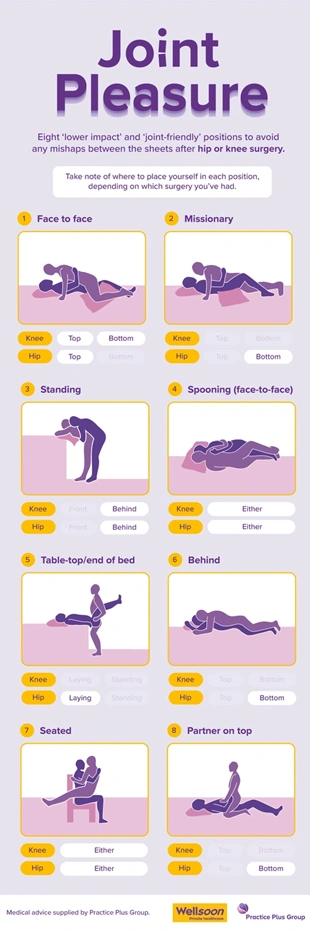
The image below provides a visual guide on how you can reduce strain after total hip replacement surgery.
Our sex positions patient guide draws on best practice and advice from orthopaedic experts with example images to ensure patients can feel confident and safe having sex again after surgery.
Learn more about hip surgery options at Practice Plus Group.
What positions should be avoided after total hip replacement?
After hip replacement surgery, you should avoid positions that:
bend the hip more than 90 degrees
twist the hip joint
require kneeling or squatting
put weight on the affected hip joint.
These movements and putting pressure on the new joint can increase the risk of hip dislocation after total hip replacement surgery.
A word from our specialist
“For hip surgery, it’s crucial to avoid bending the hip more than 90 degrees and to keep the hip stable. Positions like missionary (with the partner on top) or spooning can help maintain that stability. Ultimately, the goal is to keep the affected area supported and comfortable, and always listen to the body’s signals.”
Below are a handful of expert tips to try for safe intimacy after hip replacement surgery:
use pillows for support
move slowly and communicate clearly with your partner
avoid making sudden movements
stop immediately if you feel pain
follow physiotherapy guidance.
Risks and red flags after hip replacement surgery
Sex after hip replacement surgery is safe for most patients when precautions are followed. However, it’s important to understand the risks involved and know when to seek medical advice.
Understanding the risk of dislocation
In the initial months of recovery after a total hip replacement, the affected joint is still healing. Certain movements – particularly bending the hip beyond 90 degrees, twisting inward, or crossing the legs – can increase the risk of hip dislocation.
While uncommon, if it does occur, it’s most likely to happen within the first 6–12 weeks after surgery.
To reduce risk, you should:
avoid sudden or forceful movements
use supportive pillows
stick to the positions recommended in this blog
follow your physiotherapist’s guidance.
Signs you should stop and seek advice
You should stop sexual activity and seek medical advice if you experience:
sudden sharp or severe hip pain
a popping sensation in the hip
the affected leg appearing shorter or turning inward/outward suddenly
inability to bear weight on the operated leg
increasing swelling, redness, or warmth around the hip joint
fever or signs of infection.
These symptoms may indicate dislocation or infection and require urgent assessment.
Ongoing pain during intimacy
Mild discomfort during early recovery is normal. However, persistent pain during sex several months after surgery should be discussed with your orthopaedic consultant.
Persistent pain may be related to:
scar tissue tightness
muscle weakness
inflammation
implant positioning (although this is rare)
Your surgeon or physiotherapist can advise on safe adjustments or recommend strengthening exercises.
If you are concerned about complications, speak to your hip consultant for reassurance and guidance.
Realistic expectations about sex after hip surgery
When recovering from hip surgery, it’s important to stay realistic with regards to expectations. Patience is key, and you may need to:
try new or different sex positions to find out what’s comfortable
take things slowly, communicating clearly with your partner
gradually build up sexual activity over time
regain confidence over months after surgery.
Sex after hip replacement surgery is safe for most people when approached gradually. Wait until you feel ready, listen to your body, choose safe positions after hip replacement, and follow your surgeon’s advice.
Emotional recovery, body confidence, and communication after hip replacement
While much of the focus after hip surgery is on physical healing, emotional recovery plays an equally important role in returning to intimacy.
A total hip replacement is a major life event and it’s normal to experience changes in body confidence, mood, or sexual desire during recovery. Temporary swelling, surgical scars, reduced mobility, and fear of damaging the new joint can all affect how you feel about intimacy.
Common emotional concerns after hip replacement
Many patients report the following concerns and worries during their recovery:
fear of dislocation or damaging the new hip joint
anxiety about pain or discomfort during sex
feeling less confident about their body
reduced libido due to medication, fatigue, or stress
worry about how their partner perceives them.
It’s important to remember these feelings are common and usually improve as strength and confidence return during the recovery process.
The importance of communication
Open communication with your partner can make a significant difference. Consider the following before resuming sexual activity:
talking about any fears you have
agreeing on movements that feel safe
going slowly and communicating clearly
being honest about discomfort.
Rebuilding intimacy after surgery is often a gradual process. Emotional reassurance can be just as important as physical positioning.
Rebuilding confidence gradually
You can support your emotional recovery by:
continuing to attend and complete physiotherapy sessions to build strength and trust in your new hip
celebrating small milestones in mobility
focusing on closeness and connection, not just intercourse
seeking professional advice for any persistent anxiety.
A guide for partners: supporting intimacy after hip surgery
The partners of hip surgery patients often feel unsure about how to help after hip replacement surgery. You may worry about causing pain or damaging the new joint. Remember that clear communication and patience are key.
How partners can help
You can support recovery by:
Encouraging gradual progress
Allowing your partner to control pace and movement
Helping position supportive pillows
Avoiding sudden shifts in weight
Being patient during early recovery
Remember that confidence builds over time and, at first, can be slow. Fear of injury is common, particularly in the first few weeks after surgery.
Emotional support matters
Following hip surgery, your partner may feel:
Less confident about their body
Nervous about pain
Frustrated by temporary physical limits.
Regular reassurance and understanding can help reduce anxiety while rebuilding intimacy safely.
Intimacy doesn’t need to mean full sexual activity straight away. Physical closeness, affection, and emotional connection are important parts of recovery.
When to attend appointments together
If you or your partner feel unsure about returning to sexual activity, attending a follow-up appointment together can be helpful. Your orthopaedic team can:
explain hip precautions clearly
reassure you about dislocation risk
advise on safe positioning
answer specific questions
Many couples find that once hip pain has resolved and mobility improves, their relationship and sex life improve significantly compared to before surgery.
If feelings of low mood, anxiety, or relationship strain continue, speak to your GP or orthopaedic team for advice.
Struggling to find the information you’re looking for? Our sex after hip surgery FAQs can help!
Is erectile dysfunction after hip surgery normal?
Temporary changes can happen due to stress, medication, or recovery. Be sure to speak to your GP if symptoms continue.
How soon after hip surgery can I take Viagra?
It’s a good idea to ask your doctor before taking medication after surgery.
What is the best position for sex after hip surgery?
Side-lying or face-to-face positions that avoid bending the hip more than 90 degrees.
Will sex be painful after hip joint replacement surgery?
Some discomfort in the early days is normal but pain usually improves as you heal.
Why is it important to follow hip precautions during sexual activity?
Following precautions protects your hip joint and reduces the risk of dislocation. For more information, take a look at our risks after hip replacement surgery blog.
When should I speak to my doctor or surgeon?
You should speak to your doctor if you experience:
– severe pain – swelling – signs of infection – concerns about returning to sexual activity.
Acknowledgements
After medical school in Al-Mustansirya University in Baghdad, Nawar moved to Sweden where he passed the medical exam at Karolinksa Institute in Stockholm (MD) and started training to become Swedish-Board certified specialist in trauma and orthopaedics. He researched in the area of developmental hip dysplasia and enrolled in PhD studies at Gothenburg University on ankle fractures epidemiology. Nawar moved to the UK in 2020 and is still a visiting surgeon in Sweden. As a high volume surgeon, he has performed over 1000 joint replacements.
This article was co-written by Content Specialist, James Wood. Our Content Specialist, James, has been writing articles and blogs for Practice Plus Group since 2022. He has more than a decade of experience as a copywriter within a range of different backgrounds and works closely with medical professionals to deliver information that's easy-to-read and patient-focused. When he's not writing medical pieces, James is busy playing sports or pub quizzing.