A patient's guide to diagnostic medical imaging: what to expect from scans
Estimated reading time: 6 minutes
Join us as we ask why diagnostic imaging matters, explore the different types of diagnostic imaging, and find out what you can expect from your diagnostic imaging experience.
Diagnostic imaging is vital for accurately diagnosing, monitoring, and treating medical conditions. They allow doctors to see inside the body and make informed decisions about treatment plans. Practice Plus Group offers a wide range of scans across multiple locations, with expert staff, flexible access routes, and clear guidance to support patients throughout the process.
Why diagnostic imaging matters
From early detection of conditions to providing swift, accurate diagnoses, medical imaging is an extremely useful and important branch of healthcare. Let’s take a look at how and why it’s used.
How diagnostic imaging helps diagnose and treat conditions
Imaging technology allows medical professionals to visualise the internal structures of the body. With the ability to see what’s going on internally, doctors can provide a swift and accurate diagnosis, while making informed decisions on the best course of treatment.
Regular medical imaging also allows doctors to track and monitor the progress of a condition, or a patient’s response to treatment – which can be altered accordingly.
Common reasons patients need scans
The most common reason for needing diagnostic imaging is to find out what’s causing pain. If the root cause is an injury (such as a broken bone or ligament tear) diagnostic imaging can help reveal the extent of the damage. Patients may also need diagnostic imaging to find the cause of swelling or bleeding, monitor the progress of a certain treatment, or even to guide minimally invasive procedures.
Overview of scan types covered in this guide
At Practice Plus Group, we offer the following types of diagnostic imaging:
MRI scan
Ultrasound scan
Echocardiogram
X-ray
CT scan
Nerve conduction study
Dexa bone scan
Please note that these scans aren’t always available directly. Some require a GP or consultant referral (especially if you’re having your treatment via the NHS), while others (such as an X-ray) can often be included in the price of a private consultation if needed. A detailed breakdown of which diagnostic services are available at our different locations is available in the table below.
Birmingham
Emersons Green
Devizes
Shepton Mallet
Diagnostics, Buckinghamshire
Ilford
Plymouth
Barlborough
Southampton
Portsmouth
GIllingham
MRI scan
✔
✔
✖
✔
✔
✔
✔
✔
✔
✖
✖
Ultrasound scan
✔
✔
✔
✔
✔
✖
✔
✖
✔
✔
✖
X-ray
✔
✔
✔
✔
✔
✔
✔
✔
✔
✔
✖
CT scan
✖
✔
✖
✖
✖
✖
✖
✖
✔
✖
✖
Echocardiogram
✔
✔
✖
✔
✔
✔
✔
✔
✔
✔
✖
Nerve conduction study
✖
✖
✖
✖
✖
✔
✖
✔
✖
✖
✔
Dexa bone scan
✖
✖
✖
✖
✖
✖
✖
✖
✖
✖
✔
About Practice Plus Group imaging services
At Practice Plus Group, we have a range of different locations across the country, offering a wide range of different scans. Take a look at the information below to find out what’s available.
Locations and centres offering imaging services
Diagnostic imaging is available at the following Practice Plus Group facilities around the country:
Barlborough
Birmingham
Buckinghamshire
Devizes
Emersons Green
Gillingham
Ilford
Plymouth
Shepton Mallet
Southampton
St Mary’s, Portsmouth
Please note, diagnostic imaging isn’t always accessible directly. Some types of scan require a GP referral if treatment is via the NHS, while others (such as an X-ray) can often be included in the price of a private consultation, if needed.
X-ray Available at all Practice Plus Group locations except Gillingham. Patients can access X-rays via an NHS or private consultation.
MRI scan The table below illustrates how and where patients can access MRI scans with us:
Practice Plus Group location
Can self-pay patients refer themselves for an MRI?
Can self-pay or insured patients access MRI with a GP referral?
Can self-pay patients access MRI with a third-party referral?
Southampton
✖
✔
✔
Birmingham
✔
✔
✔
Barlborough
✔
✔
✔
Plymouth
✖
✖
✖
Shepton Mallet
✔
✔
✔
Emersons Green
✔
✔
✔
Diagnostics, Buckinghamshire
✔
✔
✔
Ilford
✖
✔
✖
Ultrasound scan Ultrasound scans are available at the following Practice Plus Group locations:
Birmingham
Devizes
Emersons Green
Shepton Mallet
Diagnostics, Buckinghamshire
Plymouth
Southampton
Portsmouth
We offer external and internal ultrasound scans for the abdomen, pelvis, testes, and trans-vaginal. Musculoskeletal ultrasound scans are also available at Practice Plus Group Diagnostics, Buckinghamshire. These scans are accessed either privately (via self-referral) or through NHS referral.
Why choose Practice Plus Group for diagnostic scans?
At Practice Plus Group Hospitals we’re passionate about giving all our patients a positive healthcare experience with excellent clinical outcomes. Whether you’re paying for yourself, using private medical insurance, or accessing your healthcare via the NHS, we’ll ensure you’re looked after.
Patient testimonial
“I really couldn’t have been happier with the service from Practice Plus Group. It was fast, affordable, and everyone I saw was lovely.”
Sally Furniss, MRI scan patient at Practice Plus Group Diagnostic, High Wycombe
All our consultants are experts in the field of diagnostic imaging and radiology. Between them, they hold years of experience in their field and carry out hundreds of diagnostic procedures annually.
Let’s take a look at some of the imaging specialists working at Practice Plus Group.
Meet our diagnostic imaging consultants
If you’re seeking diagnostic imaging services in the south-west, our specialist Zsolt Balogh may be able to help. He’s a consultant radiologist with over 35 years of experience who specialises in orthopaedic imaging and ultrasound-guided injections.
Katarina Tsokova provides diagnostic imaging at our Emersons Green and Devizes facilities and provides X-rays, ultrasound scans and MRI services for general surgery, gynaecology, urology, ENT, and orthopaedic patients. Take a look at the video below where she speaks about the different facilities available and what patients can expect from a diagnostic imaging procedure.
11
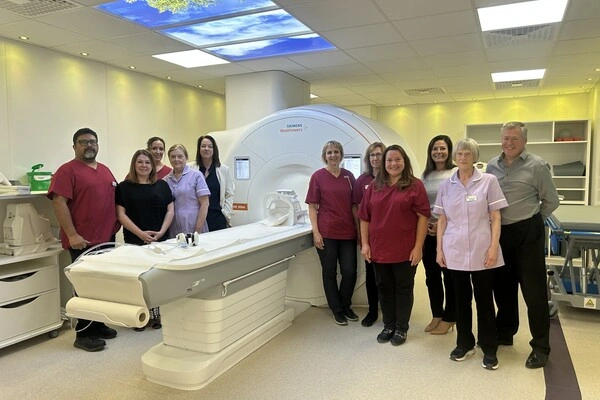
At Practice Plus Group, we also have many specialists (radiographers, reporting radiographers, sonographers, echocardiographers) who are able to help carry out different types of diagnostic imaging.
Types of diagnostic imaging scans
From ultrasound to MRI, there’s a wide range of diagnostics scans used to investigate different parts of the body, specific conditions, and to help manage pain. In the sections below, we delve deeper into what’s available at Practice Plus Group and how the different services can help you.
MRI scans
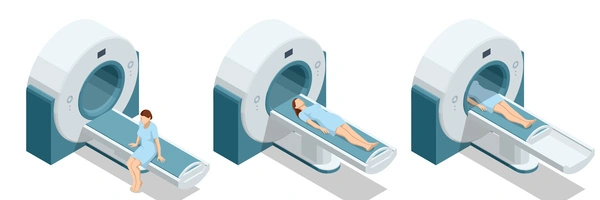
Magnetic resonance imaging (MRI) is a type of scan that uses magnetic fields and radio waves to diagnose conditions that affect tissue and bone in any part of the body. They’re used to help diagnose and monitor conditions affected the brain, joints, organs, and soft tissue. During an MRI scan, the patient lies inside the scanner – a large tube – while the scan takes place.
Ultrasound scans
An ultrasound scan builds up a picture of part of the inside of the body using sound waves that cannot be detected by a human ear. They are specifically used to monitor the development of a foetus, diagnose issues with organs, blood vessels, muscles, and joints. A small, hand-held sensor is pressed carefully against the skin surface above the area to be viewed.
X-ray imaging
X-rays are used by medical professionals to image various parts of the human body to aid diagnosis. They’re particularly good at diagnosing bone fractures, dental issues, and lung infections. Diagnostic X-rays are a controlled and very small amount of radiation which are able to pass through the body recording an image on a light-sensitive detector or computer screen.
Preparing for your scan
If you’re having an MRI scan, you may have been sent a safety questionnaire. Please take the time to fill this in. If you’ve answered any questions ‘Yes’, you’ll need to contact the booking team to let them know. Don’t worry if you don’t have a questionnaire, we’ll have one waiting for you when you arrive for your scan. Patients needing an ultrasound may need to fast or arrive with a full bladder whereas with X-rays, there’s generally no preparation required.
What to bring and wear to your scan
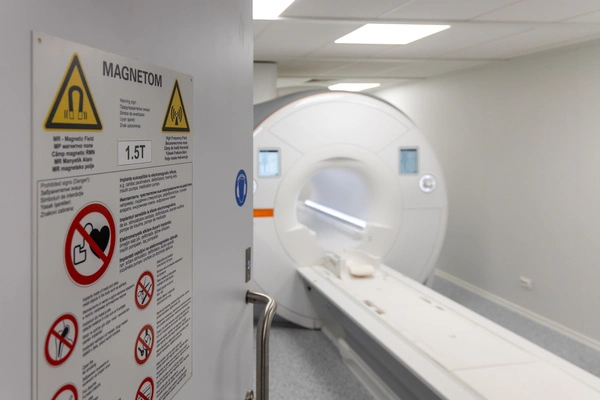
On the day of your diagnostic imaging, don’t forget to bring the safety questionnaire with you if it’s been pre-sent. If you’re having an X-ray or MRI scan, remember to wear clothes without metal parts (i.e. zips, buttons, jewellery etc) or dense, large decorations. These will damage the scanner and distort the images taken.
Dietary or medication considerations
This will depend on the type of scan you’re having. For example, if you’re having an ultrasound, you may be instructed to arrive with a full bladder or having fasted for a specific length of time. On the other hand, X-rays don’t generally require fasting or stopping certain medication. For MRI scans, dietary or medication steps may be required depending on the body part being scanned. This is to help improve the quality of the images taken.
Managing anxiety and claustrophobia
Did you know that it’s estimated that every year, around two million MRI scans are not performed due to patients suffering from claustrophobia?1
Anxiety generated by diagnostic scans is not uncommon but can be managed to the point where scans are able to go ahead. If you’re struggling with anxiety or claustrophobia due to an MRI scan, the following guide may be useful:
For MRI patients: To start the procedure, you’ll be asked to lie down on a bed, which will slowly slide into the MRI scanner. Once you’re comfortable inside the scanner, the radiographer will leave the room and the scanning process will begin. You will need to try your best to remain as still as possible when in the scanner. This is to help ensure the images produced are clear enough for results to be accurate.
If at any point during the scan you feel uncomfortable to the point the scan needs to stop, you’ll be given a buzzer to squeeze. This allows you to speak directly to the radiographer. The scanner is very noisy, but don’t worry: this is due to the electrical current passing through the machine. To help dampen the noise, you’ll be given earplugs and headphones.
For ultrasound patients: You’ll be asked to lie on an examination table and a sonographer will apply a clear gel to the area being scanned. The sonographer moves a probe over the skin which produces a live image. Depending on what’s being scanned, you may be asked to hold your breath or change position to get a clearer image. Once the scan is over, the gel is wiped away and a scan report compiled.
For X-ray patients: Depending on what’s being scanned, you’ll either lie on an examination table or the affected body part will be placed against a detector. The radiographer will help if you need assistance getting into a specific position.
During the scan: what happens and how long it takes
The MRI scanner itself is very noisy and during the procedure, you’ll hear loud tapping and banging noises. This is nothing to worry about; the noise is caused by electricity passing through the coils within the magnets and is all part of the process to diagnose and treat your specific issue. Usually, MRI, ultrasound scans and X-rays take between 15-30 minutes but it depends what’s being scanned.
During an MRI and X-ray you’ll need to stay very still to help the radiographer produce high-quality results. Ultrasound scan patients may be asked to change position to get better quality images.
After the scan: analysis, results, and follow-up
For MRI patients, when the scan is over the machine will quieten down and the table you’re lying on will move you out of the scanner. Your medical imaging scan results will be read by a radiologist and sent back to your referrer. These will then be discussed with you. Private patients generally receive their results around three working days after their scan. Both you and the referrer will receive a copy of your report (unless you self-referred).
X-ray patients will receive their results on the same day as their consultation while the results for ultrasound scans are not always available on the same day. Ultrasound patients may need to return to the hospital at a later date to discuss their results.
Costs, access, and insurance options
The price of a scan generally varies depending on the following factors:
UK location
The type of scan needed
How many body parts need scanning
The clinic or hospital chosen to carry out the scan.
You can pay for your scan in a number of different ways. First, you can self-pay. This can be done in one of two ways:
Via a single, one-off lump sum
By spreading the cost over a set time period via a payment plan. This method may not be available at all Practice Plus Group locations, so please check before you proceed.
Insured patients can also cover the cost of their scan by using existing private medical insurance. Patients opting for this method of payment will need to check their policy covers scans before proceeding.
Safety, risks, and comfort tips
Scans are generally very safe. In some cases – pregnant women, for example – MRI scans and X-rays may not be suitable due to the unknown side effects of magnetic fields on unborn babies, but Ultrasound scans carry no risk. A very small number of patients may need a contrast agent during their MRI scan which can cause an allergic reaction. This is extremely rare and the side effects are mild.
With regards to staying calm and comfortable during a scan, here are some tips to try:
Take a look at our diagnostic imaging FAQs for more information about MRI, ultrasound scans, and x-rays.
How long does each scan take?
This depends on the type of scan you’re having and how many parts of the body are being scanned. An MRI or ultrasound scan on one body part generally takes around 20 minutes, whereas an X-ray takes about 10 minutes.
Are scans safe during pregnancy?
MRI and X-ray scans may not be suitable for pregnant women. This is because the side effects of magnetic fields on unborn babies are currently unknown.
Do I need to fast or prepare for a scan?
This depends on the type of scan you’re having. Your consultant will be able to advise as to how best you can prepare.
Will I feel discomfort during the scan?
While some MRI scanners can be noisy, you shouldn’t feel any discomfort. MRI and ultrasound patients can stop their scans at any point if they feel discomfort by squeezing the button provided. X-rays are generally very quick and it’s highly unlikely that patients would feel any discomfort during the procedure.