If your symptoms are becoming difficult to manage and non-surgical treatments have proved unsuccessful, carpal tunnel surgery may be recommended. For patients looking for carpal tunnel surgery in Somerset, Practice Plus Group Hospital, Shepton Mallet offers private treatment with access to specialist hand and wrist care.
Private carpal tunnel surgery at a glance
Carpal tunnel surgery can relieve persistent numbness, tingling, pain, and weakness when non-surgical treatments have proved unsuccessful. Standard and minimally invasive surgery options are available at our Somerset hospital.
Practice Plus Group Hospital, Shepton Mallet offers specialist private treatment. This includes a £145 consultations, day-case surgery, and recovery plans specifically tailored to each patient.
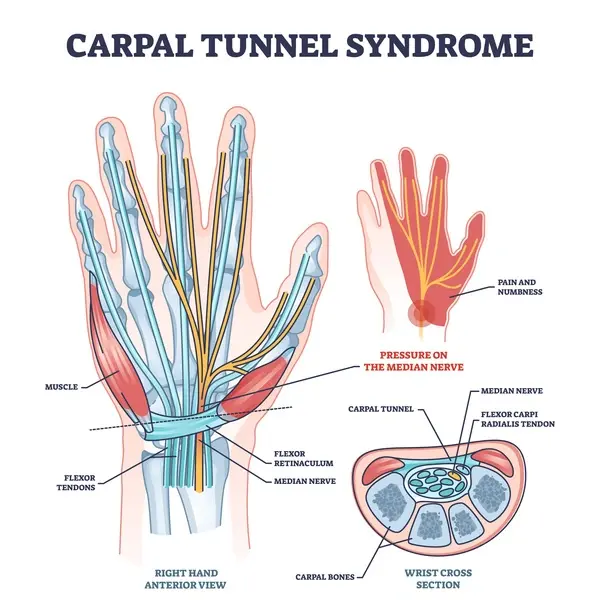
Carpal tunnel syndrome (often shortened to CTS) happens when the median nerve is compressed as it travels through the carpal tunnel in your wrist.
The median nerve helps provide feeling and movement in parts of your hand. When pressure builds around the nerve, it can cause uncomfortable symptoms that may gradually become more noticeable.
Common symptoms of CTS can include:
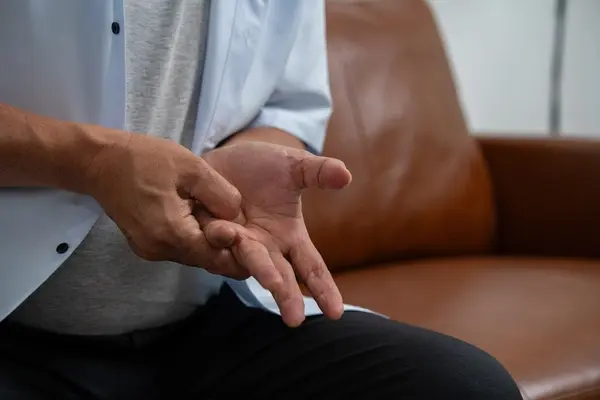
numbness in your hand or fingers
tingling or pins and needles
pain or aching in the hand, fingers or arm
weakness in the thumb
difficulty gripping or holding objects
symptoms that are particularly noticeable at night.
Symptoms often develop gradually and can come and go. For some people, they eventually begin to interfere with sleep, work, hobbies, and everyday activities.
Carpal tunnel syndrome develops when the median nerve becomes compressed inside the wrist.
There are a range of factors that can increase your likelihood of developing CTS. These include:
pregnancy
previous wrist injuries
arthritis
diabetes
family history of the condition
activities that involve frequently bending the wrist or gripping objects firmly.
With that said though, in some cases there may not be one obvious cause.
When might you need carpal tunnel surgery?
Having carpal tunnel syndrome does not automatically mean you will need surgery.
For milder symptoms, treatment might begin with more conservative measures such as:
wearing a wrist splint at night
reducing activities that put repeated pressure on the wrist
steroid injections.
physiotherapy exercises.
If your symptoms continue to get worse, do not improve with other treatments or are significantly affecting your daily life, you may be referred to a specialist to discuss surgery.
The decision is individual. Your consultant will assess your symptoms, medical history, and hand and wrist before discussing the treatment options that are most appropriate for you.
In some cases, additional investigations such as nerve conduction tests may also be recommended. These will help to confirm the diagnosis or assess general nerve function.
Where can I get carpal tunnel surgery in Somerset?
The hospital provides quality consultant-led care for patients across Somerset and the surrounding area. This includes a range of orthopaedic procedures (such as hand and wrist). Initial specialist consultations are typically available soon after the booking enquiry is made.
For patients paying for their own CTS treatment, you won’t need a GP referral. Instead, you can drop us a line directly by calling us on 000 or submitting an enquiry form.
What types of carpal tunnel surgery are available in Somerset?
At Practice Plus Group Hospital, Shepton Mallet, patients can access standard carpal tunnel release as well as a minimally invasive keyhole approach. The different surgical techniques are detailed below.
During traditional open carpal tunnel release, your surgeon makes a small incision in the wrist or palm to reach the ligament placing pressure on the median nerve.
The ligament is released to create more room inside the carpal tunnel and relieve pressure on the nerve.
At Practice Plus Group, standard carpal tunnel release is usually carried out as day surgery under local anaesthetic.
Practice Plus Group Hospital, Shepton Mallet also offers keyhole carpal tunnel surgery, sometimes described as minimally invasive carpal tunnel release.
This approach uses a smaller incision to relieve pressure on the median nerve and is performed under local anaesthetic. It is available through Miss Alison Edwards, Consultant Orthopaedic Surgeon and specialist in hand and wrist surgery.
The best type of surgical technique for you will depend on a number of different factors.
During your consultation, your specialist will discuss your symptoms, diagnosis, general health, and individual circumstances before recommending the best course of action. He or she will be able to answer any questions you have about the different surgical techniques, or carpal tunnel procedures in general.
Want fast access to healthcare?
Avoid long waiting lists. Book time with a specialist today.
How much does carpal tunnel surgery cost in Somerset?
If you’re considering private treatment, knowing the cost upfront can make planning your care much easier.
At Practice Plus Group Hospital, Shepton Mallet, there are two main costs to consider: the initial consultation and the surgery itself (if needed). The costs of these are listed below:
Treatment
Cost
Initial consultation
£145
Standard carpal tunnel surgery
£2,349
Keyhole carpal tunnel surgery
£3,149
The initial private consultation is £145 and includes an in-depth consultation, along with x-rays, blood tests, and swabs (if needed).
Your consultant will discuss whether surgery is the right option for you.
If you’re seeking carpal tunnel surgery via the NHS, waiting times can vary. You can check up-to-date local figures through the NHS My Planned Care service.
What happens during carpal tunnel surgery?
Carpal tunnel release surgery is usually a relatively short procedure. This means that the majority of patients will be able to return home on the same day.
You’ll first meet your consultant, who will review your symptoms, examine your hand and wrist, and discuss the treatment options with you.
They may recommend further tests if required. This can include a nerve conduction test to assess how well the median nerve is working.
You’ll also have the chance to ask questions about the procedure, recovery, and any potential risks before proceeding to surgery.
Standard carpal tunnel release at Practice Plus Group is generally performed under local anaesthetic. This means that the area is numbed while you remain awake.
Your surgeon makes an incision to reach the carpal tunnel before cutting the ligament that’s putting pressure on the median nerve. The incision is then closed and your hand is dressed. The standard procedure itself usually takes around 10-20 minutes.
The minimally invasive approach available at Shepton Mallet is also typically performed under local anaesthetic.
Carpal tunnel release is normally carried out as day surgery. This means the majority of patients will be able to return home on the same day as the procedure, provided the clinical team is satisfied they’re ready to leave.
You’ll receive individual instructions explaining how to care for your hand and wound after surgery.
How long does recovery take after carpal tunnel surgery?
Recovery from carpal tunnel surgery varies from person-to-person. Factors including the severity of your symptoms, the type of work you do, and your individual healing can all affect how quickly you return to normal activities.
After surgery, your hand will be bandaged, and you’ll usually be encouraged to keep your fingers moving gently to reduce stiffness.
Keeping your hand raised can also help with swelling during the early stages of recovery.
Be sure to follow the wound-care and pain-relief advice given by your clinical team rather than trying to rush your recovery.
You can generally begin using your hand for light activities as soon as it’s comfortable to do so. Strenuous activity and heavy lifting should be avoided while your wrist heals.
We advise avoiding strenuous or heavy activities for at least six weeks following carpal tunnel surgery.
Your return to work will depend largely on your job.
For example, someone working at a desk may be able to return sooner than somebody whose work involves manual labour, lifting, operating machinery, or frequent hand movements.
Practice Plus Group’s current guidance suggests the following guidelines around returning to work:
1-2 weeks for sedentary work
2-4 weeks for light manual work
6-12 weeks for heavier manual work.
Please remember these are general estimates rather than fixed deadlines. Always follow the advice given by your surgeon.
Practice Plus Group advises that patients typically wait at least two weeks before considering getting back behind the wheel. This is because recovery times vary between patients.
Before driving, you should be able to safely control the vehicle and perform an emergency manoeuvre without pain or restriction. Check your surgeon’s advice and your motor insurer’s requirements if you’re unsure.
Meet your carpal tunnel specialists in Somerset
Patients choosing private hand and wrist surgery at Shepton Mallet can be treated by Miss Alison TJ Edwards or Mr Pouya Akhbari – both Consultant Orthopaedic Surgeons.
Mr Pouya Akhbari
Mr Akhbari specialises in hand and wrist surgery as well as shoulder and elbow procedures. He can also help with sports injuries and is an expert in trauma and orthopaedic care.
Miss Edwards specialises in hand and wrist surgery and has particular expertise in procedures including carpal tunnel release, trigger finger surgery, ganglion cyst removal and Dupuytren’s treatment. She also offers minimally invasive carpal tunnel surgery.
A Somerset patient’s experience of carpal tunnel surgery
Somerset resident Humphrey Gervais chose Practice Plus Group Hospital, Shepton Mallet after worsening symptoms began affecting his sleep and everyday activities.
Before surgery, he experienced numbness, tingling and difficulty gripping, writing and using tools. Following treatment, Humphrey reported being able to return to activities including going to the gym and using his hand normally again.
Speaking about his care, Humphrey said:
“The whole experience was really professional.”
His experience is individual and results after carpal tunnel surgery will vary from patient to patient.
You can generally contact Practice Plus Group directly without needing a GP referral, making it straightforward to arrange an initial consultation and discuss your options.
Practice Plus Group works the following major UK health insurers:
Bupa
AXA Health
Aviva
Vitality
WPA
Allianz
Healix.
Before you embark on insured treatment, you’ll need to check with your insurer if your policy covers carpal tunnel surgery.
Contact your insurance provider before booking treatment to confirm:
whether carpal tunnel surgery is covered
whether you need a GP referral
whether prior authorisation is required
whether you’ll need to pay an excess
whether there are any limits or exclusions on your policy.
Payment plans are also available for eligible self-pay patients who would prefer to spread the cost of private surgery rather than paying the full amount upfront.
Terms and eligibility apply, so check the latest finance information before applying.
Why choose Practice Plus Group Hospital, Shepton Mallet?
If you’re looking for private carpal tunnel surgery in Somerset, choosing where to have your treatment is an important decision.
At Practice Plus Group Hospital, Shepton Mallet, patients can benefit from:
access to a specialist hand and wrist consultant
standard and minimally invasive carpal tunnel surgery options
treatment at a time to suit you
clear treatment pricing
self-pay and private medical insurance options
day-case surgery, helping you return home without the need for an overnight hospital stay.
Practice Plus Group Hospital, Shepton Mallet provides both private and NHS care for patients in Somerset and the surrounding area.
Book carpal tunnel surgery in Somerset
If carpal tunnel symptoms are affecting your sleep, work or day-to-day life, you don’t have to simply put up with them.
An initial consultation with a hand and wrist specialist can help establish what’s causing your symptoms, whether surgery is necessary and which treatment option may be most suitable for you.
A private consultation at Practice Plus Group Hospital, Shepton Mallet costs £145.
Still haven’t found the CTS in Somerset information you’re looking for? Perhaps our FAQs can help!
At Practice Plus Group Hospital, Shepton Mallet, standard carpal tunnel surgery currently costs £2,349, while keyhole carpal tunnel surgery costs £0. An initial private consultation costs £145.
Private carpal tunnel surgery at Practice Plus Group is available at a time to suit you.
Surgery may be considered if your symptoms are getting worse or treatments such as wrist splints or steroid injections haven’t helped. A specialist will assess your symptoms and discuss whether an operation is appropriate for you.
Carpal tunnel release is commonly carried out under local anaesthetic. This means your hand and wrist are numbed but you remain awake during the procedure.
Standard carpal tunnel release at Practice Plus Group usually takes around 10-20 minutes. The exact procedure time can vary depending on the surgical technique used and your individual treatment.
Many people can gradually return to normal activities during the first month, although complete recovery can take longer. Most people are fully recovered by around three months. Recovery varies between patients, particularly if symptoms were severe before surgery.
Many patients may be able to drive again at around two weeks, provided they can safely control the vehicle and their wound has healed sufficiently. Return to work varies according to your job, with desk-based workers generally returning sooner than people carrying out heavy manual work. Always follow your surgeon’s individual advice.
Yes, carpal tunnel surgery may be covered by private medical insurance, depending on your policy. Practice Plus Group works with a range of major UK insurers. Contact your insurer first to confirm your level of cover, any referral requirements and whether you need an authorisation code.
Check if we acceptyour insurer
How to get started
1
Get referred – Ask your GP to refer you to us.
2
Confirm cover – Contact your insurer to check your cover.
3
Get authorisation – Ask your insurer for a code.
4
Get booked in – Contact us to book your consultation.
Acknowledgements and clinical review
This page has been medically reviewed and approved by Mr Pouya Akhbari, Consultant Orthopaedic Surgeon at Practice Plus Group Hospital, Shepton Mallet. He is a GMC-registered consultant surgeon (GMC: 7043774), with over a decade of clinical experience and holds MBBS, MSc, FRCS (Tr&Orth), and MD qualifications. Mr Akhbari is an expert in hand and wrist surgery, sports injury, trauma and orthopaedics, and shoulder and elbow surgery. He has published regular medical journals on joint disease, metabolic profiling, and upper limb surgery.
All content on this page is produced by the Practice Plus Group digital content team and clinically reviewed by consultant specialists to ensure accuracy, patient safety, and alignment with current UK clinical best practice. Content is approved under Practice Plus Group’s clinical governance framework.
Pouya Akhbari General Medical Council number: 7043774
This page is regularly reviewed and updated to reflect changes in clinical evidence, surgical practice, and patient safety standards. The last clinical review was completed on 9/6/2026, with the next review scheduled for 9/06/2027.
James Wood, Content Specialist
This article was co-written by Content Specialist, James Wood. Our Content Specialist, James, has been writing articles and blogs for Practice Plus Group since 2022. He has more than a decade of experience as a copywriter within a range of different backgrounds and works closely with medical professionals to deliver information that's easy-to-read and patient-focused.