For anyone wondering how long an MRI scan takes, you’ve come to the right place. This blog takes a deep dive on how long you can expect an MRI to last depending on what’s being scanned, looks at how you can prepare, and investigates what happens during an MRI scan.
MRI scans typically take 15–60 minutes, depending on the body part being examined, the level of image detail required, and whether contrast dye is used. A full-body MRI scan may take 1–2 hours.
The overall appointment is usually longer than the scan itself. This is to allow for check-in, safety screening, changing clothes, preparation, and getting positioned and comfortable in the scanner.
How long does an MRI take?
Most MRI scans take anywhere between 15 minutes and 60 minutes, depending on the body part being scanned, the number of images needed, and whether contrast dye is used.
Your full MRI appointment may take longer than the scan itself because you’ll need time to check-in, change into a hospital gown, go through the safety screening, and get positioned correctly in the MRI scanner.
Firstly, what is an MRI scan? MRI stands for magnetic resonance imaging and an MRI scan uses a strong magnetic field, strong magnets and radio waves to create detailed images of the inside of the body. It is especially useful for looking at soft tissues, joints, organs, the brain, spinal cord, muscles, ligaments and blood vessels.
Depending on location, Practice Plus Group offer private MRI scans for up to six body parts with prices starting from £350 for one body part.
At a glance: MRI scan timings
An MRI scan usually takes between 15 to 60 minutes depending on what’s being scanned.
Smaller areas (e.g. a knee, ankle, or wrist) may not take as long while larger or more complex areas, such as the abdomen, pelvis, heart or full spine, will likely take longer.
You may need to arrive a few minutes early for the pre-scan preparation. You’ll also be given earplugs and headphones to help dampen the noise of the MRI machine.
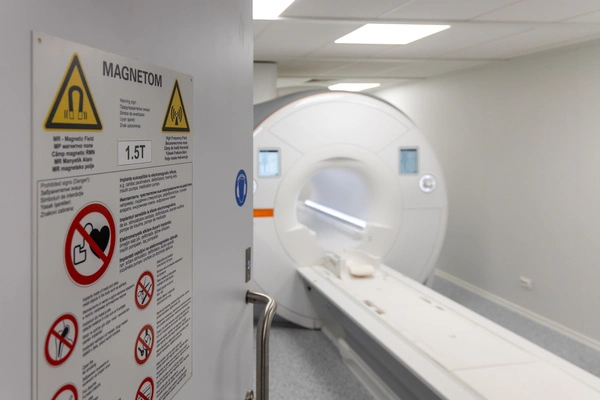
Before entering the scanner, you’ll need to remove metal items such as jewellery, hair clips, hearing aids, and watches as these will interfere with the magnet in the machine.
A word from our MRI specialist
“An MRI scan usually takes between 15 and 60 minutes, depending on which part of the body is being scanned. Some scans may take a little longer if we need to look at things in more detail or if multiple body parts need to be scanned.”
Kerri Leaf, Diagnostic Clinical Lead, Practice Plus Group Diagnostics, Buckinghamshire
Why do MRI scan times vary?
MRI scan times vary because every scan is tailored to the part of the body being examined and the clinical question your doctor or specialist wants to answer.
A knee MRI, for example, is usually quicker than a full spine MRI because it focuses on a smaller area and therefore needs fewer images. An abdominal MRI may take longer because the scanner needs to capture detailed images of several organs.
Your MRI may take longer if:
more than one body part is being scanned
highly detailed images are needed
contrast dye is required
the scan involves the heart, abdomen, pelvis or blood vessels
you find it difficult to stay still
extra images are needed during the appointment (e.g. to focus on a particular area where there maybe a specific finding)
the scan is investigating a complex injury or condition.
The radiographer will explain what to expect before the scan starts.
What happens during an MRI scan?
During an MRI scan, you lie on a flat bed that moves slowly into the MRI scanner. The scanner is shaped like a large tube that captures detailed images of the body using a strong magnetic field and radio waves. When the scan is over, a radiologist will review your images and prepare a report for your referring clinician.
While the scan is in progress, you’ll need to stay as still as possible. Movement can blur the images being taken, which may mean some sections need to be repeated.
MRI scanners are quite noisy due to the electrical current passing through the machine. The scanner will likely make loud tapping, knocking or buzzing sounds – don’t worry, this is normal. You will usually be given earplugs and headphones to help reduce the noise, and you may be able to listen to music depending on the scanning centre.
If there are any problems or you feel uncomfortable during the scan, you can speak to the radiographer through an intercom. He or she will be able to help.
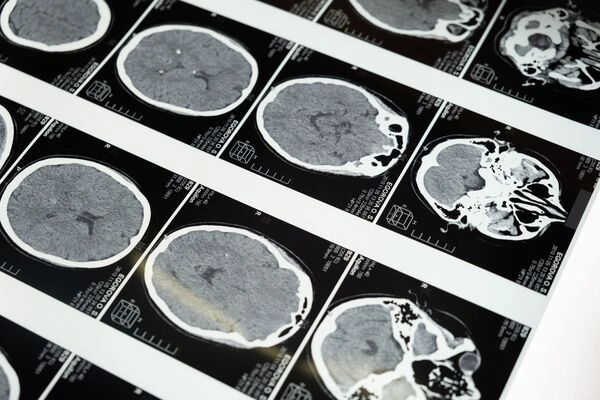
A brain or head MRI scan usually takes up to 30 minutes.
It may be used to investigate symptoms such as headaches, dizziness, seizures, changes in vision or hearing, neurological symptoms, or concerns affecting the brain and surrounding structures.
A shorter scan may be possible for more focused imaging. A longer scan may be needed if contrast dye is used or if the specialist needs more detailed images.
Please note, brain MRIs are only available at the following Practice Plus Group locations:
Emersons Green
Shepton Mallet
Devizes
Barlborough
Buckinghamshire
How long does a spine MRI take?
Depending on the area of spine that needs to be scanned, the total time in the scan room will likely be between 15-60 minutes. This will depend on whether your whole spine is being scanned or just one part e.g. neck only.
A spine MRI may be used to examine back pain, neck pain, sciatica, slipped discs, trapped nerves, spinal stenosis, or changes affecting the spinal cord.
How long does a knee MRI take?
An MRI scan on one knee usually takes up to 30 minutes, while two knees will take up to an hour.
It may be used to look at the meniscus, cartilage, ligaments, tendons, bones, and surrounding soft tissues. Knee MRI scans are commonly used when symptoms include pain, swelling, instability, locking, or reduced movement.
How long does a shoulder MRI take?
An MRI scan on one shoulder usually takes up to 30 minutes, while both shoulders will take up to an hour.
It can help assess the rotator cuff, tendons, ligaments, cartilage, joint surfaces, and surrounding soft tissues. It may be recommended for shoulder pain, weakness, reduced movement or suspected tendon injuries.
How long does an abdominal MRI take?
An abdominal MRI usually takes, on average, between 15-60 minutes to complete.
It may be used to examine organs such as the liver, kidneys, pancreas, spleen, and surrounding soft tissues. For some abdominal MRI scans, you may be asked to hold your breath briefly while images are taken. This helps reduce movement and improve image quality.
How long does a pelvic MRI take?
You’ll usually spend between 15-60 minutes in the scan room.
It may be used to look at pelvic organs, soft tissues, joints, the prostate, womb, ovaries, bowel area, or surrounding structures. Some pelvic MRI scans require additional preparation, depending on the reason for the scan.
How long does a full-body MRI take?
A full-body MRI can take anywhere between 1 – 2 hours. This depends on how much of the body is being scanned and how detailed the imaging needs to be.
Full-body MRI scans are different from a standard one body part MRI. If your doctor has requested imaging for a specific symptom, a targeted MRI of the relevant area is usually more appropriate. Please note that full body MRI scans are often used as screening and are only available privately.
How long is an MRI appointment?
As mentioned earlier, your appointment will last longer than your scan.
For example, if your MRI scan takes 30 minutes, your total appointment may still take up to an hour in total. This allows time for:
arrival and check-in
completing any necessary safety questions
changing into a hospital gown (if needed)
removal of metal items
positioning you correctly on the scanner bed
explaining the scan process
carrying out the scan
getting changed afterwards.
If you are having multiple areas scanned, your appointment may be longer.
Your appointment letter should explain any specific preparations you need to make before your MRI scan. In most cases, you’ll be able to eat, drink, and take any medication you need as normal, unless you are told otherwise.
Before your scan, you may be asked to remove:
jewellery and piercings
watches
glasses
belts
coins
keys
mobile phones
removable dental items
hearing aids
bank cards
clothing with metal zips, hooks, or fastenings.
You may be asked to wear a hospital gown to make sure no metal enters the scan room. You’ll need to let the radiology team know beforehand if you have:
a pacemaker or implanted defibrillator
a cochlear implant
metal fragments in your body
surgical clips, pins, plates, or screws
an artificial joint
a medicine patch
kidney problems
allergies
claustrophobia or anxiety about the scan.
You’ll also need to let them know if there’s a chance you could be pregnant. This does not always mean you cannot have an MRI, but the team needs to check that it is safe.
Does an MRI scan have side effects?
MRI scans are generally considered safe and do not use radiation or ionising radiation. The scan itself is completely painless and most people don’t experience any side effects.
However, some may feel:
anxious or claustrophobic inside the scanner
uncomfortable from lying still
warm during the scan
sensitive to the scanner noise
temporarily light-headed after getting up at the end.
In some cases, a contrast dye is used to help improve the image quality. If this is the case with you, the radiology team will explain any possible side effects and safety checks before it is administered.
It’s normal to feel nervous before an MRI – especially if it’s your first scan. Don’t be hesitant to lean on the radiographer – he or she is there to support you throughout the appointment and explain each step.
It may help to:
ask how long your scan is expected to take
use the earplugs or headphones provided
close your eyes before the bed moves into the scanner
breathe slowly and steadily
focus on keeping still for one image sequence at a time
let the radiographer know if you are worried.
You’ll be given a call button so you can alert the radiographer if you need help or feel uncomfortable during the scan and the radiographer will be able to communicate to you via an intercom.
A word from our MRI specialist:
“The most important thing is to try to stay as still as you can during the scan — this helps us get the clearest pictures possible.”
Kerri Leaf, Diagnostic Clinical Lead, Practice Plus Group Diagnostics, Buckinghamshire
When will I get my MRI results?
Your MRI images are reviewed by a radiologist, who prepares a report for the clinician who referred you. The timing of results can vary depending on where your scan is carried out and whether your case needs specialist review.
Private MRI scans with Practice Plus Group
Practice Plus Group offers private MRI scans for patients who want fast access to diagnostic imaging. Private MRI scans are available through self-pay and insured routes, with prices as follows:
Not yet found the information you’re looking for? Our MRI FAQs may be able to help.
How long does an MRI take?
MRI scans can take anywhere between 15 – 60 minutes to complete depending on what and how many body parts are being scanned.
How long is an MRI scan for one body part?
An MRI scan for one body part usually takes up to 30 minutes depending on the area being scanned. A knee MRI may not take as long as a pelvic or abdominal scan.
Why does my MRI appointment take longer than the scan?
Your appointment includes more than the scan itself. You may need time to check-in, attend the safety screening, change into a hospital gown, remove metal items, be positioned in the MRI scanner and get changed afterwards.
What is the quickest MRI scan?
Smaller joint scans, such as a knee, ankle, wrist, or elbow are often among the quickest. These may take around 15 – 30 minutes, depending on the images needed.
What MRI scans take the longest?
Whole spine, abdominal, pelvic, and multiple body part MRI scans can take longer than smaller areas such as the knee.
How long does a head MRI take?
On average, an MRI scan on one body part usually takes up to 30 minutes. Timings depend on the reason for the scan and whether contrast dye is needed.
How long does a back MRI take?
Generally, MRI scans take up to 30 minutes for one body part. A full spine MRI takes longer than one on specific spinal sections because it captures images of the neck, upper back, and lower back.
Do I have to stay still for the whole MRI scan?
You need to stay as still as possible while images are being taken. Some image sequences last only a few minutes, and there may be short pauses between them. Moving during the scan can blur the images and affect the quality of image detail.
Can I wear my own clothes during an MRI?
Sometimes, but only if your clothing has no metal parts. You may be asked to change into a hospital gown to make sure there is no metal near the scanner.
Can I wear hearing aids during an MRI scan?
No, you will need to remove hearing aids before entering the MRI scan room. The radiology team will explain what needs to be removed before your scan.
Why do I need to remove credit cards before an MRI?
The MRI scanner uses a strong magnetic field. Items such as credit cards, bank cards, watches, phones, and hearing aids can be damaged or affected by the magnets, so they must be left outside the scan room.
Is an MRI scan painful?
No, an MRI scan is not painful. However, some people find it uncomfortable to lie still for a prolonged period of time, or feel anxious inside the scanner. Please speak to the radiographer if you are worried or check out our guide on how to stay calm during an MRI scan.
Are there side effects after an MRI scan?
Most people have no side effects after an MRI scan. If contrast dye is used, the team will explain any possible side effects and aftercare beforehand.
What is the waiting time for an MRI scan?
MRI scan waiting times can vary depending on whether you are being referred through the NHS or choosing to book privately. NHS waiting times may depend on local demand, clinical urgency, and the type of scan needed. If you are looking for faster access, a private MRI scan may help you get diagnostic imaging sooner, with appointments often available more quickly.
Kerri qualified as a radiographer from Kingston University in 2001. She continued her training at Kings College London and gained her Pg Dip in Diagnostic Ultrasound in 2003. After working extensively in the NHS Kerry joined PPG in 2013. Kerri has continued to develop her breadth of skills and completed her PgCert in MSK ultrasound in 2020. Kerry performs a wide range of scans including Gynae, Abdominal and MSK ultrasound. In 2023 Kerri took on the role of Diagnostic Clinical Lead and she looks forward to the challenge of leading the clinical team, ensuring demand of the diagnostic service is met, whilst maintaining smooth running of the patient journey along with scanning ultrasound patients in clinic.
All content on this page is produced by the Practice Plus Group digital content team and clinically reviewed by consultant specialists to ensure accuracy, patient safety, and alignment with current UK clinical best practice. Content is approved under Practice Plus Group’s clinical governance framework.
This page is regularly reviewed and updated to reflect changes in clinical evidence, surgical practice, and patient safety standards. The last clinical review was completed on 15/02/2026, with the next review scheduled for 15/02/2027.
James Wood, Content Specialist
This article was co-written by Content Specialist, James Wood. Our Content Specialist, James, has been writing articles and blogs for Practice Plus Group since 2022. He has more than a decade of experience as a copywriter within a range of different backgrounds and works closely with medical professionals to deliver information that's easy-to-read and patient-focused. When he's not writing medical pieces, James is busy playing sports or pub quizzing.