

Estimated reading time: 5 minutes
If you need your tonsils removed, why not have it done privately? This blog looks at the common causes and considerations of private tonsillectomy costs in the UK.

Private tonsillectomy at a glance
- Waiting time: 4-6 weeks
- Cost: £2,999
- Ways to pay: self-pay, insured, payment plans
On this page:
This guide explains private tonsillectomy costs in the UK and the factors that influence pricing. It also covers what a tonsillectomy involves, who may need one, recovery and risks, and why going private can mean faster access and more flexible care.
How much does a private tonsillectomy cost in the UK?
While there are factors that can influence the cost of a private tonsillectomy (such as location, chosen private healthcare provider, consultant availability and experience level), in 2026 you can generally expect to pay between £2,800 and £4,000.
The table below provides an illustration of the current costs of a tonsillectomy at the main private healthcare providers around the UK.
Name of provider/hospital | Cost of private tonsillectomy |
|---|---|
Practice Plus Group | £2,999 |
Spire Hospital (Bristol) | from £3,691 |
Nuffield Health Highgate Hospital (London) | from £3,040 |
Circle Health Group Ridgeway Hospital (Swindon) | from £3,720 (includes consultation fee) |
Average tonsillectomy cost in the UK
In 2026, the average cost of private tonsillectomy in the UK is between £2,800 – £4,000.
What’s included in your private care package
This varies depending on your chosen private healthcare provider. With Wellsoon from Practice Plus Group, you’ll pay £2,999 (plus £145 for your initial consultation). This covers everything from your treatment to any medication needed afterwards.
Factors that affect cost
The main factors that can affect private tonsillectomy costs (and the costs of other private treatments) are:
- Location of hospital
- Consultant availability and expertise
- Chosen private healthcare provider
Please note that with Wellsoon from Practice Plus Group, our prices are fixed. This means you won’t pay more for your tonsillectomy because the hospital you’ve chosen is in a specific part of the country or a consultant has an extra year of experience. The price you see is the price you pay which, for a private tonsillectomy, is £2,999 (plus £145 for your initial consultation).
What is a tonsillectomy?
A tonsillectomy is one of the most common types of ear, nose, and throat surgery. It’s usually carried out under general anaesthetic and sees the removal of the tonsils in order to treat:
- Recurring tonsillitis
- Obstructive sleep apnea,
- Breathing or swallowing issues caused by enlarged tonsils.
A tonsillectomy can also provide relief from frequent infections, pain, and airway obstruction.
What the tonsils do and why they’re removed
Tonsils act as a first defense against bacteria and viruses that enter through your mouth and nose. The tonsil tissues produce antibodies that help fight infections and are particularly useful to young children whose immune systems have not fully developed.
They are normally removed (via a tonsillectomy procedure) in the event of recurring and severe throat infections or due to breathing issues caused by enlarged tonsils which can affect sleep.
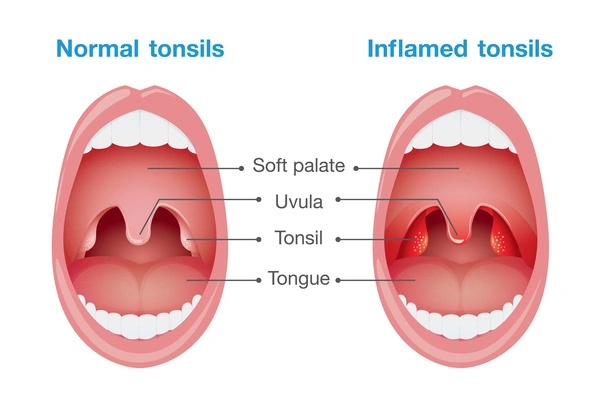
The image below shows the difference between normal and inflamed tonsils.
Common symptoms and causes
Among the most common symptoms of tonsillitis are:
- Sore throat or pain when swallowing
- Bad breath
- Swollen tonsils
- Coughing
- Head and ear aches
- Temperature of more than 38°C or 100.4°F
Who might need a tonsillectomy?
The most common criteria for a tonsillectomy include:
- Sore throats caused by tonsillitis
- A chronic infection of the tonsils which stops you from functioning normally, eating or drinking or going to work or school
- Seven or more episodes of tonsillitis in the preceding year which needed treatment
- Five or more episodes of tonsillitis in each of the two preceding years
- Three or more episodes of tonsillitis in each of the three preceding years.
If tonsillitis and swollen tonsils are affecting your quality of life, talk to your doctor about tonsil removal.
Why consider a private tonsillectomy?
As with a lot of other different treatments, one of the main reasons for choosing to go private is the speed at which you can access healthcare. While that’s the main reason, there are other factors that can play a part in the final decision. We explore what these are below.
Key benefits of going private for tonsillectomy
Here are some of the main benefits of choosing private tonsillectomy:
- Faster access to healthcare: currently, the waiting times for NHS ear, nose, and throat treatment at the Royal Wolverhampton NHS Trust is 47 weeks.1 To provide more context and a wider picture, it’s currently 49 weeks at the North Cumbria Integrated Care NHS Foundation Trust, and 41 weeks at the University College Hospitals NHS Foundation Trust in London. More information on the most up-to-date ear, nose, and throat waiting times at NHS hospitals across the country is available on the My Planned Care website.
(Practice Plus Group is not responsible for and does not control the content displayed on external websites.) - Flexible timings: private healthcare provides the opportunity to book your consultation and treatment (if needed) at a time that suits you.
- Consistency of care: private tonsillectomy will likely mean you have the same consultant and nursing team throughout your healthcare experience, from consultation to treatment and beyond!
Choosing the right ENT surgeon
There are a few things to bear in mind when looking for an approved consultant. The information below sets out what to look out for, red flags to avoid, and what to ask at your consultation.
How to find a qualified ENT consultant
There’s plenty to think about when it comes to choosing an ENT consultant for your private treatment. Here’s a handy list to get you feeling prepared and ready to make the right choice:
1 – Ask yourself and clarify what you’re looking for in a potential consultant
2 – Check their qualifications and accreditations
3 – Read reviews from past patients
4 – Shop around to explore the different costs of treatment
5 – Check if your potential consultant adheres to regulatory guidelines.
Meet our ENT surgeons
Choosing an ear, nose, and throat surgeon shouldn’t be a stressful experience. Remember to trust your instincts and choose a consultant that makes you feel confident and cared for.
From ear wax removal to tonsillectomy, our first-class consultants provide healthcare for a range of ear, nose, and throat specialities. Use the carousel below to cycle through the consultants available to help.
-

Animesh Banerjee
Ear, nose and throat
Practices at:
- Southampton
-
Attila Juhasz
Ear, nose and throat
Practices at:
- Emersons Green
-

Ourania Tramontani
Ear, nose and throat
Practices at:
- St Mary's Portsmouth
-
Samir Gendy
Ear, nose and throat
Practices at:
- Emersons Green
- Devizes
-
Szabolcs Szigethy
Ear, nose and throat
Practices at:
- Shepton Mallet


What to ask at your consultation
Before your initial consultation, it’s a great idea to write down any questions you may have. To make things easier for you, here’s a list of some questions you may want to take into your consultation to ask about the tonsillectomy procedure:
- What are the potential short and long-term side effects of my surgery?
- How do I know if surgery is right for me?
- What happens during my surgery?
- What are the pros and cons of my surgery?
- How healthy do I need to be before surgery?
- Will my insurance cover my surgery?
- Can I eat and drink the day before my surgery?
Recovery after a tonsillectomy
Following your tonsillectomy, you might find swallowing difficult but you’ll be encouraged to eat and drink as this aids recovery. Drinking cold water is a great idea as it helps relieve pain by contracting the blood vessels – as well as hydrating you. You’ll need to avoid fizzy drinks and alcohol as they can result in bleeding. Regular tooth brushing and using a mouthwash will help prevent infection.
Typical recovery timeline and pain management
The recovery time from tonsillectomy will depend on your general health. For most patients, it takes around two weeks but this can vary.
What you can eat and drink after surgery
You’ll be encouraged to drink cold water, not only to stay hydrated but to provide pain relief. You should avoid alcoholic and fizzy drinks as these may cause bleeding. While swallowing may be difficult, you’ll be encouraged to eat following your surgery. Start with plain foods like bread and avoid eating anything spicy for a week or so after your tonsillectomy.
Signs to contact your doctor
While a tonsillectomy is a relatively low-risk procedure, there are some side effects. 1 in 30 adults experience some bleeding after their operation and it’s common for anything up to 10 days after surgery. Minor bleeding usually clears up by itself however, if bleeding is severe or if you are coughing up blood, you should seek medical attention immediately. Use the emergency contact number we have given you or call 111.
Risks, side effects, and aftercare
One side effect of the tonsillectomy procedure is that you are likely to experience some discomfort for a week or two afterwards. This can be managed with painkillers.
According to the Academy of Medical Royal Colleges and the National Library of Medicine, the benefits of a tonsillectomy include:
- No further instances of tonsillitis
- Fewer throat infections
- Better quality of sleep
- Less missed time at work.2
Where to get a tonsillectomy
Tonsillectomy is available via the NHS or privately at four Practice Plus Group hospitals. If you’re a private patient, the procedure costs £2,999 (plus £145) for your initial consultation.
Practice Plus Group hospitals offering tonsillectomy
The following Practice Plus Group Hospital provide tonsillectomy:
How to book your tonsillectomy with Practice Plus Group
At Practice Plus Group, tonsillectomy is available the following ways:
- Via the NHS – this requires an NHS referral from your GP and may entail a long waiting time
- Self-pay: patients accessing their tonsillectomy privately can do so by paying for themselves either via a one-off lump sum or by spreading the cost via our monthly payment plans
- Insurance: Patients with private medical insurance may be able to access their tonsillectomy procedure through their cover. If you’ve got private health insurance, check your policy to see if tonsillectomy is covered.
Accessing healthcare via private health insurance?
Simply type in the name of your insurance provider below to see if you can access healthcare with us.
Check if we accept your insurer
How to get started
1
Get referred – Ask your GP to refer you to us.
2
Confirm cover – Contact your insurer to check your cover.
3
Get authorisation – Ask your insurer for a code.
4
Get booked in – Contact us to book your consultation.
Share
FAQs about private tonsillectomy costs
Not quite found the tonsillectomy information you’re looking for? Our dedicated FAQs can help!
How much does private tonsillectomy cost in the UK?
The cost varies depending on the healthcare provider but on average, private tonsillectomy costs between £2,800 – £4,000.
How long does recovery take for adults?
Recovery from a tonsillectomy usually takes around two weeks.
Does private health insurance cover tonsillectomy?
This depends on your insurance provider. You’ll need to check your policy before booking a consultation.
Is tonsillectomy painful for adults?
The procedure itself isn’t painful as general anaesthetic is used. However, discomfort in the days afterwards is common. This can be managed with painkillers.
Can adults go home the same day after surgery?
Patients usually go home on the same day as your surgery, but may have to spend a night in hospital depending on the time of day you had your surgery and your reaction to the general anaesthetic.
What should I eat after tonsillectomy?
According to the Royal Berkshire NHS Foundation Trust, you should try to eat normally as it involves using all the muscles of the throat. This improves healing, keeps the throat clean, and reduces complications like infection and bleeding.3
How do I qualify for a tonsillectomy in the UK?
The most common criteria for a tonsillectomy include sore throat caused by tonsillitis, recurrent episodes of tonsillitis across multiple years, and chronic infection of the tonsils which stops you eating and drinking normally.
What is the waiting time for a tonsillectomy in the UK?
For NHS patients, the waiting times for ear, nose, and throat treatment varies depending on location and consultant availability. For the latest waiting time information, take a look at the My Planned Care website. For private patients at Practice Plus Group, the waiting time for a tonsillectomy is just 4-6 weeks after initial consultation.