We’re currently experiencing some technical issues. To get in touch, please send us a message via our online form and we’ll get back to you as soon as we can. Thank you for your patience whilst we work to resolve the issue.
YAG laser capsulotomy is used to treat cloudy or blurred vision that can happen after cataract surgery. This is usually caused by clouding of the lens capsule, the thin membrane that holds the artificial lens in place after your cataract has been removed.
A specialist can assess whether YAG laser capsulotomy treatment is suitable for you, especially if you are experiencing cloudy vision, glare from bright light, or difficulty reading or driving after cataract surgery.
YAG laser capsulotomy is a quick, painless outpatient laser treatment that restores clear vision by treating the cloudy lens capsule that can develop after cataract surgery. It is available on the NHS or privately, with private treatment often offering faster access for those whose symptoms are affecting daily life.
What is YAG laser capsulotomy?
YAG laser capsulotomy is a quick outpatient laser procedure used to treat cloudy vision that can sometimes occur after cataract surgery.
The treatment uses a specialist laser to create a tiny opening in the cloudy lens capsule. This allows light to pass through the eye properly again, helping to restore clearer vision.
Why might you need YAG treatment after cataract surgery?
Cataract surgery is one of the most common and successful types of eye surgery. However, some people notice their vision becomes cloudy again months or years after the operation.
This can happen when the lens capsule thickens or becomes cloudy behind the artificial lens. When this happens, light cannot pass through clearly, which can make everyday tasks more difficult.
You may need YAG laser capsulotomy if you notice any of the following symptoms:
blurred or cloudy vision
glare from bright light
difficulty reading
trouble driving, especially at night
reduced contrast or sharpness
feeling as though your cataract has returned.
If these symptoms are affecting your daily life, it’s worth speaking to an optician, GP, or eye specialist. They can check whether posterior capsule clouding is the cause and whether YAG laser capsulotomy treatment may be suitable.
“YAG laser capsulotomy is a quick, safe and painless procedure that can restore the clear vision you enjoyed after your cataract surgery.”
Madyan Qureshi, Consultant Ophthalmologist, Practice Plus Group Ophthalmology, Rochdale
What are NHS waiting times for YAG laser capsulotomy?
NHS waiting times for YAG laser capsulotomy can vary depending on where you live, your local NHS hospital, the referral pathway, clinical urgency and current service capacity.
In England, the NHS Constitution states that patients should usually start non-urgent consultant-led treatment within 18 weeks of referral. However, this does not mean every YAG laser capsulotomy appointment will take 18 weeks, or that all patients will be seen within the same timeframe.
Some people may be seen sooner, while others may wait longer depending on local demand and whether further assessment is needed before treatment.
For the most accurate information, patients should check with their local NHS hospital, eye clinic or referral team. They may be able to advise on current waiting times for assessment and treatment.
Why do YAG laser capsulotomy waiting times vary?
Waiting times vary because YAG laser capsulotomy may be arranged through different routes. Some patients are referred by their optician, some by a GP, and others through an NHS eye clinic after previous cataract surgery.
Factors that can affect waiting times include:
local NHS capacity
the number of patients waiting for eye care
whether you need an initial assessment before treatment
whether the YAG laser service is available at your local NHS hospital
how urgent your symptoms are
whether you are waiting for one or both eyes to be assessed.
If your cloudy vision is making it difficult to drive, read, work, or manage daily activities, let your healthcare provider know when you get in touch.
Can you have YAG laser capsulotomy privately?
Yes, YAG laser capsulotomy can be carried out privately.
Choosing private YAG laser capsulotomy may be an option if your vision is affecting your quality of life and you do not want to wait for NHS treatment. Private treatment may also give you more choice over appointment times, location, and consultant-led care.
At Practice Plus Group, YAG laser capsulotomy is available as a quick and painless outpatient procedure. It may be suitable if:
you have already been told you need YAG laser capsulotomy
you are waiting for an NHS appointment but would like to be seen sooner
cloudy vision is affecting your daily routine
glare from bright light is making driving or reading difficult
you want clear information about treatment and pricing.
A private consultation can help confirm whether YAG laser capsulotomy is the right treatment for your symptoms.
What are private waiting times for YAG laser capsulotomy?
Private waiting times for YAG laser capsulotomy are often much shorter than the NHS options. At Practice Plus Group, private treatment is designed to give patients faster access to assessment and care, with clear information about appointments, pricing and what to expect. This can be especially helpful if cloudy vision after cataract surgery is affecting your reading, driving, work or day-to-day confidence.
Private YAG laser capsulotomy may be suitable if you have already been told you need treatment, or if you are experiencing symptoms such as cloudy vision, glare from bright light, or difficulty seeing clearly after cataract surgery.
What happens during YAG laser capsulotomy treatment?
YAG laser capsulotomy is usually carried out as an outpatient appointment, which means you do not need to stay in hospital overnight.
Before the treatment, your eye will be checked carefully. You may be given eye drops to widen your pupil and numbing eye drops to make the procedure more comfortable.
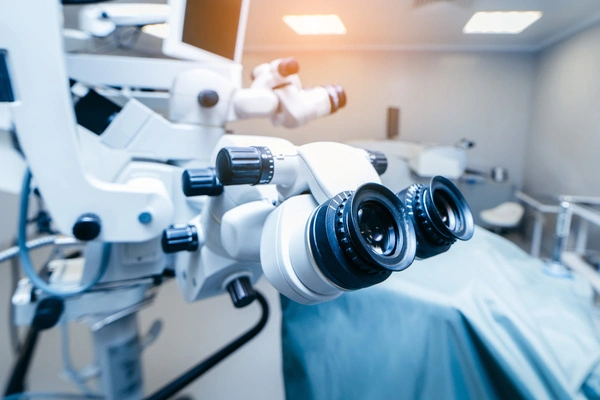
During the procedure, you will sit at a laser machine similar to the equipment used during an eye examination. Your eye specialist uses the laser to create a tiny opening in the cloudy part of the lens capsule. This opening allows light to pass through clearly again.
The treatment itself usually only takes a few minutes. You may notice a bright light during the procedure, but it shouldn’t be painful.
After treatment, your vision may be a little blurred for a short time because of the eye drops. Some people also notice eye floaters for a few days. Your care team will explain what to expect and whether you need any follow-up checks.
“Our team will guide you through every step to ensure you are comfortable and confident before your treatment and help restore clear vision for the vast majority of patients.”
Madyan Qureshi, Consultant Ophthalmologist, Practice Plus Group Ophthalmology, Rochdale
YAG laser capsulotomy is often described as a laser procedure rather than traditional eye surgery.
It does not involve surgical cuts, stitches or replacing the lens. Instead, the laser is used from outside the eye to make a small opening in the cloudy lens capsule.
This is one of the reasons YAG laser capsulotomy treatment is usually quick and carried out as an outpatient procedure. Most people can go home soon afterwards.
How soon does vision improve after YAG laser capsulotomy?
Many people notice an improvement in vision quite quickly after YAG laser capsulotomy, although this can vary.
Some people notice clearer vision very quickly, while others may need a little longer for the eye to settle. Your vision may be temporarily blurry immediately after treatment because of the eye drops used during the appointment.
Your specialist will explain what is normal after treatment and when to seek advice if you have any concerns.
What are the benefits of private YAG laser capsulotomy?
Private YAG laser capsulotomy may help you access treatment more quickly, especially if you are concerned about NHS waiting times or your symptoms are affecting daily life.
Benefits include:
faster access to assessment and treatment
clear information about what the procedure involves
treatment in a hospital or surgical centre
support from an experienced eye care team
a quick procedure designed to restore clearer vision.
For patients who have already had cataract surgery and are now struggling with cloudy or hazy vision, private YAG treatment can be a practical way to get back to everyday activities sooner.
NHS or private YAG laser capsulotomy: which is right for you?
There is no single right answer. The best option depends on your symptoms, your local NHS waiting time, your personal circumstances and how much your vision is affecting your life.
NHS treatment may be the right choice if:
you’re happy to wait for months for your treatment
your symptoms are mild
your local service can offer a suitable appointment quickly.
On the other hand, private treatment may be worth considering if:
your symptoms are affecting your quality of life
you’re finding it difficult to drive or read
you’d prefer faster access to care.
It is important to remember that private treatment does not remove your right to NHS care. You can still speak to your GP, optician, or NHS eye clinic about your options.
When should you seek urgent advice?
The clouding of the posterior capsule usually causes gradual cloudy vision after cataract surgery.
You should seek urgent medical advice if you experience:
sudden loss of vision
severe eye pain
a sudden increase in floaters
flashing lights
a dark shadow or curtain across your vision
redness with worsening pain or reduced vision.
These symptoms may not be related to posterior capsule opacification and should be assessed promptly.
How to book private YAG laser capsulotomy with Practice Plus Group
If you have cloudy vision after cataract surgery, Practice Plus Group may be able to help.
YAG laser capsulotomy treatment is available privately for suitable patients. The procedure is quick, painless, and designed to help light pass clearly through the lens capsule again.
To get started, you can contact Practice Plus Group to discuss your symptoms, check availability, and find out whether private YAG laser capsulotomy may be suitable for you.
FAQs about NHS waiting times and private YAG laser capsulotomy
Still struggling to find the right information? Our NHS and private YAG laser FAQs can help!
How long is the NHS waiting time for YAG laser capsulotomy?
NHS waiting times for YAG laser capsulotomy vary by area, hospital, and referral pathway. In England, non-urgent consultant-led treatment should usually start within 18 weeks of referral, but actual waiting times for YAG treatment can differ. Your local NHS hospital or eye clinic can give the most accurate estimate.
Can I have YAG laser capsulotomy privately instead of waiting for the NHS?
Yes, you can choose to have YAG laser capsulotomy privately if the treatment is suitable for you. This may be an option if you are experiencing cloudy vision after cataract surgery and do not want to wait for an NHS appointment.
What does YAG laser capsulotomy treat?
YAG laser capsulotomy treats posterior capsule opacification (the clouding of the lens capsule after cataract surgery). The laser creates a tiny opening in the capsule so that light can pass through the eye clearly again.
Is YAG laser capsulotomy the same as cataract surgery?
No. Cataract surgery removes the cloudy natural lens and replaces it with an artificial lens. YAG laser capsulotomy is a follow-up laser procedure that may be needed later if the lens capsule becomes cloudy.
Is YAG laser capsulotomy painful?
YAG laser capsulotomy is usually painless. Numbing eye drops are often used before treatment, and the procedure usually only takes a few minutes.
Will I see a bright light during YAG laser capsulotomy?
You may notice a bright light during the procedure. This is normal and is part of the laser treatment. Your specialist will explain what to expect before the treatment begins.
How long does YAG laser capsulotomy take?
The laser treatment itself often only takes a few minutes. You should allow longer for the full appointment as your eye may need to be checked and prepared with eye drops.
Can cloudy vision come back after YAG laser capsulotomy?
In most cases, YAG laser capsulotomy is a one-off treatment for posterior capsule opacification. Your specialist will explain what results you can expect based on your eye health.
Can I drive after YAG laser capsulotomy?
It’s inadvisable to drive immediately after treatment because your vision can be blurred from the eye drops. It is best to follow the advice given by your eye care team and arrange for someone to take you home from the hospital.
How do I know if I need YAG laser capsulotomy?
You may need YAG laser capsulotomy if your vision becomes cloudy, hazy, or glare-prone after cataract surgery. An optician or eye specialist can examine your eye and confirm whether posterior capsule opacification is the cause.
Acknowledgements and clinical review
This page has been medically reviewed and approved by Mr Qureshi, Consultant Ophthalmologist at Practice Plus Group Hospital. He is a GMC-registered consultant surgeon (GMC: 7285415), with over 10 years of clinical experience and holds various ophthalmological qualifications. His clinical expertise focuses on cataract surgery, YAG laser, and glaucoma treatment. Mr Qureshi holds a fellowship of the Royal College of Ophthalmologists alongside Bachelor of Science and Medicine qualifications from the University of Southampton.
All content on this page is produced by the Practice Plus Group digital content team and clinically reviewed by consultant specialists to ensure accuracy, patient safety, and alignment with current UK clinical best practice. Content is approved under Practice Plus Group’s clinical governance framework.
Madyan Qureshi General Medical Council number: 7285415
This page is regularly reviewed and updated to reflect changes in clinical evidence, surgical practice, and patient safety standards. The last clinical review was completed on 9/6/2026, with the next review scheduled for 9/06/2027.
James Wood, Content Specialist
This article was co-written by Content Specialist, James Wood. Our Content Specialist, James, has been writing articles and blogs for Practice Plus Group since 2022. He has more than a decade of experience as a copywriter within a range of different backgrounds and works closely with medical professionals to deliver information that's easy-to-read and patient-focused. When he's not writing medical pieces, James is busy playing sports or pub quizzing.