Guide
15–22 minutes
Whether you’re managing ongoing pain, recovering from an injury or have symptoms that need further investigation, an MRI scan can help give your healthcare professional a clearer picture of what may be happening inside your body.
So, if you’re looking for a private MRI scan in Birmingham, choosing private diagnostic imaging can offer fast access to an appointment, greater flexibility around timings, and, for some types of scan, the option to self-refer without first needing a GP referral.
In this article, we explore how private MRI scans in Birmingham work, how much they cost, what to expect during your appointment, and when you can expect your results.
Private MRI scans at a glance
- Waiting time: at a time to suit you
- Cost: £350 (for one body part)
- Ways to pay: self-pay, insured, payment plans
- Procedure time: 15-60 minutes
On this page:
Private MRI scans in Birmingham provide detailed images of various parts and structures of the body without using ionising radiation. MRI scans can help to investigate pain, injuries, and unexplained symptoms.
At Practice Plus Group Hospital, Birmingham, eligible self-pay patients can self-refer for certain scans, with fixed prices and flexible appointments at a time to suit you.prices from £350 and appointments available within around two weeks of referral.
What is an MRI scan and how does it work?
MRI stands for magnetic resonance imaging. It’s a type of medical scan that uses a strong magnetic field and radio waves to create detailed images of the inside of your body, especially soft tissues, joints, and organs.
Unlike an X‑ray or CT scan, an MRI doesn’t use ionising radiation, making it a safe and non‑invasive way to help doctors understand what’s happening beneath the surface.
Private MRI scans in Birmingham are often used to investigate pain, sports injuries, or ongoing symptoms that haven’t been explained by other tests. The images help your healthcare professional pinpoint the cause and decide whether further treatment or investigation is needed.
If you’re curious about the nuts and bolts of what an MRI scan is and how it works, here comes the science. The scanner works by aligning hydrogen atoms in your body using magnetic fields, then capturing the signals they emit to form incredibly detailed pictures. It’s technology that feels futuristic, but it’s actually been trusted in hospitals and private clinics for decades.
How does an MRI scanner create images?
During your scan, you lie on a bed that moves you into the MRI scanner.
You will need to keep as still as possible while the images are taken. This is because movement can affect their quality.
What can an MRI scan show?
An MRI scan can provide detailed images of many parts of the body, including:
- bones and joints
- muscles
- tendons and ligaments
- the spine
- soft tissues.
The type of MRI you need will depend on your symptoms and the area your healthcare professional wants to investigate.
Does an MRI scan use radiation?
No. MRI scans do not use ionising radiation you get from X-rays and CT scans.
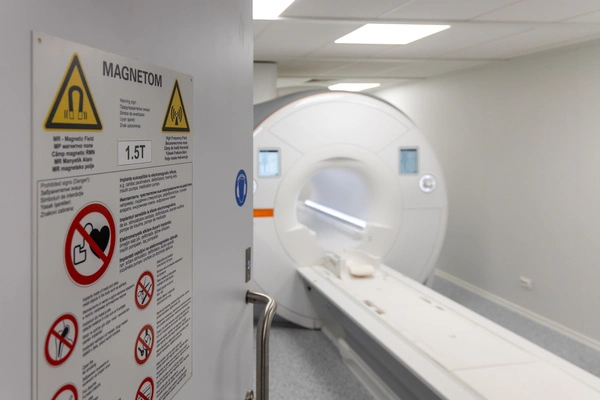
However, as MRI scanners create strong magnetic fields, there are important safety checks before your appointment. For example, you should always tell the imaging team if you have any implants (like an artificial hip or knee joint), metal inside your body, or an implanted medical device.
What is an MRI scan used for?
MRI scans can be used to investigate a wide range of symptoms and conditions.
At Practice Plus Group Hospital, Birmingham, our private self-referral MRI service has a particular focus on musculoskeletal imaging. This includes scans of areas such as your bones, joints, spine, and sacroiliac joints (connecting your lower spine to your pelvis).
MRI scans for back and spinal problems
If you have persistent back pain or other symptoms affecting your spine, the images provided from an MRI may help your healthcare professional look more closely at the structures within and around your spine. A spinal MRI scan can produce detailed images of the vertebrae, discs, and surrounding soft tissues.
However, not everyone with back pain needs an MRI. Your symptoms and medical history will help determine whether imaging is appropriate for you. If your results suggest that specialist care may be needed, take a look at our back and spinal treatments.
MRI scans for knee and joint injuries
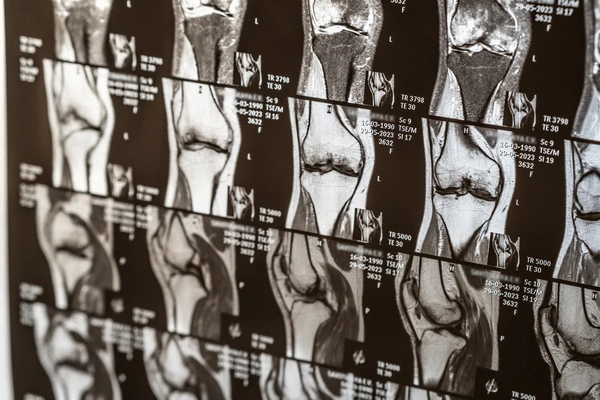
MRI is commonly used to produce detailed images of joints and the soft tissues surrounding them. For example, an MRI for a knee injury may help a healthcare professional investigate structures such as ligaments, cartilage, and other soft tissues.
MRI may also be used to investigate problems affecting the hips, shoulders, ankles and other joints.
If further treatment is recommended following your diagnosis, why not take a look at how we can help with our knee treatments and hip treatments?
MRI scans for sports injuries
Sports injuries can affect muscles, tendons, ligaments, and joints.
If it’s right for you, an MRI for sports injuries can help provide detailed images of the affected area. This can support your healthcare professional when he or she arrives at a diagnosis and treatment plan.
The results of an MRI scan don’t automatically mean you need surgery. Depending on your symptoms and diagnosis, treatment could also include:
- physiotherapy
- activity changes
- pain management
- specialist treatment.
How much does a private MRI scan cost in Birmingham?
The cost of a private MRI scan in Birmingham depends on how many areas of your body need to be scanned. The price increases the more body parts are involved in the scan.
At Practice Plus Group Hospital, Birmingham our MRI prices are as follows:
MRI scan | Price |
|---|---|
One body part | £350 |
Two body parts | £588 |
Three body parts | £825 |
Four body parts | £1,063 |
If your scan requires an injection of contrast media, there is an additional charge of £190.
More information about the cost and process of a one-body-part MRI scan can be found on our website.
What is included in the cost of a private MRI?
When comparing private MRI costs, it’s important to understand what’s included rather than looking only at the headline price.
Our team is happy to explain what the cost of an MRI scan includes when you enquire. Any additional costs relating to your particular examination will also be discussed with you before your appointment.
Can private health insurance cover an MRI scan?
You may be able to use private health insurance for your MRI scan to cover some or all of the cost. This will depend on the details of your policy and insurance provider.
Before booking, you’ll need to get in touch with your insurer to check:
- whether diagnostic imaging is covered
- whether you need pre-authorisation
- whether a referral is required
- whether there is an excess to pay
- whether Practice Plus Group is approved under your policy.
Can I get a private MRI scan without a GP referral?
In some cases, yes. Eligible self-pay patients can self-refer for an MRI scan in Birmingham, meaning you may not need to obtain a GP referral first.
This can make arranging private diagnostic imaging more straightforward if you already know which area of your body needs investigating.
How does MRI self-referral work?
When you contact us, a member of the team will ask for some information about:
- why you would like the scan
- your symptoms
- your general health
- relevant medical information
- your GP details.
This information helps our clinical team make sure the requested examination is appropriate and safe for you.
Self-referral does not mean that clinical checks are bypassed. All patients still need to be assessed for suitability before an MRI scan can take place. This is done via a safety questionnaire which you’ll need to complete before your scan. Please note that in some cases, an MRI scan may not be safe or the most suitable option. In this case, an alternative diagnostic test may be offered.
For a step-by-step overview, dive into our guide on how to get a private MRI scan.
Can another healthcare professional refer me for an MRI?
They can indeed! Depending on your specific circumstances, referrals can also be made by:
- GPs
- physiotherapists
- osteopaths
- chiropractors.
If you already have a referral, our Birmingham team can explain the next steps when you get in touch.
Are all MRI scans available through self-referral?
Unfortunately not. Our Birmingham service currently offers a range of examinations including:
- musculoskeletal scans of bones
- joints
- the spine and sacroiliac joints
- bony pelvis scans
- lumps and bumps
- contrast studies for eligible areas.
However, the self-referral service does not currently offer scans for suspected cancer, breast, or cardiac issues. There may also be other clinical restrictions that apply.
Our team will let you know whether we can accommodate your requested scan when you enquire.
How long will I wait for a private MRI scan in Birmingham?
One of the reasons people consider private diagnostic imaging is for faster appointment access.
At Practice Plus Group Hospital, Birmingham, the current self-referral service states that patients can access their scan within around two weeks of referral.
You can find out more about how long you may wait for an MRI scan and how private and NHS pathways can differ.
Are same-day MRI scans available in Birmingham?
Same-day appointments are available but cannot always be guaranteed.
If you need an MRI quickly, speak to our team about current availability. They can tell you the earliest appointment available for the type of scan you require.
Before an MRI is arranged, appropriate clinical and safety checks still need to be completed to make sure the scan is suitable for you.
How quickly will I get my MRI results?
Once your scan has been completed, the images will be reviewed by a radiologist.
For patients referring themselves, the radiology report is usually available within five days.
Your report can then help your GP or another healthcare professional decide whether you need any further assessment or treatment.
Private vs NHS MRIs: what are the differences?
Both NHS and private MRI scans use medical imaging to help healthcare professionals investigate symptoms and conditions.
Choosing private care does not necessarily mean that the scan itself is medically better. The main differences are usually how you access the scan, appointment availability, and how the care is funded.
Waiting times and appointment choice
Waiting times for an NHS MRI can vary depending on your local healthcare service, clinical urgency, and the type of scan required.
Private MRI appointments may provide greater flexibility around appointment dates and quicker access in some circumstances.
At Practice Plus Group Hospital, Birmingham, the current private self-referral pathway states that eligible patients can access a scan within around two weeks of referral.
Do referral requirements differ?
An NHS MRI will normally be requested by an appropriate healthcare professional as part of your NHS care.
Private providers often have different referral rules.
For example, at Practice Plus Group Hospital, Birmingham, eligible self-pay patients can refer themselves for certain MRI examinations without first needing to get a GP referral.
How are private MRI scans paid for?
An MRI provided through the NHS as part of NHS treatment will not normally involve a direct charge to the patient.
If you choose a private MRI scan, you can either pay for the scan yourself or, depending on the terms of your policy, cover some of all of the cost via private medical insurance.
How to prepare for an MRI scan
For many MRI scans, there is very little preparation needed.
However, your specific instructions will depend on the area being scanned and your individual medical circumstances.
Always be sure to follow the information provided by the imaging team before your appointment.
For more advice about diagnostic tests, read our patient’s guide to diagnostic medical imaging.
What should I wear for an MRI scan?
Comfortable, loose-fitting clothing is usually best.
As MRI scanners use strong magnets, you’ll need to remove metal objects before entering the scanning room.
These can include:
- jewellery
- watches
- belts
- keys
- coins
- mobile phones
- hearing aids
- clothing containing certain metal fasteners.
You may be asked to change into a gown depending on your clothing and the type of scan you’re having.
Can I eat and drink before an MRI scan?
For many MRI scans, you can eat and drink normally before your appointment.
However, certain examinations may have different requirements.
Always remember to follow the specific preparation instructions given to you when your appointment is arranged.
What should I tell the MRI team before my scan?
It’s important to tell the team if you:
- have a pacemaker or another implanted medical device
- have metal implants or metal fragments in your body
- have previously had surgery involving implants
- are or could be pregnant
- have had a previous reaction to contrast media
- feel anxious in enclosed spaces
- are severely claustrophobic.
The team will carry out safety checks before your scan and let you know whether any additional measures should be taken.
What happens during an MRI scan?
Knowing what to expect can make an MRI appointment feel much less daunting.
The scan itself shouldn’t hurt. Throughout the scan, you’ll need to remain still and the scanner can be noisy.
What happens when I arrive for my MRI?
When you arrive at the hospital, the imaging team will check your details and complete the required MRI safety screening.
You may need to remove jewellery or other metal objects and change your clothing where required.
A radiographer will explain what will happen and give you an opportunity to ask questions before the scan begins.
What happens inside an MRI scanner?
You will lie on a scanning bed, which will then move into the MRI scanner.
During the scan:
- The radiographer will position you correctly
- You will be given hearing protection to help dampen the noise of the scanner
- The scanning bed will move into the scanner
- You’ll need to keep as still as possible while the images are taken
- The radiographer will remain in contact with you throughout the examination
- Once all the required images have been taken, the bed will move back out of the scanner.
How long does an MRI scan take?
Most MRI scans take between 15-60 minutes.
The exact time depends on:
- the body part being scanned
- the number of areas being examined
- how many images are required
- whether contrast media is needed.
Your full appointment may take longer than the scan itself because time is needed for check-in, safety screening, preparation, and getting you properly positioned on the table.
For more details about scan duration, read our guide on how long an MRI scan takes.
What if I’m claustrophobic or nervous about an MRI?
Feeling nervous before an MRI scan is pretty normal, particularly if you do not like confined spaces.
If you’re worried about having an MRI, tell the team when you book your appointment rather than waiting until the day of your scan.
Why can MRI scans feel claustrophobic?
Traditional MRI scanners involve lying inside a tunnel-shaped scanner while images are taken.
You also need to remain still and may be inside the scanner for several minutes at a time.
This can make some people feel uncomfortable or anxious.
How can I feel more comfortable during an MRI?
Knowing what to expect can help.
You can also:
- tell the radiographer you’re feeling nervous
- ask questions before the scan starts
- practise slow, steady breathing
- keep your eyes closed (if that feels more comfortable)
- remember that you can communicate with the radiographer throughout the scan.
The imaging team is experienced in supporting nervous patients and will explain what’s happening.
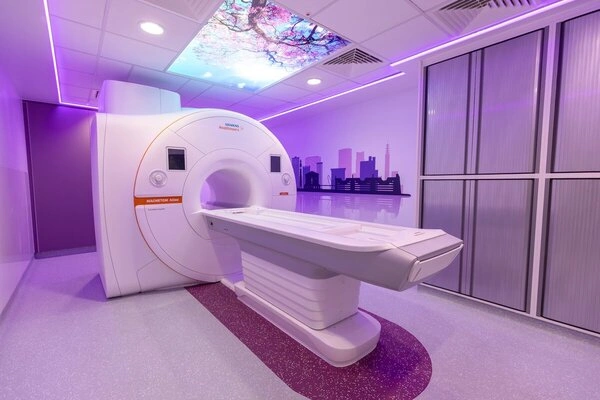
What is the scanner like at Practice Plus Group Hospital, Birmingham?
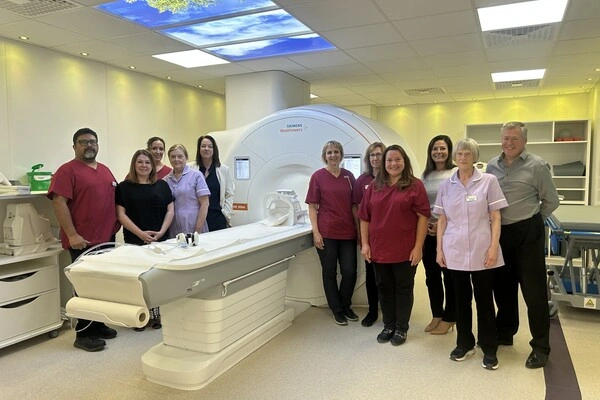
Practice Plus Group Hospital, Birmingham opened its dedicated MRI suite in March 2026.
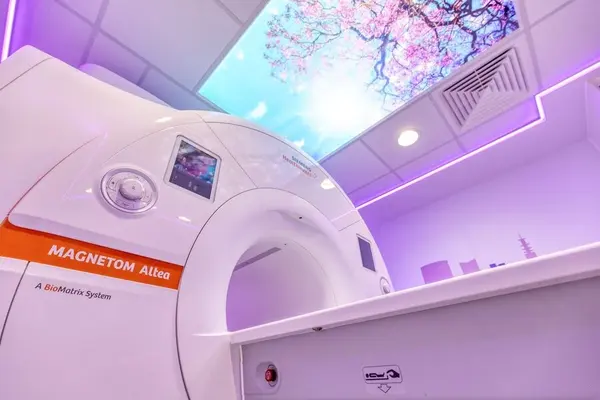
The suite features a Siemens Magnetom Altea MRI scanner with a wider bore design, giving patients more space during their scan. The purpose-built environment also includes calming décor and ambient lighting to support patient comfort.
You can learn more here about our Birmingham MRI suite.
When will I get my MRI results?
Your MRI images need to be carefully reviewed before a report can be produced. This can typically take a few days and their availability depends on whether you’re an NHS or private patient.
Who reviews MRI scan images?
MRI images are interpreted by a specialist doctor called a radiologist.
The radiologist reviews the images and produces a written report explaining the findings.
The report can then be used by your GP, consultant, or other healthcare professional alongside your symptoms, medical history, and examination findings.
How long do MRI results take?
For patients using the Birmingham self-referral MRI service, the radiology report is usually available within five days.
If you self-referred, the report is sent to the GP whose details you provided when booking.
Can I get a copy of my MRI scan?
Yes. You can request a copy of your MRI images or report when you attend your appointment.
For the Birmingham service, these can be sent through the secure Image Exchange Portal within seven days of your scan.
What happens after my MRI results?
What happens next depends on why you had the MRI and what the images show.
You may need:
- no further treatment
- advice from your GP
- physiotherapy or rehabilitation
- medication or pain management
- further tests
- an appointment with a specialist
- surgery.
If specialist treatment is needed, Practice Plus Group provides a range of orthopaedic services, including shoulder and elbow treatments.
Why choose Practice Plus Group for an MRI scan in Birmingham?
When you need answers about ongoing pain or an injury, we understand that waiting for diagnostic tests can be difficult.
At Practice Plus Group Hospital, Birmingham, we offer private diagnostic imaging in a comfortable hospital environment.
A dedicated MRI suite in Birmingham
Our Birmingham MRI suite opened in March 2026 and includes a Siemens Magnetom Altea scanner.
Its wider-bore design and purpose-built scanning environment have been designed with patient comfort in mind.
Self-referral and clear MRI prices
Eligible self-pay patients can refer themselves for certain MRI scans without needing to obtain a GP referral first.
Private MRI prices currently start from £350 for one body part. Free onsite parking is also available for patients attending the hospital.
Access to specialist care
Practice Plus Group provides more than diagnostic imaging.
If your MRI shows that you need specialist assessment or treatment, you may be able to access consultants and treatments within Practice Plus Group, including care for hip, knee, shoulder, and spinal conditions.
The right treatment will always depend on your individual symptoms, examination, and scan results.
Book a private MRI scan in Birmingham
If you would like faster access to diagnostic imaging, our team can help you understand whether a private MRI scan in Birmingham is suitable for you.
Eligible self-pay patients can self-refer for certain scans, while we also accept appropriate referrals from healthcare professionals.
If you have private medical insurance, check with your insurer before booking to confirm your cover and any authorisation requirements.
Sources and references
– Self-refer MRI scans in Birmingham
– Diagnostic imaging and medical scans
– How long does an MRI scan take?
– Guide to diagnostic imaging: what to expect
– How to stay calm during an MRI scan
– What is an MRI scan?
– NHS Guidelines: MRI scans
– Gov.uk: Safety guidelines for magnetic resonance imaging
Share
FAQs about MRI scans in Birmingham
Haven’t yet found the information you’re looking for? Our Birmingham MRI scan FAQs can help!
How much does a private MRI scan cost in Birmingham?
At Practice Plus Group Hospital, Birmingham, private MRI prices currently start from £350 for one body part. Two body parts costs £588, three costs £825 and four costs £1,063.
Can I get a private MRI scan without a GP referral?
Yes. Eligible self-pay patients can refer themselves for certain MRI scans at Practice Plus Group Hospital, Birmingham. You will still undergo clinical screening to make sure the scan is safe and appropriate for you.
How quickly can I get a private MRI scan in Birmingham?
The current Birmingham self-referral service states that patients can get an MRI scan at a time to suit them.
How long does an MRI scan take?
An MRI scan usually takes between 15-60 minutes, depending on how many body parts are being scanned. Your overall appointment will usually be longer to allow time for check-in, safety screening, and preparation.
What should I wear for an MRI scan?
Wear comfortable clothing where possible. Because an MRI scanner contains a strong magnet, you will need to remove metal objects such as jewellery, watches, and belts. You may also be asked to change into a gown.
Can I eat and drink before an MRI scan?
For many MRI scans, you can eat and drink normally beforehand. Some examinations may require different preparation, so always follow the instructions provided by the imaging team.
What happens if I’m claustrophobic during an MRI?
Tell the imaging team before your appointment if you are claustrophobic or worried about enclosed spaces. The radiographer can explain the process and support you throughout your scan. The scanner at Practice Plus Group Birmingham has a wider-bore design and the MRI suite includes ambient lighting intended to support patient comfort.
How long does it take to get MRI results?
For the Birmingham self-referral MRI service, your radiology report is usually available within five days. A radiologist reviews your MRI images and produces the report. If you self-referred, it will be sent to the GP whose details you provided when booking.
Acknowledgements and clinical review
This page has been medically reviewed and approved by Leanne Eardley, Head of Clinical Services at Practice Plus Group Hospital, Birmingham. She qualified as a nurse at Keele University, specialising in Adult Nursing. She has since spent the majority of her career in the community nursing sector. She holds a BSc Hons in Specialist Practice from Staffordshire University and a wide range of skills from her various roles within nursing.
All content on this page is produced by the Practice Plus Group digital content team and clinically reviewed by consultant specialists to ensure accuracy, patient safety, and alignment with current UK clinical best practice. Content is approved under Practice Plus Group’s clinical governance framework.
Leanne Eardley
This page is regularly reviewed and updated to reflect changes in clinical evidence, surgical practice, and patient safety standards. The last clinical review was completed on 9/6/2026, with the next review scheduled for 9/06/2027.
James Wood, Content Specialist
This article was co-written by Content Specialist, James Wood. Our Content Specialist, James, has been writing articles and blogs for Practice Plus Group since 2022. He has more than a decade of experience as a copywriter within a range of different backgrounds and works closely with medical professionals to deliver information that's easy-to-read and patient-focused. When he's not writing medical pieces, James is busy playing sports or pub quizzing.
View LinkedIn profile