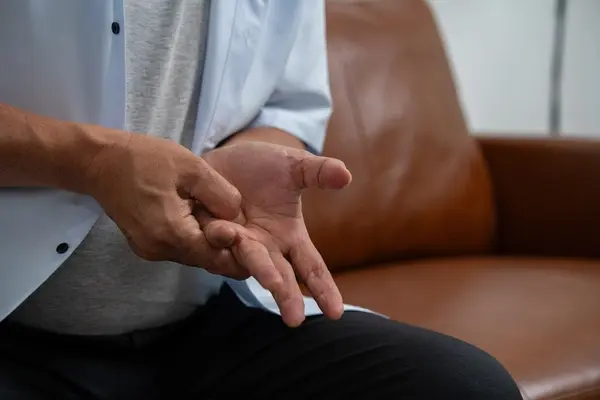
Why does my wrist hurt? Common causes of wrist pain and treatment options
Wrist pain can make everyday tasks difficult. From typing and driving to opening a jar, our wrists and hands are extremely important in everyday life. Sometimes the cause is obvious, such as a fall or sports injury. In other cases. you may develop an aching or painful wrist without remembering having suffered any injury at all.
Private hand and wrist treatment at a glance
There are many possible causes of wrist pain, including sprains, repetitive strain, arthritis, carpal tunnel syndrome, De Quervain’s tenosynovitis, and ganglion cysts. Where your wrist hurts, what the pain feels like and whether you have other symptoms, such as swelling, weakness, tingling, or numbness, can all provide useful clues.
The good news is that many causes of wrist pain improve with simple measures. If the pain persists, keeps returning, or starts affecting how you use your hand, further assessment can help identify the problem and the most appropriate treatment.
The wrist is a complex structure made up of several small bones alongside ligaments, tendons, nerves and other soft tissues. Because we use our hands and wrists constantly, there are many different structures that can become irritated or injured.
Some of the most common causes of wrist pain are detailed in the sections below.
A sprain affects a ligament, while a strain usually involves a muscle or tendon.
Wrist sprains commonly happen after a fall, particularly if you instinctively put your hand out to try and lessen the impact. They can also happen during sport or after suddenly twisting the wrist.
You might notice:
pain and swelling
tenderness
bruising
difficulty moving your wrist
pain when gripping
pain when you put pressure through the wrist.
Milder injuries often improve gradually. More severe pain or difficulty using the wrist may need assessment to rule out a fracture or more significant ligament damage.
A fracture can cause sudden, severe wrist pain following a fall, direct impact, or other injury.
Other signs can include:
swelling
bruising
tenderness
numbness or tingling
difficulty moving your wrist.
If you have a broken wrist, you may also hear or feel a crack, snap, or grinding sensation when the injury happens.
If you think you might have broken your wrist, you should seek medical advice as soon as possible rather than trying to diagnose or treat the injury yourself.
Repeating the same hand and wrist movements can irritate muscles and tendons over time. This may be associated with work, sport, hobbies or activities that involve repeated gripping.
The wrist may feel sore or achy rather than suddenly painful. Symptoms can become worse during a particular activity and ease when you stop.
Reducing or modifying the activity for a while can help. If symptoms persist, you should get the wrist assessed by a professional.
De Quervain’s affects tendons running along the thumb side of your wrist.
It can cause:
pain around the thumb side of the wrist
pain at the base of the thumb
pain when gripping or pinching
swelling
difficulty moving the thumb comfortably
pain when twisting your wrist or lifting something.
If you have been searching for the cause of wrist pain at the base of the thumb, De Quervain’s is one possible explanation. Arthritis in the thumb joint can produce similar symptoms, so an assessment is important to provide a clear diagnosis if the pain persists.
Carpal tunnel syndrome occurs when the median nerve becomes compressed as it passes through a narrow space in the wrist called the carpal tunnel.
Symptoms often develop gradually and can include:
aching or pain in the hand, fingers or wrist
pins and needles
numbness
a weak thumb
difficulty gripping or holding objects.
Symptoms are often more noticeable at night.
Carpal tunnel syndrome can sometimes improve with changes to activities or from wearing a wrist splint. Steroid injections or carpal tunnel surgery may be considered if symptoms continue.
A ganglion cyst is a fluid-filled lump that develops near a joint or tendon, particularly around the hands and wrists.
You may notice a smooth lump on the top, side, or the palm side of your wrist. The size of the lump may change over time. Ganglion cysts are often painless, but they can sometimes cause:
aching or wrist pain
discomfort when moving the joint
reduced movement
weakness
numbness if the cyst puts pressure on a nearby nerve.
Many ganglion cysts do not require treatment. If yours is painful or interfering with normal activities, ganglion cyst aspiration or removal may be considered.
Osteoarthritis occurs when changes in a joint affect the cartilage and surrounding tissues. It can lead to pain, stiffness, and reduced movement.
Arthritis near the base of the thumb is particularly relevant to wrist and hand pain. You may find gripping, opening things like jars and bottles, turning keys, or pinching objects uncomfortable.
Where arthritis severely affects the trapezium (the small cube-shaped bone at the base of the thumb), trapeziectomy surgery or a joint replacement surgery may be considered where appropriate.
Rheumatoid arthritis is an autoimmune condition that causes inflammation in the joints. It commonly affects the small joints of the hands but can also involve the wrists.
Unlike pain caused by a single injury, rheumatoid arthritis may affect both sides of the body. Symptoms of rheumatoid arthritis can include:
joint pain and swelling
warmth around the joint
stiffness – particularly after waking
pain in both wrists or hands
reduced movement
tiredness or feeling generally unwell.
Early diagnosis of rheumatoid arthritis is important because treatment can help control inflammation and limit joint damage.
The wrist contains numerous ligaments and tendons that help provide movement and stability. Damage can happen after trauma, repetitive lifting, or simply through gradual wear and tear.
Symptoms might include:
persistent wrist joint pain
clicking
weakness
pain during rotation
discomfort when putting weight through the hand.
A specialist assessment may be needed to identify which structure is involved. In some circumstances, a wrist arthroscopy can be used to assess and treat problems inside the joint.
What does the location of my wrist pain mean?
Before we look at the table below, it’s important to remember that the precise location of your pain does not provide a diagnosis on its own. Instead, it can help your clinician understand which structures may be affected.
Where or how it hurts
Possible explanations
Pain at the base of the thumb
De Quervain’s tenosynovitis, thumb arthritis or irritation around the tendons
Pain with tingling or numb fingers
Carpal tunnel syndrome or another nerve problem
Pain on top of the wrist with a lump
Ganglion cyst
Pain after a fall or impact
Sprain, ligament injury or fracture
Pain when twisting or gripping
Tendon, ligament or joint irritation
Pain and stiffness in both wrists
Rheumatoid arthritis or another inflammatory joint condition
Wrist pain and swelling
Injury, tendon inflammation, arthritis or, less commonly, infection
Shooting pain from the wrist into the hand
Nerve irritation or compression may need to be considered
As different conditions can produce similar symptoms, it’s best not to self-diagnose persistent wrist pain based on its location alone.
Why does my wrist hurt when I move it?
Wrist pain when you move it is commonly associated with irritation or injury to a structure that moves or stabilises the joint. This could include:
sprained ligament
irritated tendon
repetitive strain injury
arthritic joint
De Quervain’s tenosynovitis
wrist injury affecting cartilage or other soft tissues.
The movement that causes the pain can provide another clue. Pain when moving the thumb, for example, may have a different cause from pain when bending the wrist backwards or rotating your hand.
If movement becomes increasingly restricted or painful, you should have the wrist assessed by a medical professional.
Want fast access to healthcare?
Avoid long waiting lists. Book a private consultation today.
If your wrist hurts when you put pressure on it, such as when pushing yourself up from a chair, doing a press-up or leaning on your hand, there may be irritation within the joint or surrounding soft tissues.
Possible causes include:
sprain
tendon problem
ligament injury
ganglion cyst.
If the pain occurred after a fall, you should also consider the possibility of a fracture. Some wrist fractures are not always immediately obvious.
Avoid repeatedly forcing weight through a painful wrist while you are waiting for it to improve or be assessed.
Why do I have sudden wrist pain with no injury?
Not all wrist problems follow an obvious accident. Sudden wrist pain with no injury may sometimes be related to:
tendon irritation
repetitive strain
De Quervain’s tenosynovitis
arthritis or an inflammatory flare
nerve irritation
a ganglion cyst, including one that is not immediately obvious.
Think about whether you have recently changed your activity levels or spent more time gripping, lifting, typing, using tools, or playing sport.
Sudden severe pain, significant swelling, warmth, or loss of movement should be assessed promptly even when you cannot remember injuring the wrist.
Why does my wrist hurt at night?
Night-time wrist pain can have several causes, but carpal tunnel syndrome is worth considering when pain is accompanied by:
pins and needles
numbness
weakness in the hand.
Carpal tunnel symptoms often become more noticeable at night because of the position of the wrist during sleep.
A wrist splint that keeps the wrist in a neutral position may sometimes help mild carpal tunnel symptoms. If numbness, weakness, or pain continues, further assessment is recommended.
Why do both my wrists hurt?
Pain in both wrists may be the result of repetitive activities involving both hands. However, symmetrical wrist pain can also occur with inflammatory conditions such as rheumatoid arthritis.
If both wrists are painful, swollen, or stiff – particularly if stiffness is worse after waking or you have similar symptoms in your fingers – speak to your GP.
How is wrist pain diagnosed?
Because so many conditions can cause similar symptoms, diagnosis starts by understanding exactly how your pain behaves. A clinician may ask:
when the pain started
whether you injured the wrist
exactly where it hurts
which movements make it worse
whether symptoms are constant or intermittent
whether you have pain and swelling
whether you experience numbness or tingling
whether your grip feels weaker
whether you have noticed a lump
whether one or both wrists are affected.
During a physical exam, your doctor or specialist may look for swelling, tenderness, changes in the shape of the joint, or a ganglion cyst. He or she may also assess:
your range of movement
grip strength
thumb and finger movement
sensation in your hand
which movements reproduce your pain.
Not everybody with wrist pain needs a scan. Depending on your symptoms, investigations can include:
an X-ray to look at bones and joints
ultrasound to examine certain soft-tissue problems
an MRI scan for more detailed assessment of soft tissues and structures within the wrist
nerve conduction studies if carpal tunnel syndrome or another nerve problem is suspected
blood tests where inflammatory arthritis such as rheumatoid arthritis is suspected.
Your clinician will recommend tests based on your symptoms and the findings from your examination.
How can I ease wrist pain at home?
For mild wrist pain without signs of serious injury, the following simple measures may help.
Give the irritated area time to settle. You do not necessarily need to stop using your hand completely, but temporarily reducing activities that repeatedly trigger the pain can help.
For a recent injury or swelling, wrap an ice pack or bag of frozen peas in a towel rather than placing it directly against your skin.
The NHS advises using it for up to around 20 minutes at a time every two to three hours during the early stages of an injury.
Completely avoiding movement for prolonged periods can contribute to stiffness. Unless you have been told to immobilise the joint, gentle pain-free movement can help maintain flexibility.
A wrist splint can be useful for certain conditions. For example, keeping the wrist straight overnight can sometimes reduce symptoms of carpal tunnel syndrome.
Medicines such as paracetamol or anti-inflammatory treatments may be suitable for some people. Check with a pharmacist or healthcare professional if you are unsure which options are appropriate for you, particularly if you have other health conditions or take regular medication.
your wrist pain is affecting everyday activities (such as driving, washing, or cooking)
the pain is becoming worse or repeatedly returns
symptoms have not improved after around two weeks of appropriate home care
you have tingling or loss of sensation
your grip is becoming weaker
your wrist is persistently swollen or stiff
you have a lump that concerns you
you have ongoing pain and swelling in your hands and wrists
you think your symptoms could be caused by rheumatoid arthritis.
Getting a diagnosis can be particularly useful when pain is interfering with work, sleep, sport, or everyday tasks.
When is wrist pain urgent?
You should seek urgent medical advice if you have severe wrist pain, particularly following an injury. Contact NHS 111 if:
you heard a snap, crack, grinding, or popping sound when you injured your wrist
you cannot move your wrist or hold objects
your wrist has changed shape or colour
you have lost sensation in some or all of your hand
your wrist or a lump on it is very painful, hot or red
you feel unwell alongside a hot, swollen wrist..
These symptoms can be associated with problems such as a fracture or infection and should not be managed solely at home.
Can wrist pain be prevented?
Not every wrist problem can be prevented, but reducing unnecessary strain can help protect your hands and wrists.
You can:
gradually increase new exercises or activities rather than making sudden jumps in workload
take regular breaks from repetitive tasks
vary movements where possible
keep your workstation comfortable and well positioned
avoid repeatedly working through significant wrist pain
use appropriate protective equipment during sport or physical work
build strength gradually when returning to exercise following an injury.
If the same pain repeatedly returns whenever you perform a certain activity, it may be worth having the underlying cause assessed rather than continually treating individual flare-ups.
What treatments for wrist pain does Practice Plus Group offer?
Not everybody with wrist pain needs surgery. Your treatment will depend on the underlying cause, how severe your symptoms are and whether simpler treatments have helped.
Carpal tunnel syndrome develops when the median nerve is compressed as it passes through the wrist. Treatment may include a splint, injections or, where symptoms persist, surgery to release the pressure on the nerve.
Ganglion cysts are fluid-filled swellings that commonly develop around the hands and wrists. Many do not need treatment, but a cyst that is painful or interfering with movement may be drained or surgically removed.
The trapezium is a small wrist bone located at the base of the thumb. Arthritis affecting this area can cause significant pain, stiffness and difficulty gripping. A trapeziectomy removes the trapezium bone to help relieve symptoms in suitable patients.
Another alternative is a replacement of the joint at the base of the thumb, which also helps to relieve symptoms and maintain range of motion.
De Quervain’s tenosynovitis affects tendons on the thumb side of the wrist. If symptoms remain troublesome despite non-surgical treatment, surgery may be considered to release pressure around the affected tendons.
A wrist arthroscopy is a form of keyhole surgery. A small camera called an arthroscope is inserted into the wrist so the surgeon can assess the joint and, where appropriate, treat damage caused by trauma, wear and tear or injuries to ligaments and tendons.
Depending on the cause of your wrist pain, an injection may sometimes be recommended to help manage pain and inflammation. Practice Plus Group offers a number of hand and wrist injection options, including ultrasound-guided injections.
The most appropriate treatment can only be recommended once the cause of your symptoms has been assessed.
Getting treatment for persistent wrist pain
There is no single treatment that works for every painful wrist.
A mild strain may only need temporary activity changes and time to recover. Carpal tunnel syndrome may respond to a splint or injection before surgery is considered. A ganglion cyst may not need treatment at all unless it becomes painful or affects movement. Arthritis at the base of the thumb may require a different approach again.
The most important first step is finding out why your wrist hurts.
If ongoing wrist pain is limiting your everyday life, explore private hand and wrist surgery and treatment at Practice Plus Group to learn more about the conditions we treat and the options available.
Private healthcare offers greater flexibility over when, where, and by whom you’re treated. In the vast majority of cases, the waiting times are shorter too, and with Practice Plus Group, prices are transparent.
Choosing private healthcare can make planned treatment easier to fit around work, family, and personal commitments. Options to access private treatment are self-pay, payments plans, or medical insurance.
Not yet found the information you’re looking for? Our handy wrist pain FAQs might be able to help.
There is no single most common cause for everybody. Wrist pain frequently follows an injury, repetitive activity or tendon irritation. Arthritis, carpal tunnel syndrome, De Quervain’s, and ganglion cysts are also common possibilities. Your symptoms and the location of the pain can help narrow down the cause.
Wrist pain does not always follow a noticeable injury like a fall. Repetitive strain, tendon irritation, arthritis, carpal tunnel syndrome, De Quervain’s, and ganglion cysts can all cause discomfort without an obvious accident.
Pain around the base of the thumb can be associated with De Quervain’s tenosynovitis or arthritis affecting the thumb joint. Both can cause pain during gripping, twisting, or thumb movement.
Yes. Carpal tunnel syndrome can cause an ache or pain affecting the fingers, hand, wrist, or arm. Tingling, numbness, a weak thumb, and difficulty gripping are particularly characteristic symptoms.
Yes, although many ganglion cysts are painless. A larger cyst or one pressing against nearby structures can cause aching, pain with movement, numbness, or reduced movement.
Pain when bending your wrist may be caused by a sprain, tendon irritation, repetitive strain, arthritis, or another problem within the joint. Persistent pain, swelling or restricted movement should be assessed.
An ice pack can be useful for pain and swelling following a minor recent injury. Wrap it in a towel and avoid putting ice directly against your skin. NHS guidance suggests applying it for up to around 20 minutes every two to three hours.
The NHS recommends seeking medical advice when wrist pain is worsening, keeps returning, is stopping you doing normal activities or has not improved after around two weeks of home treatment. You should seek help sooner if you have severe symptoms, numbness, significant weakness or signs of a fracture.
Sometimes. Most wrist pain does not automatically require surgery. Surgery may be considered for conditions such as persistent carpal tunnel syndrome, troublesome ganglion cysts, severe arthritis at the base of the thumb or certain ligament, tendon and joint problems.
Acknowledgements and clinical review
This page has been medically reviewed and approved by Mr Pouya Akhbari, Consultant Orthopaedic Surgeon at Practice Plus Group Hospital, Shepton Mallet. He is a GMC-registered consultant surgeon (GMC: 7043774), with over a decade of clinical experience and holds MBBS, MSc, FRCS (Tr&Orth), and MD qualifications. Mr Akhbari is an expert in hand and wrist surgery, sports injury, trauma and orthopaedics, and shoulder and elbow surgery. He has published regular medical journals on joint disease, metabolic profiling, and upper limb surgery.
All content on this page is produced by the Practice Plus Group digital content team and clinically reviewed by consultant specialists to ensure accuracy, patient safety, and alignment with current UK clinical best practice. Content is approved under Practice Plus Group’s clinical governance framework.
Pouya Akhbari General Medical Council number: 7043774
This page is regularly reviewed and updated to reflect changes in clinical evidence, surgical practice, and patient safety standards. The last clinical review was completed on 9/6/2026, with the next review scheduled for 9/06/2027.
James Wood, Content Specialist
This article was co-written by Content Specialist, James Wood. Our Content Specialist, James, has been writing articles and blogs for Practice Plus Group since 2022. He has more than a decade of experience as a copywriter within a range of different backgrounds and works closely with medical professionals to deliver information that's easy-to-read and patient-focused.