Practice Plus Group Hospital, Birmingham offers expert cataract care with experienced surgeons. They provide safe, effective surgery that replaces the cloudy cataract lens with a clear artificial one. From choosing a qualified surgeon to understanding the procedure, recovery, and payment options, patients can access high-quality cataract treatment privately or through the NHS.
Understanding cataracts and their treatment
Before we get into the specifics about what Birmingham can offer, let’s first take a look at cataracts. What causes them and what are the symptoms to watch out for? When should surgery be considered and how could it benefit you?
What causes cataracts and common symptoms
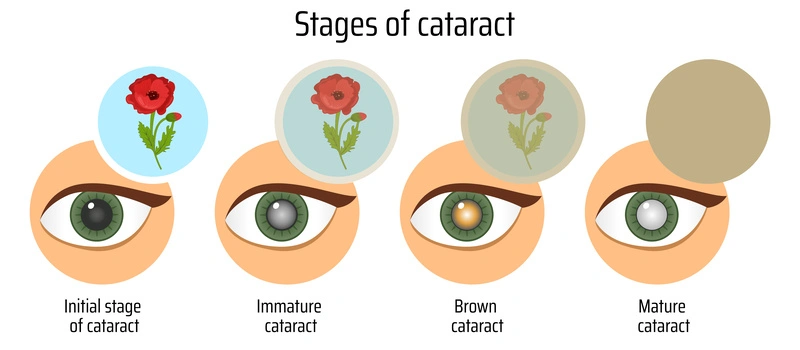
Cataracts occur when the lens in the eye becomes cloudy, making it difficult for light to pass through. More often than not they’re age-related but genetics, diabetes, smoking, and injuries to the eye can also play a part.
The common symptoms of a cataract include:
cloudy or blurred vision
changes to colour vision
glare at night (particularly while driving) and during the day
difficulty in seeing your phone or text on television
double vision or ghosting of images (especially if only noticeable in one eye)
sensitivity to bright light.
When cataract surgery is recommended
First off, if you think you’ve got a cataract, the best thing to do is get an eye exam. This is typically done at an optician’s but they’re also available from ophthalmologists (after a referral from your GP).
Eye surgery can be avoided if your eye doctor thinks your vision can be corrected by wearing glasses or contact lenses. However, as cataracts develop over time, the likelihood of needing surgery increases. If your vision loss cannot be corrected by wearing glasses or contacts, then cataract surgery is likely your best option.
How cataract surgery restores clear vision
The surgery works by removing the cloudy lens and replacing it with a clear, artificial one. This new lens allows light to pass through easily and restores your vision. Often, artificial lenses have the ability to boost specific parts of your vision. For example, some are designed to improve colour contrasts, while others can help you see long or short distances better.
At Practice Plus Group, we offer a range of different lenses for our private cataract patients. The block below illustrates the lenses available, how they might improve your vision, and how much they cost.
Lens
Price
Cataract surgery – standard monofocal lens
£1995
Distant
Intermediate
Near
Lens
Price
Cataract surgery – enhanced monofocal lens
£2145
Cataract surgery – enhanced monofocal lens TORIC
£2545
Distant
Intermediate
Near
Lens
Price
Cataract surgery – extended depth of focus lens
£2945
Cataract surgery – extended depth of focus lens TORIC
£3095
Distant
Intermediate
Near
Lens
Price
Cataract surgery – full visual multifocal lens
£3045
Cataract surgery – full visual multifocal lens TORIC
£3195
Distant
Intermediate
Near
Choosing a cataract surgeon in Birmingham
When looking for cataract surgeons in Birmingham, it’s important to choose the right one for you. And, to make your task a bit easier, we’ve come up with the following mini-checklist of things to look out for:
Their qualifications
Their level of medical experience
The number of cataract procedures they carry out over the course of a year.
If the surgeon you’re researching ticks the above boxes for you, it might be time to make a decision.
Qualifications to look for in a cataract surgeon
As a minimum, a cataract surgeon must be a doctor with a medical degree (look for the letters MD in their profile), as well as be registered with the General Medical Council (GMC). Next, they should hold membership of a professional organisation such as the Royal College of Ophthalmologists or one similar. This is a good one to look out for as it demonstrates a commitment on the surgeon’s behalf to continued professional development.
Specialised training in cataract surgery is a must while additional expertise in other eye treatments is also a very good sign. The Royal College of Ophthalmologists awards Certificates of Completion of Training (CCTs) to consultants upon completion of their specialist training.
Meet your cataract surgeon
From top-notch qualifications all the way through to charity work, our Consultant Ophthalmologist at Practice Plus Group Hospital, Birmingham, Ayoub El Mourabit represents an excellent choice to help you with your cataracts.
Consultant profile
Name: Ayoub El Mourabit
Qualifications: – Doctor of Medicine (MD), 2014 – Diploma from the European Board of Ophthalmology, 2019 – Specialist Doctor in Ophthalmology, 2020 – IELTS (C2)
Specialities: – cataract surgery – YAG laser surgery – Peripheral iridotomy – SLT trabeculoplasty – intravitreal injections – minor eyelid operations.
Quote: “True fulfilment comes from serving others with sincere intention, where compassion and spiritual purpose meet.”
Reviews: “Mr Ayoub made my cataract surgery experience completely reassuring. From the moment I met him, he was welcoming, calm, and explained everything clearly, which made me feel confident and at ease.”
The following are things you should look for in a great ophthalmologist:
Qualifications: ophthalmologists need to hold an MD (Doctor of Medicine) qualification alongside specialist certificates. For example, Ayoub El Mourabit holds a Diploma and a Specialist Doctor certificate in the field of ophthalmology.
Memberships: great ophthalmologists will often hold memberships or fellowships at prestigious organisations such as the Royal College of Ophthalmologists. This is to recognise their professional achievements as well as providing opportunities to develop leadership skills.
Friendly and approachable: patients should feel comfortable when in the company of their ophthalmologist. Clear communication, the ability to listen, and demonstrating empathy are key factors that make a great ophthalmologist.
Ayoub El Mourabit on communication:
“Clear, sincere communication is the cornerstone of a strong and trusting clinician–patient relationship. Such a foundation empowers patients to navigate the challenges of their care with confidence.”
Questions to ask at your first consultation
You should start by asking whether cataract surgery is the right option for you. Your consultant will be able to answer this after running some tests and asking some questions of their own.
What to expect from cataract surgery in Birmingham
Speaking generally, cataract surgery involves the removal of the cloudy lens and the insertion of a clear, artificial one. On a national level, the surgery has a high success rate. According to NICE guidelines: “95% of people with no pre-existing eye conditions achieve 6/12 best-corrected vision”, which, in English translates to: 95% of cataract surgery patients experience an improvement in their vision.2
In fact, a study from the Royal College of Ophthalmologists indicates that fewer than 1 in 200 patients experience substantial reduction in vision following the surgery.3
At Practice Plus Group Hospital, Birmingham, if you’re a private patient you’ll have your cataract surgery just 4-6 weeks after your initial consultation. This will take place at a time convenient for you, usually 1-2 weeks after your booking enquiry.
Step-by-step guide to cataract surgery
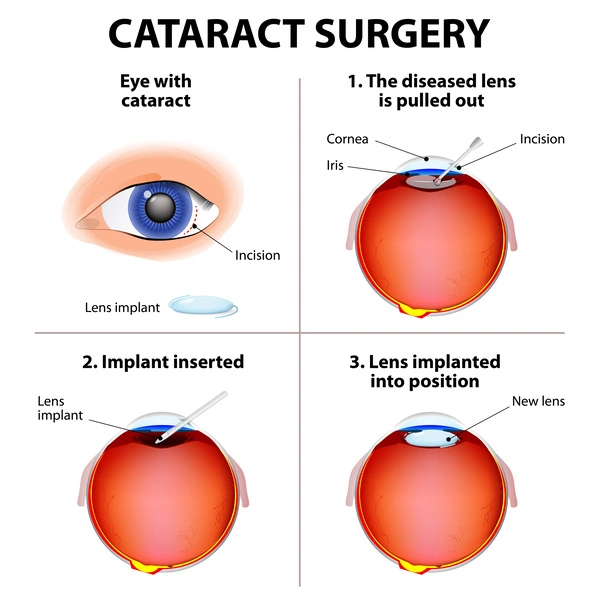
During cataract surgery, the old cloudy lens is removed and a clear artificial lens is inserted in its place. This restores vision clarity, improving colour contrasts.
The image below illustrates how cataract surgery is performed with step-by-step illustrations.
What happens during the procedure?
During the procedure, your eye will be cleaned with an antiseptic solution. Local anaesthetic will be applied too – this will either be in the form of eyedrops or injection. A drape is then placed over your affected eye with air blown under it.
The cataract is removed by phaco-emulsification which works to break up the old, cloudy lens. Once this is complete, your cataract surgeon will insert your new, artificial lens. If at any point you feel discomfort during your eye surgery, please let your consultant know. The entire procedure generally only takes between 15-30 minutes.
It’s possible you’ll see the benefits right away but sometimes it can take up to 2 weeks to fully recover.
Recovery and aftercare: what to expect in the days following surgery
Immediately after your operation, you may be able to see from your affected eye but your vision will likely be blurred as your pupils will still be dilated.
You’ll be able to return home when your nursing team is happy with your post-surgery progress. You won’t be able to drive for at least 24 hours after the procedure, so you’ll need a friend or family member to take you home. If the eye feels uncomfortable, please use your normal pain tablets.
Once allowed to go home, your cataract surgery recovery will really begin! We’ll give you post-operative drops and instructions on how to apply them. It is important to prevent infection by following the instructions given, particularly good hand hygiene whilst using the eye drops.
As cataract lenses often help improve vision, if you wear glasses, you may need to alter the prescription. Your optician will be able to help with prescription changes, so it’s worth booking yourself in with them to find out what works best for you.
You will be given contact details should you have any concerns or worries post-operatively.
It’s worth bearing in mind the importance of eye health and, at Practice Plus Group, we advocate lifestyles that support healthy eyesight. If you need support to give up smoking or lose weight, don’t hesitate to reach out to our healthcare team.
Booking private cataract surgery in Birmingham
At Practice Plus Group Hospital, Birmingham, cataract patients can access their treatment in a number of different ways.
Paying for yourself For those wishing to pay for themselves, this is done either in a one-off lump sum or by spreading the cost using a payment plan.
Private health insurance Patients with existing private health insurance will need to first check their policy covers the procedure before booking cataract surgery.
NHS If you wish to have your treatment via the NHS, either let our friendly patient advisors know when you call to book or select the NHS option on our online form.
Not quite found the information about Birmingham cataract surgery you’re looking for? Our dedicated FAQs could help!
How long does cataract surgery take?
Cataract surgery usually takes between 15-30 minutes.
Is cataract surgery painful?
No, cataract surgery shouldn’t be painful at all. This is because it’s done under local anaesthetic, which means you will be awake during the operation. Most of the time, drops are used to numb the eye.
How much does cataract surgery cost in Birmingham?
If you’re having your surgery privately, cataract surgery at Practice Plus Group Hospital, Birmingham starts from £1,995. This is for a standard monofocal lens. There are 7 different types of lenses on offer and each has its own cost attached.
When can I drive after cataract surgery?
You should be able to drive around 24 hours after your cataract surgery, provided you meet DVLA requirements.
How long does it take to recover from cataract surgery?
You may experience an improvement in your vision within a few hours but most people report better vision clarity between 1-2 weeks after their procedure.
What type of anaesthetic is used for cataract surgery?
Cataract surgery is usually carried out under local anaesthetic. This means you’ll be awake during the procedure. Depending on your specific needs, your local anaesthetic will be administered via eye drops or injection. Please note that general anaesthesia can be provided, if found suitable following consultation.
What are the risks of cataract surgery?
Certain risk factors can increase the likelihood of complications. Older patients may be at increased risk due to age-related changes in ocular tissues and overall health. Those with pre-existing conditions such as glaucoma, macular degeneration or diabetes may also have a higher risk of certain complications.
Other risk factors include; poor overall health, the use of certain medications and previous eye surgery.
Will I still need glasses after cataract surgery?
This depends on the type of artificial lens you’re having fitted. For example, an enhanced monofocal toric lens removes the need for glasses post-surgery.
How long is the NHS waiting list for cataract operations?
This depends on where you want to have your procedure and consultant availability. Waiting lists vary depending on location. For the latest information on NHS waiting times, take a look at the My Planned Care site.
(Practice Plus Group is not responsible for and does not control the content displayed on external websites.)
Is it better to go private or NHS for cataract surgery?
This completely depends on your specific needs. NHS treatment is free but more than likely will come with a lengthy waiting list – sometimes up to or beyond a year. Private healthcare comes at a cost but with a much shorter wait. With Wellsoon from Practice Plus Group, you’ll have your cataract surgery just 4-6 weeks after your initial consultation.