Blog
10–15 minutes
If you’re looking for experienced cataract surgeons in Portsmouth, choosing the right consultant and hospital can make the whole process feel much more straightforward.
At Practice Plus Group Surgical Centre, St Mary’s Portsmouth, you can access consultant-led cataract care close to home, with clear treatment options, transparent prices, and support from your initial assessment all the way through to recovery.
So, whether you’re considering self-pay cataract surgery, using private medical insurance to cover the costs or simply want to understand whether a cataract procedure is right for you, this guide explains what to expect.

Private cataract surgery at a glance
- Waiting time: 4-6 weeks
- Cost: £2,099 for standard lens (one eye)
- Ways to pay: self-pay, insured, payment plan
- Procedure time: 15-30 minutes
On this page:
Private cataract surgery in Portsmouth offers faster access to consultant-led care and a wider choice of replacement lenses. Treatment is typically available within 4-6 weeks of initial consultation.
Practice Plus Group Surgical Centre, St Mary’s, Portsmouth provides personalised cataract treatment, with lens options including enhanced, toric, multifocal and extended depth-of-focus lenses.
Why choose private cataract surgeons in Portsmouth?
For some people, the main reason for considering private cataract surgery in Portsmouth is faster access. For others, it’s about having a greater level of choice over their treatment, lens options, and available consultants.
Whichever route you’re considering, the most important thing is receiving the best level of care for you. This is based on your eyes, your general health, and the way your cataracts affect your everyday life.
Shorter waiting times for cataract removal
If cataracts are making reading, driving, or other everyday activities increasingly difficult, waiting for treatment can be understandably frustrating.
That’s where we come in! At Practice Plus Group, private eye surgery is available just 4–6 weeks after your initial appointment. Find out more about current private surgery waiting times.
Consultant-led care from start to finish
Your initial consultation is an important part of deciding whether cataract removal is appropriate for you.
Your eye(s) will be assessed and your consultant will discuss your symptoms, medical history, treatment options, and expected results of surgery (if needed) with you. This is also your opportunity to ask questions about the procedure, risks, recovery, and the type of replacement lens that may suit you.
Read our guide to what happens at a cataract consultation.
Transparent pricing and self-pay options
For patients considering private cataract surgery in Portsmouth, knowing what treatment may cost before making a decision is important.
At St Mary’s, Portsmouth, cataract surgery currently starts from £2,099 for a standard monofocal lens for one eye. Premium lens options are available and start from £2,249 (per eye). A private cataract consultation with a specialist costs £145.
What are cataracts and when is surgery recommended?
A cataract develops when the natural lens inside your eye becomes cloudy. This can gradually affect the amount and quality of light reaching the retina and make your vision less clear.
NICE guidelines recommend decisions about cataract surgery should consider how a cataract affects your vision and quality of life rather than being based on visual acuity alone.
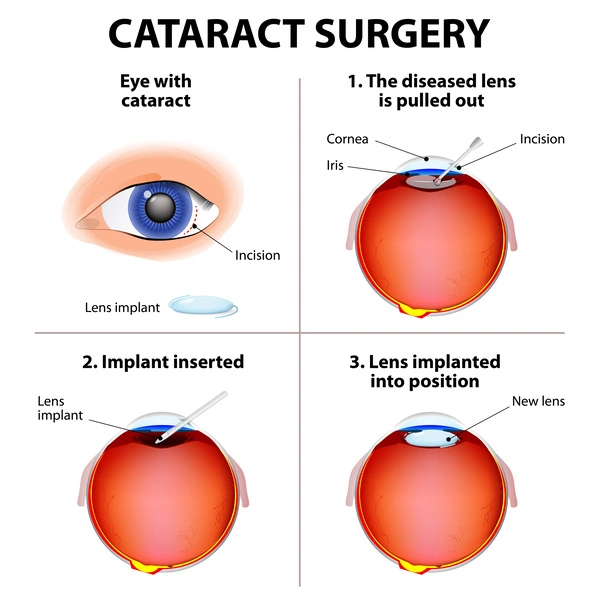
Cataract surgery itself involves removing the cloudy natural lens and replacing it with an artificial intraocular lens (IOL).
How cataracts develop
Cataracts commonly develop with age but can affect younger people too. You may initially find that changing your glasses prescription helps, but as a cataract develops, wearing glasses or contact lenses won’t remove the cloudiness within the natural lens itself.
Symptoms of a cataract can include:
- blurred or misty vision
- difficulty seeing at night
- glare, halos, or sensitivity to bright lights
- colours appearing less vivid
- double vision in one eye.
When does cataract surgery become the best option?
There is no single point at which every patient needs an operation.
A consultant ophthalmologist will consider:
- how much your cataracts are affecting your everyday activities
- whether one or both eyes are affected
- the potential benefits and risks of surgery
- your specific treatment goals.
Meet out Portsmouth cataract surgeons
Choosing between Portsmouth cataract surgeons should involve more than simply searching for the closest appointment.
You should check the surgeon’s:
- qualifications
- GMC registration number
- ophthalmology experience
- clinical interests
- experience with the type of lens or procedure you’re considering.
Consultant expertise in Portsmouth
One of the consultant ophthalmologists currently practising at St Mary’s Portsmouth is Ms Rubina Rahman.
Ms Rahman is GMC-registered with more than 30 years’ experience as a Consultant Ophthalmologist. Her specialisms include cataract removal, glaucoma treatment, and vitreo-retinal disorders. She also works with a number of major private medical insurers.
In our dedicated Consultants directory, patients can view individual consultant experience, specialisms, and credentials when deciding which specialist is most appropriate for their needs.
Experience with lens replacement and personalised eye care
Modern cataract treatment is not simply about removing the cataract. The replacement lens selected during treatment can also influence your vision afterwards.
If you’re seeking cataract treatment in the Portsmouth area, our experienced consultant ophthalmologists will discuss your eyesight, lifestyle, and expectations before recommending an appropriate lens.
The aim should be for you to feel prepared and informed enough to make a decision, rather than assuming that the most expensive or technologically advanced lens is automatically the best option.
Cataract surgery in Portsmouth with Practice Plus Group
Practice Plus Group Surgical Centre, St Mary’s Portsmouth provides both NHS and private ophthalmology services from its location on the St Mary’s Hospital campus.
Consultant-led cataract care in Portsmouth
Private patients can access experienced cataract surgeons in Portsmouth and a wider clinical team involved in assessment, surgery and aftercare.
The Portsmouth centre provides cataract treatment alongside services for other eye conditions, helping patients access specialist ophthalmology care locally.
Fast access to private cataract surgery in Portsmouth
Practice Plus Group currently lists private eye surgery waiting times of 4–6 weeks following the initial appointment.
Actual timings depend on consultant availability, your clinical assessment and whether any further investigations are required.
Modern facilities and regulated care
Practice Plus Group Surgical Centre Portsmouth is regulated by the Care Quality Commission.
Its latest CQC assessment, published in February 2025, gives the centre an overall rating of ‘Good’, with positive ratings for safe, effective, caring, responsive, and well-led care.
Your cataract surgery journey: step-by-step
Knowing what happens at each stage can make eye surgery feel less daunting. The steps below detail what you can expect from the journey.
1. Initial cataract consultation and eye assessment
During your cataract consultation in Portsmouth, your clinical team will assess your vision and eye health.
Tests may include measurements of your vision and eye pressure, along with ocular biometry to measure the eye and help calculate the best replacement lens for you. Depending on the condition of your eyes, additional scans may be recommended.
2. Lens selection and treatment planning
Your consultant will explain which intraocular lens options are suitable for you.
This discussion should consider your current eyesight level, any astigmatism present, your lifestyle, and your expectations around wearing glasses after surgery.
3. The day of cataract surgery
During cataract removal, the cloudy natural lens is broken down and removed. An artificial lens is then inserted in its place.
Cataract surgery is usually performed under local anaesthetic and is generally carried out as a same-day procedure. The operation itself typically takes around 15–30 minutes, although more complex procedures may take longer.
4. Aftercare and follow-up
Upon returning home, you’ll receive instructions about caring for your eye. These will include prescribed eye drops and activities to avoid while your eye heals.
Your clinical team will also explain which symptoms are expected and when you should contact them for advice.
Cataract lens options and personalised treatment plans
A major benefit of private treatment is the access to a wider choice of replacement lenses.
The information below provides a concise summary of what each of the different lens replacements can offer. Alternatively, explore the wider range of eye surgery and treatment options available through Practice Plus Group.
Monofocal and enhanced monofocal lenses
A standard monofocal IOL is usually designed to provide clear vision at one main focal distance, commonly distance vision. Reading glasses may still be needed afterwards.
Enhanced monofocal lenses can provide a wider range of useful vision than a standard monofocal lens, depending on your suitability.
Multifocal and extended depth of focus lenses
Some private patients may be suitable for multifocal or extended depth of focus lenses designed to improve vision across more than one distance.
These lenses are not appropriate for everybody, which is why careful assessment and discussion with your consultant is important.
Toric lenses for astigmatism
Toric IOLs can help correct astigmatism at the same time as cataract removal.
Your consultant will explain whether the degree and type of astigmatism you have makes a toric lens a good option for you.
Cataract surgery recovery and results
While it’s important to remember that everybody heals at different rates, full cataract surgery recovery can take around two to six weeks.
Many people begin noticing improvements earlier than this, although some temporary blurring, light sensitivity, or mild discomfort can be normal immediately after surgery.
Cataract surgery recovery timeline
- First 24–48 hours: vision may be blurred or hazy and your eye may feel slightly uncomfortable.
- 1–2 weeks: vision usually continues to improve as your eye heals. You should continue using any prescribed eye drops and follow your surgeon’s instructions.
- 3–4 weeks: many people can return to most normal daily activities. Strenuous exercise or heavy lifting may still need to be avoided.
- Around 6 weeks: the eye is usually substantially healed and vision should be more stable.
For more detailed advice, read our cataract surgery recovery guide.
Cost of private cataract surgery in Portsmouth
The cost of cataract surgery in Portsmouth depends on the type of replacement lens selected.
The prices and attributes of each available lens at Practice Plus Group Surgical Centre, St Mary’s Portsmouth are as follows:

Lens |
Price |
|---|---|
Cataract surgery – standard monofocal lens |
£1995 |
Distant

Intermediate
Near

Lens |
Price |
|---|---|
Cataract surgery – enhanced monofocal lens |
£2145 |
Cataract surgery – enhanced monofocal lens TORIC |
£2545 |
Distant
Intermediate

Near

Lens |
Price |
|---|---|
Cataract surgery – extended depth of focus lens |
£2945 |
Cataract surgery – extended depth of focus lens TORIC |
£3095 |
Distant
Intermediate

Near


Lens |
Price |
|---|---|
Cataract surgery – full visual multifocal lens |
£3045 |
Cataract surgery – full visual multifocal lens TORIC |
£3195 |
Distant
Intermediate
Near

Self-pay cataract surgery
If you choose self-pay cataract surgery in Portsmouth, you can fund your treatment yourself without needing private medical insurance.
Self-pay treatment at Practice Plus Group is designed to provide clear pricing and include relevant elements of your treatment and aftercare.
Paying with private medical insurance
Cataract surgery may also be covered by private medical insurance, depending on your policy and insurer.
You should contact your insurer before treatment to confirm whether cataract surgery is covered, whether you need a GP referral and whether your chosen consultant and hospital are approved.
Practice Plus Group works with the following major insurers:
- Allianz
- AXA Health
- Aviva
- Bupa
- Healix
- VitalityHealth
- WPA
Find out more about having surgery with private medical insurance.
Finance options for cataract surgery
Eligible patients may also be able to spread the cost of treatment over a set timeframe.
Practice Plus Group currently offers eligible patients 0% payment plans over selected terms, with longer-term finance options also available through Chrysalis Finance. Finance is subject to status and terms and conditions.
Explore finance options for private surgery.
Why patients trust our Portsmouth cataract team
Trust in a cataract surgeon comes from more than clinical experience alone. Patients also want to feel listened to, understand their treatment choices and know where to turn if they have concerns.
At Portsmouth, one patient reviewing the eye surgery booking experience described the appointments team as “exceedingly courteous and helpful” when arranging treatment for her parents.
Alongside patient feedback, the hospital’s current Good CQC rating, consultant-led care and transparent treatment information provide additional reassurance when comparing cataract treatment providers.
Sources and references
– NHS guidance: cataract surgery and recovery
– NICE guidelines: Cataracts in adults
– Royal College of Ophthalmologists: Cataract standards and guidance
– CQC: Practice Plus Group Surgical Centre, Portsmouth
– Cataract surgery recovery time – a patient guide
– What happens at a cataract consultation?
– How long is the waiting time for cataract surgery?
– Questions to ask before cataract surgery
Share
FAQs about cataract surgeons in Portsmouth
If you’re still looking for the information you need, why not try our cataract surgeons in Portsmouth FAQs?
How do I choose the best cataract surgeon?
Rather than looking for a single “best” cataract surgeon, choose a consultant with appropriate ophthalmology qualifications, GMC registration, and experience treating cataracts. You should also feel comfortable discussing risks, lens options, and your expectations with them.
Can I choose my cataract surgeon privately?
Yes. Private treatment generally gives you greater choice over your consultant. This is usually subject to availability and whether the surgeon provides the treatment you need. Insured patients should also check that their chosen consultant is approved by their insurer.
Is private cataract surgery better than NHS cataract surgery?
Both NHS and private cataract surgery can provide high-quality care. Private treatment may offer shorter waiting times and a broader choice of premium lens options, while NHS cataract surgery is provided without patients paying privately. The right route depends on your needs, budget and circumstances.
Is cataract surgery painful?
No. Cataract surgery is usually carried out using local anaesthetic to numb the eye. Most patients experience little or no pain during the procedure, although you may notice pressure, lights, or movement.
Can I choose which cataract lens I have?
If you are suitable for more than one type of intraocular lens, your consultant will discuss the advantages and disadvantages of each option with you. Your eye health, prescription, any astigmatism, and general lifestyle will all influence the recommendation.
How much does private cataract surgery cost in Portsmouth?
At Practice Plus Group Surgical Centre, St Mary’s Portsmouth, cataract surgery currently starts from £2,099 per eye for a standard monofocal lens. Premium lens options cost more. A private cataract consultation costs £145.
How quickly can I have private cataract surgery in Portsmouth?
The waiting time for private cataract surgery at Practice Plus Group is just 4–6 weeks after your initial appointment.
How long does cataract surgery take?
The procedure itself usually takes around 15–30 minutes, although you’ll spend longer at the hospital to allow time for preparation and recovery before going home.
How long does recovery from cataract surgery take?
Full recovery can take between two to six weeks, although many patients notice their vision improving sooner. Your consultant will advise you when it is safe to return to driving, work, exercise, and other normal activities.
How long after a cataract consultation will I have surgery?
For private patients at Practice Plus Group, surgery is available between 4–6 weeks following the initial consultation.
Acknowledgements and clinical review
This page has been medically reviewed and approved by Ms Rahman, Consultant Ophthalmologist at Practice Plus Group Hospital. She is a GMC-registered consultant surgeon (GMC: 4146685), with over 30 years of clinical experience and holds various ophthalmological qualifications. Her clinical expertise focuses on cataract surgery, glaucoma treatment, and vitreo-retinal disorders. Ms Rahman serves as an examiner for the Royal College of Surgeons in Glasgow and has undertaken several leadership and educational roles. She has also published over 50 abstracts and 35 peer-reviewed papers across a wide range of ophthalmic topics.
All content on this page is produced by the Practice Plus Group digital content team and clinically reviewed by consultant specialists to ensure accuracy, patient safety, and alignment with current UK clinical best practice. Content is approved under Practice Plus Group’s clinical governance framework.

Rubina Rahman General Medical Council number: 4146685
This page is regularly reviewed and updated to reflect changes in clinical evidence, surgical practice, and patient safety standards. The last clinical review was completed on 9/6/2026, with the next review scheduled for 9/06/2027.
James Wood, Content Specialist
This article was co-written by Content Specialist, James Wood. Our Content Specialist, James, has been writing articles and blogs for Practice Plus Group since 2022. He has more than a decade of experience as a copywriter within a range of different backgrounds and works closely with medical professionals to deliver information that's easy-to-read and patient-focused. When he's not writing medical pieces, James is busy playing sports or pub quizzing.
View LinkedIn profile