9–14 minutes
This guide explains what back pain is, why it happens, when to worry about back pain, and what symptoms may need medical attention. It also covers chronic pain and fibromyalgia, including how specialist care can help people with back pain that has lasted a long time or is affecting daily life.

Private back surgery at a glance
- Waiting time: 4-6 weeks
- Cost: treatment dependent
- Ways to pay: insured, self-pay, payment plans
- Hospital stay: treatment dependent
- Procedure time: treatment dependent
On this page:
Back pain is a common condition that is usually caused by muscle strain, poor posture, or age-related changes. Most cases improve with movement, self-care, and appropriate treatment. It’s important to seek medical advice if symptoms are severe, persistent, or accompanied by warning signs. These include numbness, weakness, bladder or bowel changes, or unexplained weight loss.
What is back pain?
Back pain is discomfort, stiffness, aching or pain felt anywhere along the spine. It can affect the lower back, middle back, upper back, neck area, or the muscles and soft tissues around the spine.
For many people, back pain occurs after a sudden movement, strain, or injury. For others, it builds gradually over a period of time. It may feel like a dull ache, sharp pain, muscle spasm, burning sensation, or stiffness. Some people also get pain that travels into the buttocks, hips, or legs, which can happen when nerves are irritated.
Back pain is very common. Most cases are not caused by anything serious and will improve with time, movement, and the right support. However, it can still be painful, frustrating, and limiting, especially if it affects everyday activities.
Common causes of back pain
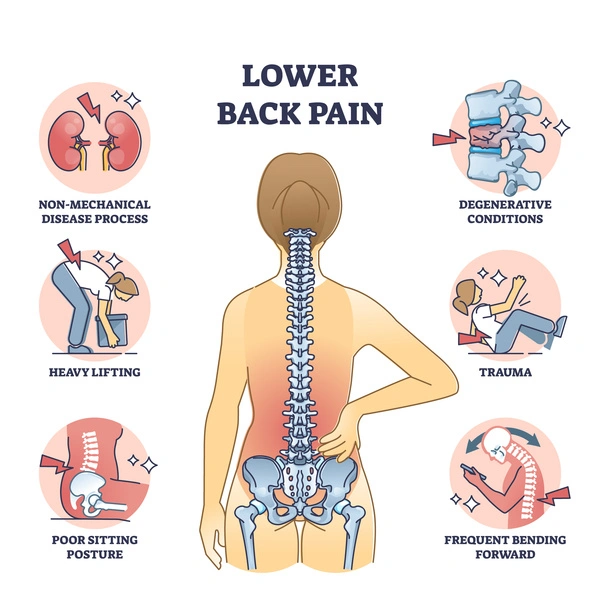
Back pain can have many different causes. Sometimes there is no single clear reason, and the pain may be linked to a combination of muscles, joints, discs, nerves, posture, lifestyle, and general health.
Among the most common causes of back pain are:
- muscle strain or ligament sprain
- lifting heavy objects with poor technique
- sudden twisting or awkward movement
- sitting or standing for long periods
- poor posture or reduced movement during the day
- spinal wear and tear
- slipped disc or nerve irritation
- sciatica
- arthritis
- previous injury
- stress, tension, or poor sleep
- being less active over a long time.
Back pain can also be linked to existing medical conditions. These include ankylosing spondylitis and fibromyalgia.
When to worry about back pain
The good news is that the majority of back pain isn’t serious. However, there are certain symptoms that shouldn’t be ignored.
You should seek urgent medical help if you have back pain and any of the following symptoms:
- numbness, tingling, weakness, or pain in both legs
- loss of feeling around your genitals, buttocks, or anus
- changes in bladder or bowel control
- difficulty peeing or loss of bladder control
- chest pain
- back pain after a serious accident, fall or injury
- a high temperature
- unexplained weight loss
- swelling or a deformity in your back
- pain that is getting worse, not better
- pain that is severe at night or stops you sleeping
- pain made worse by coughing, sneezing, or going to the toilet.
You should also speak to a healthcare professional if your back pain:
- hasn’t improved after a few weeks
- keeps returning
- is affecting your daily life
- is associated with symptoms such as leg pain, pins and needles, weakness, stiffness, or fatigue.
When back pain may be linked to sciatica
Sciatica is pain caused by irritation or compression of the sciatic nerve. It often starts in the lower back or buttock and travels down the back of the leg.
Symptoms of sciatica can include:
- pain in the buttock, leg, or foot
- tingling or pins and needles
- numbness
- weakness
- pain that feels worse when sitting, coughing, or sneezing.
Sciatica can improve over time, but you should seek advice if symptoms are severe, getting worse, or lasting for a long time. If sciatica is linked to bladder or bowel changes, numbness around the genitals or buttocks, or weakness in both legs, this needs urgent medical attention.
When back pain may be inflammatory
Some types of back pain are caused by inflammation rather than strain or wear and tear. One example is ankylosing spondylitis. While it may sound a bit like a dance, it’s actually a long-term inflammatory condition that can affect the spine and other joints.
Back pain linked to ankylosing spondylitis may:
- start gradually
- be worse in the morning or during the night
- improve with exercise
- feel worse after rest
- cause stiffness that lasts a long time
- be associated with pain around the buttocks
- occur alongside fatigue or pain and swelling in other joints.
This type of pain can be different from a typical pulled muscle. If you have back pain and stiffness that has lasted for more than three months – especially if it improves with movement but not rest – it’s worth speaking to a healthcare professional.
Long-term back pain
Back pain becomes more complicated when it lasts for a long time. Some people continue to feel pain even after the original injury or cause has settled. This is often described as persistent or chronic pain.
Chronic back pain can affect more than just the back itself. If you’re constantly in pain, it’s likely going to affect your mood, sleep, confidence, work, relationships, and your overall quality of life. People with back pain may also become less active because they’re worried about making the pain worse. Over time, this can lead to stiffness, weakness, and reduced confidence with movement.
Pain management is not just about reducing pain. It is also about helping people understand their symptoms, improve function, and feel more in control. Treatment may include physiotherapy, exercise, reviewing any medication you’re currently taking, practising relaxation techniques, pacing strategies, and even psychological support such as cognitive behavioural therapy CBT.
Practice Plus Group has a new specialist starting soon in Birmingham with expertise in fibromyalgia and chronic pain. This may be particularly helpful for patients whose pain:
- has lasted a long time
- has not improved with standard treatment
- is affecting daily life, sleep, or general wellbeing.
Fibromyalgia and back pain
Fibromyalgia is a long-term condition that can cause widespread pain across the body. It can also cause tiredness, poor sleep, brain fog, headaches, and increased sensitivity to pain.
Back pain may be one of several symptoms for people with fibromyalgia. The pain is not always linked to a single injury or visible problem on a scan. Instead, the nervous system may become more sensitive. This means pain signals feel stronger or last longer than expected.
Fibromyalgia can be difficult to live with. This is especially true when symptoms come and go or affect many areas of the body. Treatment usually focuses on improving quality of life and helping people manage symptoms. These may include:
- gentle exercise and movement
- group exercise programmes
- pacing activity to avoid overdoing things
- improving sleep routines
- stress management
- relaxation techniques
- medicines (if needed)
- talking therapies such as cognitive behavioural therapy (CBT)
- support from a pain or musculoskeletal specialist.
There is no single treatment that works for everyone with fibromyalgia. A personalised approach is often best, especially when symptoms have been present for a long time.
What can increase the risk of back pain?
Back pain can happen to anyone, but some factors may increase the risk. These include:
- heavy lifting
- repetitive bending or twisting
- long periods of sitting
- low levels of physical activity
- poor sleep
- stress or anxiety
- previous back injury
- being overweight
- smoking
- certain jobs or hobbies
- inflammatory or musculoskeletal conditions.
With all that said, back pain isn’t always caused by one specific thing. Many people with back pain have a mix of physical, lifestyle, and emotional factors that all play a role.
Preventing back pain
Preventing back pain is not about avoiding movement. In many cases, staying active is one of the most helpful things you can do for your back.
Some of the ways to reduce the risk of back pain include:
- moving regularly during the day
- avoiding long periods in one position
- building strength gradually
- stretching and maintaining flexibility
- using good lifting technique
- taking breaks from sitting
- keeping active by walking, swimming, or cycling
- maintaining a healthy weight
- managing stress
- getting enough sleep.
If you already have back pain, try not to rest in bed for long periods. Unless you’re experiencing ‘red flag’ symptoms, gentle activity can actually be better than complete rest.
How is back pain treated?
Treatment depends on your symptoms, how long you’ve had pain, and whether there’s an underlying cause.
Back pain treatment may include:
- advice and reassurance
- gentle movement and staying active
- physiotherapy
- pain relief medication
- anti-inflammatory medication (if needed)
- guided exercises
- group exercise
- manual therapy (such as mobilisation or soft tissue techniques)
- pain management support
- CBT or other psychological therapies
- scans or further investigations (if needed)
- referral to a specialist if symptoms are severe, complex, or long-lasting.
For many people, the most helpful treatment plan combines physical support with education and confidence-building. This is especially important for long-term pain where fear of movement can sometimes make symptoms harder to manage.
Do you always need a scan for back pain?
Not always. Many cases of back pain improve without the need for an X-ray, MRI scan, or CT scan. Scans are usually recommended when the results are likely to change your treatment plan or when symptoms suggest something more serious may be happening.
A healthcare professional can assess your symptoms and advise whether imaging is needed. In some cases, a scan can help identify problems such as disc changes, nerve compression, arthritis or other spinal conditions. In other cases, symptoms can be managed safely without imaging.
When to see a specialist
You may benefit from a pain clinic or physiotherapy if:
- symptoms are getting worse
- pain is affecting your sleep, work, or everyday life
- you have leg pain, numbness, pins and needles, or weakness
- you have recurring flare-ups
- you have symptoms of chronic pain or fibromyalgia
- you are worried about an underlying medical condition
- previous treatment has not helped.
Specialist assessment can help identify the likely cause of your symptoms and recommend a treatment plan that suits your needs.
Getting help for back pain at Practice Plus Group
At Practice Plus Group, we support patients with a wide range of musculoskeletal symptoms. These include back pain, joint pain, and other long-term pain conditions.
If your back pain has been affecting your daily life, or you are worried about persistent symptoms, our team can help assess your needs and talk you through your options.
Want to access back treatment via private medical insurance?
Simply type in the name of your insurance provider below to see if you can access healthcare with us.
Check if we accept your insurer
How to get started
1
Get referred – Ask your GP to refer you to us.
2
Confirm cover – Contact your insurer to check your cover.
3
Get authorisation – Ask your insurer for a code.
4
Get booked in – Contact us to book your consultation.
Sources and references
– NHS: Back pain
– NICE: Low back pain and sciatica in over 16s
– NHS: Fibromyalgia
– NHS: Ankylosing spondylitis
Share
Back pain FAQs
Not quite found the information you’re looking for? Our back pain FAQs could help.
What is back pain?
Back pain is pain, stiffness, or discomfort felt anywhere along the spine or surrounding muscles. It can affect the lower, middle or upper back and may be caused by strain, injury, posture, nerve irritation, arthritis, or a medical condition.
When should I worry about back pain?
You should worry about back pain if it is linked to symptoms such as:
– numbness around your genitals or buttocks
– bladder or bowel changes
– weakness in both legs
– chest pain
– unexplained weight loss
– fever
– pain after a serious accident.
If you experience any of these symptoms, you should seek urgent medical advice.
Is back pain common?
Yes, back pain is very common. Many people experience it at some point, and most cases improve with time, gentle movement, and simple treatment.
Should I rest if I have back pain?
Short rest may help at first, but long periods of bed rest are usually not recommended. Staying active with gentle movement can help prevent stiffness and support recovery.
Can heavy lifting cause back pain?
Yes, heavy lifting can increase the risk of back pain, especially if you lift suddenly, twist while lifting, or use poor technique. Building strength and using safe lifting habits can help reduce the risk.
Can back pain be caused by fibromyalgia?
Fibromyalgia can cause widespread pain, and back pain may be one of the symptoms. It is a long-term condition that can also cause tiredness, poor sleep and increased sensitivity to pain.
What is chronic back pain?
Chronic back pain is pain that lasts for a long time – usually beyond the expected healing period. It may continue even when there is no clear injury, and it can affect sleep, mood, movement, and daily activities.
Can CBT help with back pain?
Cognitive behavioural therapy CBT can help some people manage long-term pain by changing how they respond to pain, improving coping strategies, and reducing the impact pain has on everyday life.
What is ankylosing spondylitis?
Ankylosing spondylitis is a long-term inflammatory condition that can cause back pain and stiffness. Pain may be worse in the morning or after rest and may improve with exercise.
How can I prevent back pain?
Preventing back pain often involves staying active, moving regularly, avoiding long periods in one position, strengthening your muscles, lifting safely, and managing lifestyle factors such as sleep, stress and weight.
Acknowledgements and clinical review
This page has been medically reviewed and approved by Mr Andrew Bacon, Consultant Neurosurgeon at Practice Plus Group Hospital. He is a GMC-registered consultant surgeon (GMC: 6028673), with over 15 years of clinical experience and holds an MBBS qualification. His clinical expertise focuses on neurovascular surgery and can carry out spinal decompression, microdicectomy, and neurovascular surgery. Mr Bacon joined Practice Plus Group in 2013 and is a member of the Medical Defence Union and the Society of British Neurological Surgeons.
All content on this page is produced by the Practice Plus Group digital content team and clinically reviewed by consultant specialists to ensure accuracy, patient safety, and alignment with current UK clinical best practice. Content is approved under Practice Plus Group’s clinical governance framework.

Andrew Bacon General Medical Council number: 6028673
This page is regularly reviewed and updated to reflect changes in clinical evidence, surgical practice, and patient safety standards. The last clinical review was completed on 9/6/2026, with the next review scheduled for 9/06/2027.
James Wood, Content Specialist
This article was co-written by Content Specialist, James Wood. Our Content Specialist, James, has been writing articles and blogs for Practice Plus Group since 2022. He has more than a decade of experience as a copywriter within a range of different backgrounds and works closely with medical professionals to deliver information that's easy-to-read and patient-focused. When he's not writing medical pieces, James is busy playing sports or pub quizzing.
View LinkedIn profile