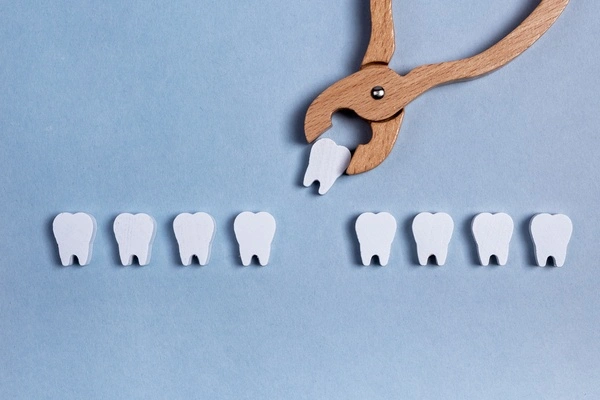
What is dental extraction? Signs you may need a tooth extraction
A dental extraction is a procedure to remove a tooth from its socket in the jaw. It may be recommended when a tooth is badly damaged, decayed, infected, or causing other problems that cannot be successfully treated in other ways.
Although having a tooth removed can sound daunting, tooth extractions are common dental procedures.
Private dental surgery at a glance
In this guide, we explain what dental extraction means, the signs and symptoms that could indicate a tooth needs removing, the difference between simple and surgical tooth extraction, and what happens during the procedure.
We also cover how long recovery can take, how to protect the blood clot in your tooth socket and when symptoms such as severe pain could be a sign of dry socket or another complication.
A dental extraction is the complete removal of a tooth from its socket. The aim of the procedure is usually to resolve a dental problem when preserving the tooth is no longer possible or when leaving it in place could cause further oral health problems.
A tooth extraction may be recommended due to the following:
advanced tooth decay
significant damage
infection
gum disease
problems with an impacted tooth.
However, this is not an exhaustive list and, depending on the cause and condition of the tooth, other treatments such as a filling or root canal treatment may sometimes be possible. The NHS notes that the appropriate treatment for tooth decay depends on its severity, with extraction generally considered when the affected tooth cannot appropriately be restored.
Your dentist or dental specialist will assess your teeth, gums, and overall oral health before recommending the most suitable treatment.
What are the signs and symptoms you may need a tooth extraction?
There is no single symptom that signals a tooth definitely needs removing. Having a face-to-face dental assessment will help establish the cause of your symptoms and whether the tooth can be saved.
With that said though, some symptoms can indicate a problem serious enough that tooth extraction may be considered.
Sign or symptom
What it could mean
Persistent or severe toothache
Advanced tooth decay, infection, damage, or an abscess
Pain when biting or chewing
Damage, decay, or infection around the tooth
Sensitivity to hot or cold
Tooth decay or damage affecting deeper parts of the tooth
Swollen, red, or painful gums
Gum disease or infection
Facial or jaw swelling
A dental infection or abscess that requires prompt assessment
A bad taste in your mouth
Infection or a dental abscess
A loose adult tooth
Advanced gum disease or damage to the supporting tissues
A tooth broken below or close to the gum line
The tooth may be difficult to restore or remove with a simple extraction
Repeated pain or swelling around a wisdom tooth
An impacted or partly erupted wisdom tooth may be causing problems
Tooth decay can cause toothache, sensitivity, and visible changes to the tooth, while a dental abscess may cause severe pain, swelling, difficulty chewing, a bad taste, or a high temperature.
Advanced gum disease can also cause gums to become sore and swollen and, in more severe cases, can cause teeth to become loose or fall out. Some severely affected teeth may even need to be removed.
Ongoing toothache is one of the most common reasons people seek dental care.
However, pain does not necessarily mean that you need a tooth extraction. For example, some damaged teeth can be restored with fillings, crowns, or root canal treatment.
If a tooth is extensively decayed or damaged and cannot be restored, extraction may be recommended.
You should arrange a dental assessment rather than waiting for severe toothache to disappear on its own.
An infection within or around a tooth can cause the following symptoms:
significant pain
gum swelling
facial swelling
sensitivity
a bad taste in your mouth.
A dental abscess requires urgent dental treatment and will not improve by itself. Depending on the cause, treatment may involve:
draining the infection
root canal treatment
removing the affected tooth.
If you think you have an abscess, you should seek urgent dental advice. Significant swelling that affects your ability to breathe, speak, or swallow requires emergency medical attention.
Sometimes a tooth is damaged through trauma or breaks because it has been weakened by extensive decay.
Where sufficient healthy tooth structure remains, your dentist may be able to restore it. However, a tooth that has broken at or below the gum line can be more difficult to treat.
If the remaining tooth cannot be accessed safely using standard dental forceps, surgical removal may be necessary. Teeth broken at the gum line, impacted teeth, and teeth with complex or curved roots among the circumstances where surgical removal may be required.
Healthy, permanent teeth should not normally feel loose. However, as gum disease progresses, the tissues supporting the teeth can become damaged. More serious gum disease can cause the gums to shrink and teeth to become loose, with some people eventually requiring tooth removal.
A loose tooth should therefore be assessed by a dentist.
An impacted tooth is one that cannot fully emerge into its normal position.
Wisdom teeth are particularly likely to become impacted. They may be blocked by neighbouring teeth or partially covered by the gum.
Impacted wisdom teeth do not always require removal. However, removal may be considered when they repeatedly cause problems. These can include:
pain
swelling
gum infections
tooth decay
food trapping
cysts
dental abscesses.
What are the different types of tooth extraction?
The type of tooth extraction procedure you need depends largely on how easily the tooth can be accessed. The table below sets out the different types of tooth extractions procedures.
Type of extraction
When it may be used
What happens
Simple tooth extraction
The tooth is visible, intact, and easily accessible
The area is numbered before the tooth is loosened and removed
Surgical tooth extraction
The tooth is impacted, broken at the gum line, or otherwise difficult to access
An incision may be made in the gum and sometimes a small amount of surrounding bone may need to be removed
A simple tooth extraction is generally used for a visible tooth that can be easily accessed.
During the procedure, the area surrounding the tooth is numbed with local anaesthetic. The tooth is then carefully loosened using a dental instrument before being lifted from the socket using forceps.
At Practice Plus Group, the entire procedure typically takes between 15-30 minutes.
Many routine extractions can be managed in general dental care. More complex tooth extractions may require someone with additional oral surgery experience or referral to an oral surgeon.
A surgical removal of a tooth is used when the tooth cannot be easily removed using a standard simple extraction.
Examples include an impacted tooth, a tooth broken at the gum line, or a tooth with particularly complex roots.
During surgical extraction, access to the tooth may be created through the gum. Bone obstructing access to the tooth can sometimes need to be removed before the tooth itself is extracted.
In the event the patient is anxious, has a strong gag reflex, has a movement disorder, or the tooth has a high level of surgical complexity, at Practice Plus Group Hospital, Emersons Green, we have the option of using Midazolam. This is a sedative administered intravenously that works to keep the patient calm.
Want fast access to healthcare?
Avoid long waiting lists. Book a private consultation today.
What happens during a dental extraction procedure?
Your exact procedure will depend on which tooth is being removed, its position, and whether a simple or surgical extraction is required.
Your dental team will assess the tooth and discuss why removal is the best course of action for you.
An X-ray may be needed to examine the tooth, its roots, and the surrounding structures. Your medical history and any medication you take may also need to be reviewed before treatment.
You will have an opportunity to discuss the procedure, its expected benefits, risks and alternatives before deciding whether to proceed.
Most routine tooth extractions are carried out using a local anaesthetic.
Local anaesthesia numbs a specific part of the body while you remain awake. Its purpose is to prevent pain during the procedure.
You may still notice sensations such as pressure or movement while the tooth is being loosened.
For a simple extraction, the tooth is loosened and removed from its socket.
For a surgical extraction, the dental surgeon may need to make an incision in the gum to access the tooth. In some cases, a small amount of surrounding bone may also need to be removed.
Once the tooth has been removed, stitches may be needed.
What happens to the tooth socket after an extraction?
After your tooth has been removed, a hole is temporarily left in the jawbone. This is known as the tooth socket.
Your body responds by forming a blood clot inside the socket. This is an important part of the healing process because it protects the area while new tissue begins to form.
Protecting this clot is particularly important during the first 24 hours after your extraction.
What should I expect during tooth extraction recovery?
Some soreness, swelling, and slight bleeding or blood-stained saliva can be normal after a tooth is extracted.
Pain and swelling may increase during the first few days before gradually settling. Recovery may take longer after a more complicated surgical extraction than after a straightforward procedure.
For the first 24 hours after tooth removal, you’ll need to avoid disturbing the extraction site.
Don’t vigorously rinse or spit and avoid touching the socket with your tongue or fingers. Doing so can disturb the blood clot and interfere with healing.
You should follow the individual aftercare instructions given by your dental team.
Once your clinical team says it is safe to eat, try soft foods like yoghurt. These are usually easier to swallow while your mouth is sore.
Avoid chewing directly over the extraction site while it heals.
Take extra care while the local anaesthetic is still working because numbness can make it easier to accidentally bite your tongue, cheek, or lip or burn yourself on hot food and drinks. Local anaesthetic commonly remains effective for several hours following dental extraction.
Some swelling is normal following dental or oral surgery.
If advised by your clinical team, placing a covered ice pack against the outside of the cheek for short periods may help with swelling.
A word from Miss French, Specialist Oral Surgeon:
“As an oral surgeon, I know that a lot of people are worried about having a tooth extraction. I work my hardest to make the whole experience, from assessment to surgery to recovery, as comfortable and smooth as possible. I feel very lucky to be able to support patients through this difficult experience and to be able to get them out of pain.”
Dry socket (also called alveolar osteitis) is a painful complication that can develop after a tooth extraction.
Normally, a blood clot forms in the extraction socket and protects the area during healing. Dry socket can occur when this clot does not form correctly or is lost too early.
Typical symptoms include:
increasing or throbbing pain
an unpleasant taste
bad breath.
Symptoms commonly begin around 3-5 days after the extraction procedure.
Contact your dentist or oral surgery team if pain suddenly becomes significantly worse several days after your extraction rather than gradually improving.
Dry socket can usually be treated locally by cleaning the socket and, when appropriate, applying a dressing.
What is normal after a tooth extraction and when should I get help?
Some discomfort, swelling, and light bleeding are expected following tooth extraction.
However, you should contact your dentist or oral surgery team if you experience the following:
pain that becomes significantly worse rather than better
persistent heavy bleeding
severe or increasing facial swelling
a high temperature
discharge.
NHS hospital guidance notes that increasing pain and swelling several days after surgery can be signs of infection. Severe mouth or facial swelling accompanied by difficulty breathing, speaking, or swallowing requires emergency medical attention.
Private dental surgery with Practice Plus Group is carried out at a time to suit you.
The exact time between consultation and treatment will depend on the procedure you need, your specific clinical requirements, and appointment availability.
If you are considering private treatment, our team can explain current availability and help you understand your treatment options.
Choosing the right option for you
Private healthcare offers greater flexibility over when, where, and by whom you’re treated. In the vast majority of cases, the waiting times are shorter too, and with Practice Plus Group, prices are transparent.
Choosing private healthcare can make planned treatment easier to fit around work, family, and personal commitments. Options to access private treatment are self-pay, payments plans, or medical insurance.
Frequently asked questions about dental extraction
Not yet found the information you’re looking for? Our dental surgery FAQs might be able to help!
Common benefits include:
faster access to planned care
greater choice over your consultant and hospital
more flexibility around treatment dates
different ways to fund treatment.
The exact options available will depend on the provider and procedure. At Practice Plus Group, all of the above benefits are available to you if you choose private healthcare.
Private planned healthcare can provide more choice over factors such as consultant, hospital and appointment or surgery dates.
No. You can pay directly for private healthcare yourself. This is commonly known as self-pay or pay-as-you-go healthcare. Insurance is another option if you already have an appropriate policy.
Private patients can often select their preferred consultant, subject to the consultant performing the required procedure and having availability. Practice Plus Group allows patients to search its consultant network by specialty and location.
There is generally greater flexibility around private treatment dates, although the dates available depend on the procedure, consultant, and hospital.
Times vary. At Practice Plus Group, self-pay patients can usually expect a private specialist consultation within 1-2 weeks of their initial enquiry and treatment around 4-6 weeks after this. Insured patients can have treatment at a time to suit them.
Yes. You do not need an ongoing private medical insurance policy to have one private procedure. Self-pay healthcare allows you to pay directly for an individual consultation or treatment.
Yes – if eligible. Payment plans may be available for some patients. Terms, eligibility, and the total amount repayable should always be checked before entering a finance agreement.
Not always. Practice Plus Group states that a GP referral is not required in most circumstances, although some medical insurance policies may require one. Always check the requirements for your particular treatment and insurance policy.
Acknowledgements and clinical review
This page has been medically reviewed and approved by Miss Kathryn French, Special Oral Surgeon at Practice Plus Group Hospital, Emersons Green. She is a GDC-registered consultant surgeon (GMC: 229443) who carries out more that 500 dental procedures each year. She holds a BA and MA from Oxford University as well as a BDS Hons from Peninsula Dental School. She has co-authored numerous medical journals and specialises in surgical extractions, sedation, and cone beam CT interpretation and reporting.
All content on this page is produced by the Practice Plus Group digital content team and clinically reviewed by consultant specialists to ensure accuracy, patient safety, and alignment with current UK clinical best practice. Content is approved under Practice Plus Group’s clinical governance framework.
Kathryn French, General Dental Council number: 229443
This page is regularly reviewed and updated to reflect changes in clinical evidence, surgical practice, and patient safety standards. The last clinical review was completed on 9/6/2026, with the next review scheduled for 9/06/2027.
James Wood, Content Specialist
This article was co-written by Content Specialist, James Wood. Our Content Specialist, James, has been writing articles and blogs for Practice Plus Group since 2022. He has more than a decade of experience as a copywriter within a range of different backgrounds and works closely with medical professionals to deliver information that's easy-to-read and patient-focused.