Gallstone symptoms: signs, causes, and when to seek treatment
The most recognisable gallstone symptoms include pain in the upper right or centre of the abdomen, and feeling or being sick. Symptoms can last several hours. In some cases, gallstones can cause more serious problems, requiring medical attention.
If gallstones are repeatedly causing symptoms, treatment may involve surgery to remove the gallbladder. Practice Plus Group offers private surgery to remove the gallbladder and gallstones with a wait time of just four weeks.
Private gallstones treatment at a glance
While in the majority of cases, gallstones cause no symptoms, when they block the flow of bile they can trigger sudden, severe pain in the upper abdomen, or under the right ribs. This can last for several hours and sometimes causes nausea or vomiting.
Pain may also spread to the back or shoulders. Urgent medical attention is needed if symptoms are accompanied by jaundice, fever, chills, or severe persistent pain.
Most gallstones remain in the gallbladder without causing any problems. These are sometimes referred to as asymptomatic or ‘silent’ gallstones.
Symptoms typically develop when a stone moves from the gallbladder and temporarily or permanently blocks part of the biliary system (the network of organs that creates, stores, and moves bile).
The most common gallstone symptoms are:
sudden or severe pain in your abdomen
pain beneath the ribs on your right-hand side
pain in the middle or upper part of your abdomen
pain lasting longer than 30 minutes and potentially several hours
feeling sick and vomiting.
The abdominal pain caused by gallstones is known as biliary colic. It can be intense and constant rather than coming and going every few seconds.
Some people experience repeated symptoms of pain separated by periods when they feel completely fine.
A typical gallstone attack can feel like a strong, persistent ache or severe pain in your upper abdomen. The pain often:
starts suddenly
becomes intense
remains fairly constant
lasts at least 30 minutes
continues for several hours (in some cases).
The location can vary slightly. Some people feel the pain directly beneath their right ribs, while others feel it towards the centre of their abdomen.
Gallstone-related pain may also be felt in the back or shoulder area. NICE notes that gallstones can cause stomach, back, and shoulder pain as well as nausea and vomiting.
Where is gallstone pain located?
The gallbladder sits beneath your liver towards the upper right-hand side of your abdomen.
Because of this, gallstone pain is commonly experienced:
This is one of the most common characteristic locations for gallbladder pain.
Some people experience pain centrally rather than clearly on the right-hand side.
Pain can sometimes travel through towards your back.
Referred pain may occasionally be felt around the shoulder or shoulder blade.
Abdominal pain can have many possible causes, so the location of the pain alone cannot confirm that gallstones are responsible.
What does a gallstone attack feel like?
A ‘gallstone attack’ usually refers to an episode of biliary colic. It occurs when a gallstone temporarily obstructs the flow of bile from the gallbladder. Pressure builds up as the gallbladder contracts, which causes pain. An episode may:
start suddenly
cause significant upper abdominal pain
last from 30 minutes to several hours
be accompanied by nausea or vomiting
gradually improve once the obstruction clears.
If the blockage doesn’t clear, inflammation or other complications can develop. The NHS advises seeking urgent medical help through your GP or NHS 111 if abdominal pain lasts longer than 30 minutes.
Want fast access to healthcare?
Avoid long waiting lists. Book a private consultation today.
Are indigestion and bloating symptoms of gallstones?
People sometimes associate gallstones with symptoms such as indigestion, bloating, or discomfort after eating.
However, these symptoms are also extremely common in people without gallstones and can be caused by a range of different digestive conditions. They should therefore not be relied upon on their own to diagnose gallstone disease.
A healthcare professional will usually look at the overall pattern of your symptoms and may arrange tests if gallstones are suspected.
If you repeatedly experience significant abdominal pain, especially pain beneath your right ribs or lasting more than 30 minutes, you should seek medical advice.
Do gallstones cause symptoms after eating?
Some people notice gallstone symptoms after eating, particularly when eating foods that have triggered symptoms previously.
The gallbladder normally releases bile into your digestive system when you eat. If gallstones obstruct the normal movement of bile, contractions of the gallbladder can trigger pain.
However, attacks do not have to occur immediately after eating and symptoms can develop at other times.
NICE recommends avoiding foods or drinks that you know trigger your symptoms while you are waiting for definitive treatment.
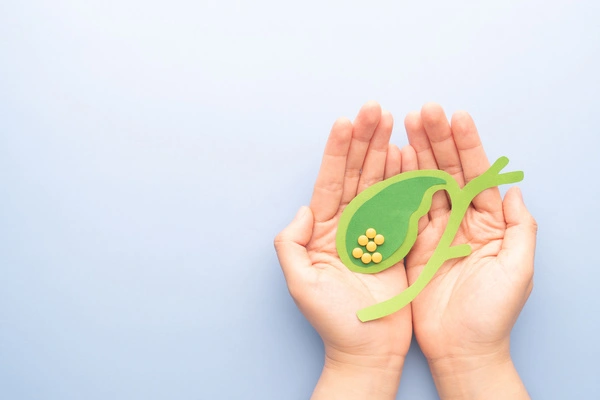
Gallstones are hardened deposits of cholesterol or bile pigments that develop inside the gallbladder.
Your gallbladder is a small organ located beneath the liver. Its job is to store bile, a digestive fluid produced by the liver that helps your body digest fats.
Bile travels through a network of bile ducts connecting the liver, gallbladder, and digestive system. The bile ducts are also closely connected with the pancreas. Gallstones may stay inside the gallbladder or move into one of these ducts.
The majority of people with gallstones do not develop symptoms. Problems usually begin when a stone irritates the gallbladder or blocks the normal flow of bile.
What causes gallstones?
Gallstones develop when substances within bile become imbalanced and begin to form solid deposits. Different types of gallstones exist, although many contain cholesterol.
It’s not always possible to identify exactly why an individual develops them.
Several factors are associated with an increased likelihood of developing gallstones. According to the NHS, risk is higher if you:
are over 40
are a woman
are living with obesity
eat a diet high in fat and low in fibre
have lost weight rapidly
have diabetes
have Crohn’s disease.
With that being said, having one or more of the above risk factors doesn’t mean it’s guaranteed you’ll develop symptomatic gallstones.
“Gallstones are a common problem and may cause unpredictable symptoms of severe pain and medical problems such as infection that require additional treatments in hospital. However minimally invasive planned day case surgery to remove the gallbladder resolves the pain and uncertainty and enables a return to normal life.”
People searching for symptoms of gallstones in women may wonder whether gallstones behave differently depending on sex.
While it’s true that women are more likely to develop gallstones than men, according to NHS guidance, the characteristic symptoms themselves are broadly the same.
Gallstone symptoms in women can include:
severe upper abdominal pain
pain beneath the right ribs
pain lasting 30 minutes or longer
nausea
vomiting
jaundice if a bile duct becomes blocked
fever or chills if inflammation or infection develops.
As abdominal discomfort can sometimes be mistaken for other digestive, gynaecological, or general abdominal problems, persistent or severe symptoms should always be properly assessed rather than self-diagnosed.
When are gallstones symptoms serious?
It’s important to remember that while the majority of gallstone attacks are painful, they’re also temporary.
Occasionally, a stone can remain trapped or block another part of the biliary system. This can lead to potentially serious complications and requires urgent medical attention.
The NHS advises calling 999 or going to A&E if you experience:
sudden, severe abdominal pain
abdominal pain spreading to your back while you are being sick
a very high temperature, or feeling hot, cold, or shivery
Although complications are relatively uncommon, gallstones can block the gallbladder or bile ducts. This primarily causes inflammation or infection but can result in a number of further complications.
Cholecystitis is an inflammation of the gallbladder. It’s usually caused when a gallstone blocks the duct leading out of it.
Symptoms of cholecystitis can include:
persistent pain in the upper right of the abdomen
tenderness
fever.
Unlike uncomplicated biliary colic, the pain may not settle when the gallbladder stops contracting.
If a gallstone blocks the common bile duct, bile cannot drain normally. This can cause bilirubin to build up in the bloodstream, resulting in jaundice.
Signs of this condition can include:
yellow skin or yellowing of the whites of the eyes
dark urine
pale stools
itching.
Yellowing of the skin may be less noticeable on brown or black skin, so changes to the whites of the eyes, urine, or stools may be easier to recognise.
Gallstones can sometimes affect the drainage pathway associated with the pancreas. Pancreatitis occurs when the pancreas becomes inflamed.
Gallstone pancreatitis can cause severe upper abdominal pain which may also spread through to your back. Symptoms can also include nausea and vomiting.
If you experience any of these, you need to seek urgent medical attention.
If a stone blocks a bile duct and an infection develops behind the obstruction, this can lead to cholangitis.
Symptoms may include:
severe upper abdominal pain
fever or chills
jaundice
feeling very unwell.
This is a serious condition requiring prompt medical treatment as it may develop into sepsis.
NICE guidance identifies cholecystitis, cholangitis, pancreatitis, and jaundice as potentially serious complications of gallstone disease.
How are gallstones diagnosed?
If your symptoms indicate the presence of gallstones, it’s a good idea to get yourself checked out. To do this, you need to book yourself in for an initial consultation. If you’re choosing to go private, consultations at Practice Plus Group are available in just 1-2 weeks.
During the appointment, the specialist will ask about your specific symptoms and medical history and may carry out the following tests.
Blood tests can help identify signs of inflammation, infection, or disruption to normal liver function.
An abdominal ultrasound is usually one of the main tests used to look for gallstones.
NICE guidance recommends offering both liver function tests and an ultrasound scan when gallstone disease is suspected.
A magnetic resonance cholangiopancreatography (MRCP) may be considered if:
the bile duct appears enlarged despite the absence of gallstones
liver function test results are abnormal.
This is a specialist MRI scan that produces detailed images of the bile ducts. Unfortunately, it may not be possible to carry out this scan during your consultation. You may need to come back to the hospital at a later date to have this done. An MRI scan will also incur extra cost.
Do all gallstones need treatment?
No. If gallstones are discovered accidentally and have never caused symptoms, treatment is often unnecessary.
Treatment becomes more likely when:
gallstones repeatedly cause pain
attacks are severe
inflammation develops
stones enter the common bile duct
complications occur.
How are symptomatic gallstones treated?
For people with gallbladder stones that cause persistent pain, a specialist may recommend a procedure called laparoscopic cholecystectomy. This is a keyhole surgery that removes the gallbladder, preventing the stones from causing further attacks.
You do not need your gallbladder to survive. After it has been removed, bile flows directly from the liver into the intestine rather than being stored in the gallbladder, and most people can continue eating a normal healthy diet.
Practice Plus Group provides private gallbladder removal surgery for people experiencing painful gallstones and other suitable gallbladder conditions.
The operation is normally carried out using laparoscopic or keyhole surgery.
Gallbladder removal surgery looks like this:
you are given a general anaesthetic
the surgeon makes several small incisions in your abdomen
a small camera and surgical instruments are inserted
the gallbladder is carefully separated from surrounding tissue
the gallbladder is removed through one of the incisions
the incisions are closed.
Most people undergoing keyhole gallbladder removal are able to go home on the same day as their surgery, depending on their individual circumstances.
How much does private gallbladder removal cost?
At Practice Plus Group, private gallbladder removal surgery costs £6,649, with an additional £145 for the initial consultation and tests. If needed, MRI and ultrasound scans will also incur an extra cost but that’s it. Any medication, blood tests, hospital stays and more are covered in the cost of your treatment.
Private patients can access treatment through:
self-pay
private medical insurance
payment options, subject to eligibility.
What happens after gallbladder removal?
Most gallbladder removal procedures are performed using keyhole surgery.
You may experience some temporary discomfort around the incision sites afterwards, and your healthcare team will advise you about pain relief, activity, and caring for your wounds.
While recovery times vary, most people can gradually return to their normal routine within 1-2 weeks after keyhole surgery.
Open gallbladder surgery requires a larger incision and generally involves a longer recovery period.
Can you live normally without a gallbladder?
Yes. Your gallbladder stores bile but does not produce it. The liver continues producing bile after the gallbladder has been removed.
Instead of being stored and released from the gallbladder, bile flows more continuously into the intestine. Many people who have had their gallbladders removed continue to live a normal life with a healthy diet.
When should I speak to a doctor about gallstone symptoms?
Speak to a healthcare professional if you develop recurring abdominal pain that could be caused by gallstones.
In particular, seek medical advice if pain:
occurs beneath your right ribs
is severe or persistent
lasts longer than 30 minutes
keeps returning
is associated with nausea or vomiting.
Seek emergency medical help for sudden severe pain, pain spreading into the back with vomiting, a high temperature or jaundice.
Early assessment can help determine whether gallstones are responsible and whether treatment is needed.
Choosing the right option for you
Private healthcare offers greater flexibility over when, where, and by whom you’re treated. In the vast majority of cases, the waiting times are shorter too, and with Practice Plus Group, prices are transparent.
Choosing private healthcare can make planned treatment easier to fit around work, family, and personal commitments. Options to access private treatment are self-pay, payments plans, or medical insurance.
Not yet found the information you’re looking for? Our gallstone FAQs might be able to help!
Many gallstones cause no symptoms but when they do occur, one of the first signs is often severe or persistent pain in the upper abdomen, especially beneath the ribs on the right-hand side or towards the centre. The pain may last from around 30 minutes to several hours and can be accompanied by nausea or vomiting.
Common gallbladder stone symptoms include:
upper abdominal pain (particularly beneath the ribs on the right-side)
pain lasting more than 30 minutes
nausea and vomiting.
This type of pain is commonly known as biliary colic.
Gallstone pain is typically felt in the upper abdomen, either beneath the right ribs or towards the centre. In some cases, discomfort can also be felt in the back or shoulder area.
Biliary colic commonly lasts for more than 30 minutes and can continue for several hours. The NHS recommends contacting your GP or NHS 111 urgently if abdominal pain lasts longer than 30 minutes.
The characteristic symptoms are broadly the same in women and men, although women are more likely to develop gallstones.
Symptoms can include:
upper abdominal pain
nausea
vomiting
jaundice
fever.
A blocked bile duct can stop bile draining normally. Depending on where the blockage occurs, this may cause severe pain, jaundice, inflammation, or infection. Stones in the common bile duct sometimes need to be removed using a procedure called ERCP.
Yes. A gallstone can interfere with drainage around the pancreas and trigger inflammation known as acute pancreatitis. Severe abdominal pain spreading towards the back, particularly when accompanied by vomiting, requires urgent medical attention.
No. Gallstones that have never caused symptoms usually do not require treatment. However, NICE recommends laparoscopic gallbladder removal for people diagnosed with symptomatic gallbladder stones.
Once your gallbladder has been removed, gallstones cannot form inside the gallbladder because it is no longer present. However, stones can occasionally remain or develop within the bile ducts, which may require further investigation or treatment.
Gallbladder removal is a commonly performed surgical procedure and is usually completed using minimally invasive keyhole surgery. It is carried out under general anaesthetic. Most patients having uncomplicated laparoscopic surgery can go home on the same day, although recovery and hospital stay vary from person to person.
Acknowledgements and clinical review
This page has been medically reviewed and approved by Mr Mark Tomlinson, Consultant General Surgeon at Practice Plus Group Hospital. He is a GMC-registered consultant surgeon (GMC: 3454138), with over 34 years of clinical experience and holds an MBBS qualification from the University of London. He is an expert in vascular surgery, hernia repair, gallstone removal, and the removal of skin lumps and cysts. Mr Tomlinson is also a fellow of the Royal College of Surgeons of England and has been involved in various areas of vascular research.
All content on this page is produced by the Practice Plus Group digital content team and clinically reviewed by consultant specialists to ensure accuracy, patient safety, and alignment with current UK clinical best practice. Content is approved under Practice Plus Group’s clinical governance framework.
Mark Tomlinson, General Medical Council number: 3454138
This page is regularly reviewed and updated to reflect changes in clinical evidence, surgical practice, and patient safety standards. The last clinical review was completed on 9/6/2026, with the next review scheduled for 9/06/2027.
James Wood, Content Specialist
This article was co-written by Content Specialist, James Wood. Our Content Specialist, James, has been writing articles and blogs for Practice Plus Group since 2022. He has more than a decade of experience as a copywriter within a range of different backgrounds and works closely with medical professionals to deliver information that's easy-to-read and patient-focused.