Symptoms of a torn ACL: signs, causes, and what to do next
Understanding the signs of an ACL tear can help you know when your knee needs assessing. In this guide, we explain what a torn ACL feels like, the difference between partial and complete tears, how the injury is diagnosed, and what treatment options may be available.
Private healthcare offers greater flexibility over when, where and by whom you’re treated. In the vast majority of cases, the waiting times are shorter too, and with Practice Plus Group, prices are transparent.
Choosing private healthcare can make planned treatment easier to fit around work, family, and personal commitments. Options to access private treatment are self-pay, payments plans, or medical insurance.
It’s the injury all sportspeople dread: a sudden twist of the knee, a popping sensation, and rapidly developing swelling. These are all symptoms of a torn ACL, an injury common when playing sports that involve jumping, pivoting, or sudden changes of direction.
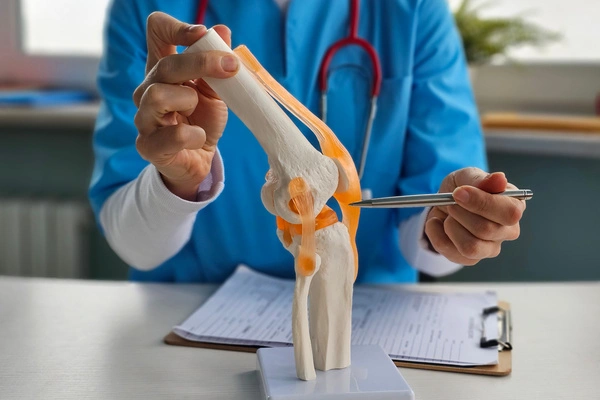
The anterior cruciate ligament (ACL) is a strong band of tissue running through the centre of your knee joint. It is one of four major knee ligaments responsible for keeping the joint stable.
The ACL connects your thigh bone (femur) to your shin bone (tibia). Together with the surrounding ligaments and muscles, it stops your shin bone sliding forwards in relation to your thigh bone and helps control twisting (rotational) movement of the knee. This is particularly important when you turn, pivot, land, or rapidly change direction.
Another ligament crossing the centre of the knee is the posterior cruciate ligament (PCL). The ACL and PCL work together to control movement between the thigh bone and shin bone, while the medial and lateral collateral ligaments help control sideways movement.
Because the ACL plays such an important role in knee stability, damaging it can make certain movements feel unpredictable or insecure.
The symptoms of an ACL injury can vary significantly. You do not need to experience every symptom to have damaged your ACL, and the intensity of the initial pain does not necessarily show whether the ligament is partially or completely torn.
Some of the most common symptoms of a damaged ACL develop at the moment the injury happens or during the following few hours.
Many people describe hearing a popping sound or feeling a distinct ‘pop’ inside their knee at the moment their ACL is injured.
It can happen as you twist, land awkwardly, or suddenly change direction. You might also describe the sensation as a snap or tear.
However, not everyone with a torn ACL hears or feels a pop. The absence of one does not rule out an ACL injury.
An ACL tear can cause immediate pain within the knee joint. It may be sharp at first and make it difficult to continue walking, running, or playing sport.
Pain levels vary, however. Some people with significant ACL injuries report less pain than expected after the initial injury, especially once the first few hours have passed.
For this reason, pain alone cannot tell you whether your ACL is intact, partially torn, or completely ruptured.
Rapid swelling is another important sign.
An ACL injury can cause bleeding inside the knee joint (known as a haemarthrosis). This means noticeable swelling may develop relatively quickly after the injury. NHS musculoskeletal guidance notes that swelling within two hours of suffering the injury is commonly associated with ACL rupture. Most people who develop this kind of rapid, tense swelling after a twisting sports injury turn out to have damaged their ACL.
The knee may feel tight, stiff, and difficult to bend or straighten as the swelling increases.
One of the classic signs of a significant knee injury is having to stop whatever you were doing immediately.
For example, you might have been running towards the ball, stopped suddenly, twisted, or changed direction and found that you could no longer continue playing.
An inability to continue an activity is common with significant ACL injuries, although some people are still able to walk afterwards.
Pain and swelling can restrict your knee’s range of movement.
You may find it difficult to straighten your leg fully or bend your knee as far as normal. This can be particularly noticeable during the first few hours and days after suffering the injury.
Difficulty straightening the knee can also occur with other injuries, including damage to the meniscus. This symptom should be assessed rather than assumed to be caused by the ACL. If your knee becomes ‘locked’ and you cannot straighten it at all, it should be assessed urgently, as this can be a sign of a displaced meniscus tear that may need early treatment.
Instability is one of the most important ongoing signs of ACL damage.
Once the initial pain and swelling settle, you may notice that your knee continues to feel unstable. This may be more noticeable when turning, pivoting, going downstairs, or changing direction.
Some people describe the knee as buckling, shifting, or suddenly giving way underneath them.
This can happen because the ACL is no longer providing its normal level of stability within the knee joint.
A significant ACL injury may make putting weight through the affected leg difficult or painful, especially immediately after the injury.
You may still be able to walk but this doesn’t mean your ACL is undamaged.
What does a torn ACL feel like?
How a torn ACL feels varies at different stages of the injury.
At the moment it happens, you may feel a ‘pop’ or sudden shift inside the knee. This is typically followed by pain and swelling. The knee can feel weak or unreliable when you try to stand.
Over the following days, the acute pain may reduce as the swelling settles. At this stage, instability can become the more noticeable symptom. Your knee might feel reasonably comfortable when walking in a straight line but give way when you twist, pivot, or change direction.
For people who are active or regularly playing sports, this instability can be particularly noticeable when trying to make a comeback. This is especially true for people who play football, netball, rugby or other activities that place rotational forces through the knee.
People searching for one specific ACL pain location may be disappointed; the discomfort is often spread across the knee.
Because the ACL is deep inside the knee joint, pain may feel as though it is coming from within the knee rather than directly from the front, back, or side.
Associated injuries can change where you feel pain too. ACL injuries can occur alongside damage to the meniscus, cartilage, or other ligament injuries, making it difficult to identify the damaged structure based on pain location alone.
Yes, some people can walk with an ACL tear.
Immediately after a severe injury, pain and swelling may make weight bearing very difficult. Others may find they can walk relatively normally after the initial symptoms begin to settle.
The problem is often most noticeable during movements requiring the knee to rotate or rapidly change direction. The knee may suddenly buckle or give way despite feeling reasonably comfortable during ordinary walking.
So, if you are wondering how to know if your ACL is torn, whether you can walk is not a reliable test. A clinical assessment is needed to confirm the diagnosis.
Partial ACL tear vs complete ACL tear: the symptoms
ACL injuries range from relatively mild sprains to complete tears in which the ligament is fully ruptured.
The ligament can therefore be damaged partially or completely, and it is not always possible to determine the extent of the injury from symptoms alone. The table below aligns the possible symptoms with the severity of the injury.
Type of ACL injury
What happens?
Possible symptoms
Mild ACL sprain
The ligament is stretched but remains intact
Pain, tenderness, and some swelling. Stability is relatively well-preserved
Partial ACL tear
Some ACL fibres are damaged but some remain intact
Pain, swelling, and reduced movement, with varying levels of instability
Complete ACL tear
The ligament is completely ruptured
Often a pop, rapid swelling, pain, difficulty continuing activity, and significant instability
An MRI and specialist knee assessment may therefore be needed to determine how much of the ACL has been damaged.
What causes a torn ACL?
Many ACL injuries happen without another person making contact with the knee.
A typical non-contact ACL injury occurs when your foot remains planted while your body rotates or changes direction. Sudden deceleration can have a similar effect.
Other common mechanisms include landing awkwardly after jumping, pivoting quickly, changing direction while running, or receiving a direct blow to the knee.
This is why ACL injuries are frequently associated with sports such as football, netball, basketball, rugby, and skiing.
You can also injure your ACL outside sport. An awkward fall, sudden twist, or accident can place enough force through the knee to damage the ligament.
Anyone can tear an ACL, but some activities and circumstances are associated with a higher risk.
Sports involving jumping, pivoting, and rapid changes of direction are particularly strongly associated with ACL injuries. Previous ACL injury can also increase the likelihood of another injury.
Research also shows a higher rate of non-contact ACL injury among female athletes than male athletes participating in comparable sports, with some studies reporting a risk two to eight times higher. The reasons are likely to involve several factors. These include:
anatomy
muscle strength
movement mechanics
hormones.
Other factors linked to a higher risk include a family history of ACL injury, the shape of the bones around the knee, and fatigue towards the end of a match or training session.
Can ACL injuries be prevented?
Not every ACL injury can be prevented, but structured injury-prevention programmes can lower the risk. These usually combine a dynamic warm-up, strengthening exercises for the hips and legs, balance work, and coaching on how to land and change direction safely.
Programmes such as the FIFA 11+ warm-up have been shown to reduce the risk of serious knee injuries, particularly in young, female athletes. If you play a high-risk sport, ask your coach or physiotherapist whether a programme like this could be built into your training.
Want fast access to healthcare?
Avoid long waiting lists. Book a private consultation today.
It’s important to note that a ‘pop’, swelling, and pain do not automatically mean you’ve torn your ACL.
The knee contains bones, cartilage, tendons, and several important ligaments, all of which can be injured during the same twisting or impact event.
For example, meniscus injuries can cause pain, catching or locking of the knee. Medial collateral ligament injuries may produce pain and instability towards the inner side of the knee, while an injury to the posterior cruciate ligament (PCL) can also affect knee stability.
It is also possible to injure several structures at the same time.
This is one reason it is important not to self-diagnose an ACL tear based on symptoms alone. A specialist can examine your knee and arrange imaging where necessary.
When should you get medical help for a suspected ACL tear?
A knee injury causing a ‘pop’ sound, rapid swelling, significant instability, or difficulty putting weight through the leg should be medically assessed.
According to NHS guidance, you should seek urgent advice via NHS 111 if:
your knee is very painful
you cannot move it or put weight on it
it is badly swollen
it has changed shape
it locks, gives way, or painfully clicks.
Prompt assessment is particularly important because ACL injuries can occur alongside damage to the meniscus, cartilage, and other structures in your knee.
Go to A&E straight away if your knee looks deformed or out of place, or if you have numbness, tingling, or a cold or pale foot after the injury. These can be signs of a more serious injury, such as a dislocation, that needs emergency treatment.
“A torn ACL doesn’t always feel dramatic at the time. Many people can still walk, and the pain often settles within a few days. The tell-tale sign is a knee that keeps giving way when you twist or change direction. If you’ve had a sporting knee injury with rapid swelling or a ‘pop’, get it assessed early. The right diagnosis, whether that leads to physiotherapy or reconstruction, gives you the best chance of getting back to the activities you love.”
Jeevan Chandrasenan, Consultant Orthopaedic Surgeon, Practice Plus Group Hospital, Barlborough
Diagnosis usually starts with a discussion about what happened.
Your clinician may ask whether you were turning, landing, running, or playing sports, whether you heard a ‘pop’ and how quickly your knee became swollen.
They will then examine the knee, looking at swelling, movement, and stability. Specific movements can help assess whether the ACL is functioning normally. Common tests include the Lachman test, the anterior drawer test and the pivot shift test, which check how far the shin bone moves forwards or rotates in relation to the thigh bone.
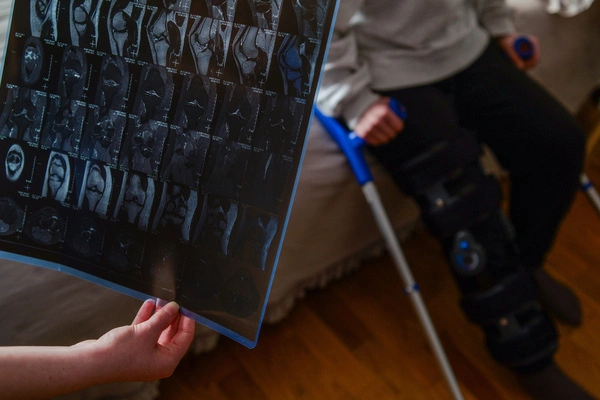
An MRI scan may be recommended to see the ACL and surrounding soft tissues in detail. MRI can also identify associated injuries to other ligaments, cartilage, or the meniscus.
X-rays do not show an ACL tear itself, but they may be used to rule out fractures or other bone injuries following significant trauma. Occasionally, an X-ray shows a small flake of bone pulled away from the outer side of the knee (a Segond fracture), which is strongly linked with ACL injury.
What should you do if you think you have torn your ACL?
Immediately after a knee injury, if you’re playing sport, you should stop straight away. Try to avoid testing the knee by twisting or pivoting on it.
Reducing the amount of weight placed through the knee and using an ice pack wrapped in a towel can help with pain and swelling while you arrange appropriate medical attention. NHS guidance recommends applying ice for up to 20 minutes at a time and avoiding prolonged standing when experiencing knee pain.
For the first few days, it is also sensible to avoid heat, alcohol, running and massage, as these can increase bleeding and swelling in the knee. Crutches can help if walking is painful.
Pain relief may also be appropriate. Medicines including paracetamol or anti-inflammatory drugs (NSAIDs) such as ibuprofen may be suitable for some people, but NSAIDs are not appropriate for everyone. Speak to a pharmacist, GP, or other healthcare professional if you are unsure which medication is safe for you.
Do not try running, jumping, or pivoting until the injury has been properly assessed. Early physiotherapy to reduce swelling and get the knee moving again is an important part of recovery, whether or not you go on to need surgery.
How are ACL injuries treated?
Treatment depends on how badly the ACL is damaged, whether other parts of the knee are injured, how stable your knee feels, and the activities you want to return to.
Not every ACL injury requires surgery.
For some people, physiotherapy and structured rehabilitation can restore enough strength, control, and stability for normal activities. This can sometimes be appropriate for partial tears or people whose knee remains stable and whose activities place relatively little rotational stress through the joint.
Surgery may be considered when the knee remains unstable, particularly for people who want to return to sports or activities that involve jumping, pivoting, and sudden movements.
If surgery is planned, a period of physiotherapy beforehand (sometimes called ‘prehabilitation’) is usually recommended. Going into surgery with a knee that is no longer swollen, straightens fully and has good muscle strength is linked to a better recovery afterwards.
ACL injuries in children and teenagers who are still growing need specialist assessment, as treatment has to take the growth plates around the knee into account.
When might ACL reconstruction be recommended?
ACL reconstruction replaces the damaged ligament with a tissue graft. The aim is to restore stability and function to the knee. The graft is usually taken from your own body, most commonly from a hamstring tendon, the patellar tendon at the front of the knee, or the quadriceps tendon above the kneecap. Your surgeon will discuss which option is best for you.
At Practice Plus Group, ACL reconstruction is performed using minimally invasive knee arthroscopy techniquesminimally invasive, arthroscopic (keyhole) techniques . Recovery is gradual and normally involves physiotherapy to rebuild strength, movement, and control before returning to more demanding activities. Most people return to everyday activities within a few months, but getting back to sports that involve jumping, pivoting or changing direction usually takes at least nine months. Returning too early increases the risk of injuring the knee again.
If ongoing instability is affecting your everyday activities or preventing you from returning to sport, learn more about ACL reconstruction surgery at Practice Plus Group. The information covers what the procedure involves, the recovery process, and where treatment is available.
Private healthcare offers greater flexibility over when, where, and by whom you’re treated. In the vast majority of cases, the waiting times are shorter too, and with Practice Plus Group, prices are transparent.
Choosing private healthcare can make planned treatment easier to fit around work, family, and personal commitments. Options to access private treatment are self-pay, payments plans, or medical insurance.
Not quite found the ACL information you’re looking for? Our FAQs might be able to help!
Typical early signs include feeling or hearing a ‘pop’, sudden knee pain, rapid swelling, reduced movement, and difficulty continuing the activity you were doing. Your knee may also feel unstable when you try to stand or walk.
However, you should remember that not everyone experiences all of these symptoms.
A “blown ACL” is an informal term commonly used to describe a significant ACL tear or rupture. It may feel like a sudden pop or shift inside the knee followed by pain, swelling, and instability. As the initial symptoms improve, repeated giving way can become the main problem.
Yes. Although a popping sensation is a well-recognised symptom, you can damage or tear your ACL without hearing anything. Other symptoms, such as rapid swelling, instability, and difficulty bearing weight, can still indicate a significant knee injury.
No. Rapid swelling is common with ACL rupture, but the timing and amount of swelling can vary. An ACL injury should not be ruled out simply because your knee did not become dramatically swollen.
In some cases, yes. Some people struggle to bear weight immediately, while others can walk after their initial pain and swelling settle.
Instability may only become obvious when turning, pivoting, going downstairs, or trying to return to sport.
Symptoms alone may not reliably distinguish a partial ACL tear from a complete rupture. A clinician can assess the stability of your knee, and an MRI can show the ACL and help identify whether the ligament is intact, partially torn, or completely ruptured.
Yes. Pain varies considerably between people and injuries.
Some people experience severe pain immediately, while others find that the pain becomes relatively manageable even though the knee remains unstable.
It can be. Repeated buckling or giving way is one of the characteristic ongoing symptoms associated with ACL injuries. However, other knee conditions can also cause instability, so recurring episodes should be professionally assessed.
No. Some ACL injuries can be managed using physiotherapy, rehabilitation, and activity modification. Surgery is more likely to be considered when significant instability continues, when other knee structures are damaged, or when someone wants to return to sports that involve sudden or pivoting movements.
The outcome depends on your injury and activity level. Some people can function well following rehabilitation without surgery, while others continue experiencing knee instability.
Repeated episodes of the knee giving way can damage other structures within the joint, particularly the meniscus and cartilage, and may increase the risk of osteoarthritis later in life. This is why ongoing instability should be assessed rather than ignored.
Recovery depends on how badly the knee is injured and whether you have surgery. Milder sprains may settle within a few weeks with physiotherapy.
After ACL reconstruction, most people walk without crutches within a few weeks and return to everyday activities within a few months. Returning to pivoting sports usually takes nine to twelve months and should be guided by your surgeon and physiotherapist.
Acknowledgements and clinical review
This page has been medically reviewed and approved by Mr Jeevan Chandrasenan, Consultant Orthopaedic Surgeon at Practice Plus Group Hospital. He is a GMC-registered consultant surgeon (GMC: 6054810), with over 10 years of clinical experience and holds BMBS and BMedSCI qualifications from the University of Nottingham. He is an expert in knee and hip surgery, alongside ultrasound-guided injections. Mr Chandrasenan is also a fellow of the British Association of Knee Surgery, the Orthopaedic Association, and the Orthopaedic Sports Trauma and Arthroscopy Association.
All content on this page is produced by the Practice Plus Group digital content team and clinically reviewed by consultant specialists to ensure accuracy, patient safety, and alignment with current UK clinical best practice. Content is approved under Practice Plus Group’s clinical governance framework.
Jeevan Chandrasenan, General Medical Council number: 6054810
This page is regularly reviewed and updated to reflect changes in clinical evidence, surgical practice, and patient safety standards. The last clinical review was completed on 9/6/2026, with the next review scheduled for 9/06/2027.
James Wood, Content Specialist
This article was co-written by Content Specialist, James Wood. Our Content Specialist, James, has been writing articles and blogs for Practice Plus Group since 2022. He has more than a decade of experience as a copywriter within a range of different backgrounds and works closely with medical professionals to deliver information that's easy-to-read and patient-focused.