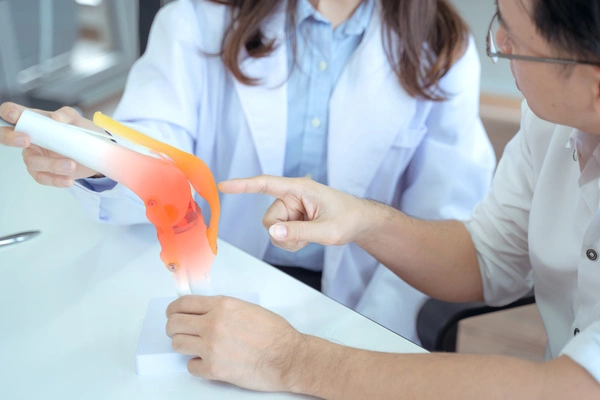
Total knee replacement surgery is a common procedure that replaces a worn out knee joint with an artificial implant. This is usually to treat severe arthritis or long-term damage within the knee joint.
During a total knee replacement, worn-out cartilage and damaged bone are removed and replaced with specially designed metal and plastic components. These artificial surfaces are shaped to recreate the smooth movement of a healthy knee, helping to reduce pain while improving mobility.
For many people, a full knee replacement can be life-changing. When knee pain begins to interfere with sleep, walking, work, or everyday tasks and regular painkillers, injections, and physio prove ineffective, surgery can offer long-term relief and a meaningful improvement in quality of life.
At Practice Plus Group, our experienced orthopaedic surgeons perform hundreds of knee joint replacement procedures each year. They follow evidence-based protocols to deliver excellent patient outcomes and results.
The knee is a complex hinge joint supported by cartilage, ligaments, tendons, and fluid. Damage to this joint can lead to pain, stiffness, and reduced mobility.
When symptoms severely affect daily life and don’t improve with treatment, knee replacement surgery may be recommended. This is followed by a structured recovery process that gradually restores movement, strength, and quality of life.
Your knee anatomy explained
Understanding how the knee functions can help to explain why replacing the damaged surfaces is so important when it comes to restoring comfort and mobility.
We’ve included some images below to help illustrate how the knee joint works, along with a written explanation.
Image showing the anatomy of the knee joint
Anatomy of a total knee replacement
12
The knee joint is one of the largest and most complex joints in the body. It connects the femur (thigh bone) to the tibia (shin bone), with the patella (kneecap) sitting at the front of your knee. The joint functions like a hinge, allowing you to bend and straighten your leg while also providing stability during movement.
To provide this movement, several key structures within the knee work together:
Articular cartilage cushions the bone surfaces
Ligaments stabilise the joint
Tendons attach muscles to bone
Synovial fluid lubricates the joint.
When cartilage deteriorates, friction inside the knee joint increases, potentially leading to inflammation and pain. Over time, movement can become more restricted making everyday tasks feel increasingly difficult.
What causes knee damage?
According to the NHS, the most common cause of knee joint damage is osteoarthritis.1 This degenerative condition gradually breaks down cartilage over time. Age is a significant risk factor, but younger individuals can also develop arthritis following injury or repetitive strain.
Osteoarthritis isn’t the only cause. Others include:
Rheumatoid arthritis and inflammatory conditions
Previous knee injuries (fractures, ligaments, and meniscal tears)
Chronic knee instability
Excess body weight.
Carrying additional weight places increased stress on the knee with every step. This can accelerate cartilage wear and quickly worsen symptoms.
Knee damage often develops gradually. Early signs may include stiffness after sitting or mild discomfort during activity. As cartilage loss progresses, pain becomes more persistent and joint flexibility declines.
Symptoms that may indicate you need total knee replacement surgery
So, what are the signs indicating you need a knee replacement? Well, the big giveaway is when symptoms are persistent and hinder daily function. Another major symptom to watch out for is when your knee fails to respond to conservative treatments (e.g. pain medication, compression, rest).
You may notice:
Persistent pain that limits walking
Stiffness, especially in the morning
Swelling that restricts movement
Difficulty climbing stairs
Pain that disrupts sleep
Reduced confidence due to instability.
As symptoms progress, unfortunately, many patients describe a gradual loss of independence. Activities they once enjoyed can become increasingly difficult to do. When quality of life is consistently affected, a total knee replacement procedure may be recommended following specialist assessment.
Types of knee replacement
Depending on the severity and location of damage to the knee joint, your specialist may recommend one of the following types of knee replacement surgery:
Total knee replacement – involves replacing the entire knee joint and is the most common approach when arthritis is widespread.
Partial knee replacement – replaces only the damaged parts of the knee. It preserves more natural bone and ligaments but is suitable only when arthritis is confined to one area.
Revision knee surgery – is performed when a previous artificial implant becomes loose, worn, or infected.
Your consultant will assess imaging, joint stability, alignment, and overall health before recommending the most appropriate procedure.
Preparation is an important part of achieving the best possible outcome.
In the weeks leading up to your surgery, you may be given exercises specifically designed to strengthen the muscles around the knee. Building strength before surgery can lead to a faster recovery.
You’ll also need to attend a pre-operative assessment to confirm you are medically fit for surgery. This may include blood tests, an ECG, and a medication review.
You can also make changes to your immediate surroundings. Some practical steps to prepare your home include:
Removing loose rugs and trip hazards
Arranging support for the first few weeks (e.g. cooking and cleaning)
Placing essential items within easy reach
Preparing simple meals in advance.
What happens during total knee replacement surgery?
Total knee replacement is performed under spinal or general anaesthetic, depending on your specific needs. The surgeon will make an incision at the front of your knee to access the joint.
The procedure involves carefully removing damaged cartilage, reshaping the bone surfaces, and positioning the metal and plastic components precisely. The wound is then closed and dressed.
The operation typically takes between one and three hours to complete. This is to ensure the implant is perfectly positioned to enable long-term stability and function of the new joint.
Step-by-step procedure
An incision is made at the front of your knee
Damaged cartilage and bone are removed
The femur and tibia are reshaped to accommodate the new implant
Metal components are secured to both bones
A plastic spacer is inserted between them
The kneecap may be resurfaced.
Modern knee implants are designed to replicate natural movement while also withstand years of daily use.
Surgical techniques
There are a range of different surgical techniques that a specialist can use when it comes to total knee replacement surgery. Factors affecting their decision range from the severity of the damage to the knee all the way to simply whether the technique is suitable.
The surgical techniques for knee replacement are as follows:
Traditional approach – The standard midline incision provides full access to the joint.
Minimally invasive techniques – Smaller incisions may reduce soft tissue trauma in suitable patients.
Computer-assisted surgery – Some surgeons use digital mapping to improve implant alignment.
Your consultant will determine the most appropriate method for you based on suitability.
Recovery after total knee replacement
Recovery following knee replacement surgery is gradual and structured. While every patient heals at their own pace, most experience steady improvement with the right rehabilitation and support.
At Practice Plus Group, we follow enhanced recovery protocols designed to get you moving safely and confidently as soon as possible.
Hear from our knee specialist:
“If you’ve had a knee replacement, keep doing your exercises religiously and you should achieve good function of the knee that improves your quality of life significantly.
The best reward an orthopaedic surgeon can receive from their patient is: Thank you for giving me my life back!”
Istvan Mersich, Consultant Orthopaedic Surgeon at Practice Plus Group Hospital, Barlborough
Begin standing and walking (with assistance) within 24 hours
Start gentle knee exercises on the same day or the morning after surgery
Leave hospital within 1–3 days, depending on mobility and pain control
Go home with crutches or walking aids for support
Start a structured physiotherapy programme immediately.
Early mobilisation is important. Moving the joint soon after surgery helps improve circulation, reduce stiffness and lower the risk of complications such as blood clots.
You’ll be given personalised guidance before discharge, including exercises to perform at home and advice on wound care, swelling management, and safe movement.
Detailed recovery timeline
Although knee surgery recovery time varies depending on age, fitness level, and overall general health, the following timeline offers a helpful guide.
Weeks 1-3: Early healing phase
This is the most intensive stage of recovery. You may experience:
Swelling around the knee and lower leg
Bruising
Stiffness, particularly in the morning
Moderate discomfort as soft tissue heals.
During this stage, the focus is on:
Regaining knee movement (bending and straightening)
Managing swelling with elevation, ice, and pain medication
Walking short distances with crutches
Performing regular physiotherapy exercises.
Consistency is key. Even though the knee may feel tight, regular movement prevents the build-up of scar tissue, which can limit long-term flexibility.
Sleep may be disrupted during this period, but this will likely improve over time.
Weeks 4-6: Regaining confidence
By this stage:
Swelling begins to reduce
Walking becomes steadier
Pain levels decrease significantly
Muscles get stronger.
During this period of recovery, many patients are able to transition from two crutches to one, and then progress to walking crutch-free indoors.
Physiotherapy exercises focus on:
Strengthening the quads and hamstrings
Improving balance
Increasing range of motion.
Some patients may be cleared to drive around six weeks after surgery. This will depend on mobility, strength, and whether the operated knee is on the driving side (if you have an automatic car). Always follow your consultant’s advice before getting back behind the wheel.
Weeks 6-12: Building strength and stamina
Between two and three months after surgery, you should notice:
Greater confidence walking outdoors
Improved ability to climb stairs
Reduced stiffness around the affected joint
Increased daily activity tolerance.
The following low-impact activities are often encouraged during this stage:
Walking longer distances
Swimming
Cycling on a static bike.
Although major pain from arthritis should be gone, some mild discomfort after physical activity is normal. This is due to the knee continuing to adapt.
Months 3-6: Significant functional improvement
At this stage:
Most swelling has resolved
Strength and flexibility continue improving
Daily activities feel easier
Many patients return to work (depending on job demands).
You may still experience occasional stiffness after prolonged sitting or increased activity, but this continues to improve over time.
The majority of patients report substantial improvements in mobility and overall quality of life by six months.
Months 6-12: Full recovery and long-term adaptation
Full recovery from total knee replacement surgery can take up to a year. During this period:
Muscles fully rebuild strength
Balance improves
Movement feels more natural
The knee continues adapting to the implant.
It’s important to remember that recovery is not linear and some days may feel better than others. Gradual, consistent progress is to be expected and patience is key.
Tips to support your recovery
To optimise healing and reduce complications:
Perform physiotherapy exercises daily
Keep the wound clean and dry
Take prescribed medication as directed
Wear compression stockings if advised
Stay active but avoid high-impact activities
Maintain a healthy weight to reduce strain on the implant.
If you notice increasing pain, redness, swelling, calf tenderness (which may indicate blood clots) or fever, contact your healthcare provider as soon as possible.
Reducing risks and complications
Although knee replacement is considered to be very safe, as with any surgical procedure, there is a risk of complication. Potential complications include:
Infection
Blood clots
Stiffness from scar tissue
Ongoing discomfort (some patients may still feel pain)
Implant loosening.
To reduce the risk:
Take prescribed anticoagulants
Wear compression stockings – if advised by your doctor
Stay mobile
Follow physiotherapy advice carefully.
You will be closely monitored throughout your initial recovery by the surgical team.
Long-term outcomes
Most patients experience:
Significant pain relief
Improved walking distance
Greater independence
Better sleep
Enhanced confidence.
While knee implants typically last 15–20 years, it’s still important to maintain a healthy weight and avoid high-impact activities to help encourage a long implant lifespan.
Total knee replacement surgery costs
Understanding knee replacement surgery costs is an important part of planning your treatment. At Practice Plus Group, your treatment package typically includes:
Initial assessment with a consultant orthopaedic surgeon
Diagnostic investigations such as X-ray (please note, MRI and ultrasound will incur extra cost)
Pre-operative assessment
Total knee replacement surgery
Hospital stay
Anaesthetist fees
In-patient physiotherapy
One follow-up appointment
Post-discharge care package.
Cost breakdown
Initial consultation
Diagnostic investigations
Pre-operative assessment
Main treatment
Recovery
Total cost
Hospital fees
£145
X-ray included
Included
£13,799
Included
from £13,944
Consultant fees
Included
Included
Included
Included
Includes one follow-up appointment
n/a
Anaesthetist fees
n/a
n/a
Included
Included
n/a
n/a
Physio
n/a
n/a
n/a
Included during hospital stay
Included
n/a
Cost
£145
Included
Included
£13,799
Included
from £13,944
Finance options and private medical insurance are available subject to approval.
Still struggling to find specific information? Perhaps our total knee replacement FAQs can help!
How long does total knee replacement surgery take?
Usually between 1–3 hours.
Is it considered major surgery?
Yes. However, total knee replacement surgery is one of the most routinely performed and successful orthopaedic procedures in the UK.
Will I still feel pain after surgery?
Some discomfort is normal during recovery, but long-term severe arthritis pain should significantly improve.
How soon can I drive?
Typically 6 weeks after surgery, depending on recovery and surgeon advice.
What activities should I avoid?
Anything with a high chance of falling. Running, jumping, and contact sports are generally discouraged as they can place increased stress on the new joint. On the other hand, low-impact activities such as walking, swimming, and cycling are often encouraged during the recovery process.
How long will my knee replacement last?
Modern implants are designed to last 15-20 years or longer. Longevity depends on factors such as activity level, body weight. and overall joint health. Maintaining a healthy lifestyle and avoiding excessive strain can help prolong implant lifespan and function.
When can I return to work?
This depends on the physical demands of your job. Many patients with desk-based roles return to work around six weeks after surgery. More physically demanding roles may require a longer recovery period.
What are the warning signs of complications?
You should seek medical advice if you experience:
– Increasing redness or warmth around the wound – Persistent swelling or calf pain – Fever and shivering – Sudden worsening pain.
These symptoms could indicate infection or blood clots and should be assessed as soon as possible.
Acknowledgements and clinical review
This page has been medically reviewed and approved by Mr Istvan Mersich, Consultant Orthopaedic Surgeon at Practice Plus Group Hospital, Barlborough. He graduated from the University of Medicine in Hungary with an MD qualification before achieving an Specialist Registrar Trauma and Ortho qualification in 2004. He has 25 years of experience as an Orthopaedic Surgeon and carries out more than 350 annual procedures. He is an expert in hip and knee surgery and joined Practice Plus Group in 2005.
All content on this page is produced by the Practice Plus Group digital content team and clinically reviewed by consultant specialists to ensure accuracy, patient safety, and alignment with current UK clinical best practice. Content is approved under Practice Plus Group’s clinical governance framework.
Istvan Mersich, General Medical Council number: 5194789
This page is regularly reviewed and updated to reflect changes in clinical evidence, surgical practice, and patient safety standards. The last clinical review was completed on 9/6/2026, with the next review scheduled for 9/06/2027.
James Wood, Content Specialist
This article was co-written by Content Specialist, James Wood. Our Content Specialist, James, has been writing articles and blogs for Practice Plus Group since 2022. He has more than a decade of experience as a copywriter within a range of different backgrounds and works closely with medical professionals to deliver information that's easy-to-read and patient-focused. When he's not writing medical pieces, James is busy playing sports or pub quizzing.